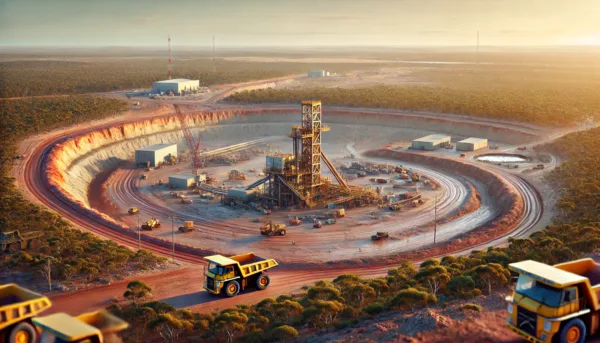

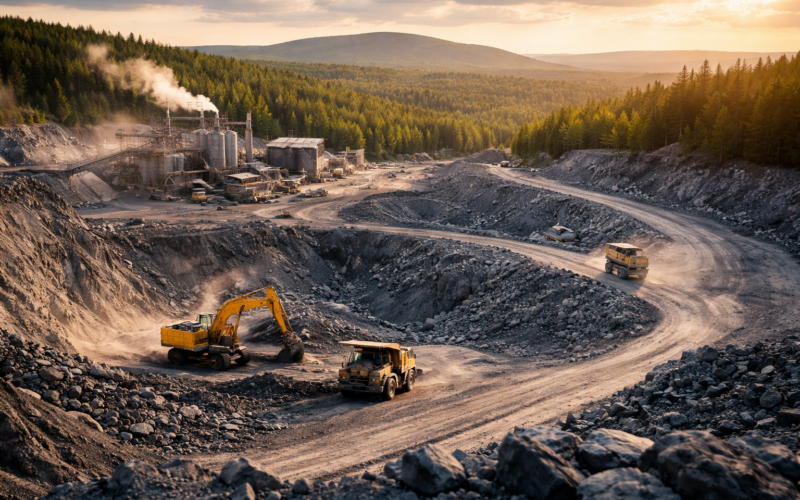
Nouveau Monde Graphite Inc. (NYSE: NMG, TSX: NOU) has assembled a US$297 million equity financing package made up of a US$213 million private placement and a US$84 million bought deal public offering to advance its Phase-2 Matawinie Mine toward final investment decision. The raise comes only weeks after the company disclosed a US$335 million senior project debt commitment, meaning the equity leg now appears designed to complete the capital stack for construction. Canada Growth Fund, Investissement Québec, and Eni S.p.A. are anchoring the private placement, giving the transaction a mix of state-backed industrial policy and strategic corporate validation. For a pre-revenue graphite developer that has spent years selling the idea of a North American mine-to-anode chain, this is the kind of financing milestone that shifts the discussion from ambition to execution.
Why does Nouveau Monde Graphite’s Matawinie financing package matter more than a standard mining capital raise?
This financing matters because it is not simply a lifeline for a speculative junior miner. It is a coordinated attempt to finance a strategic graphite asset inside a Western critical minerals agenda that increasingly values domestic supply security over lowest-cost sourcing. The US$297 million equity package, when paired with the previously announced US$335 million project debt commitment, is expected to fully fund the Phase-2 Matawinie Mine. That changes the conversation materially. Markets tend to punish developers not only for geology or permitting risk, but for the long purgatory between feasibility and actual funding. Nouveau Monde Graphite is trying to exit that purgatory.
The composition of the investor group matters almost as much as the amount raised. Canada Growth Fund and Investissement Québec reinforce the idea that the project is being treated as industrial infrastructure rather than as a purely private-sector mining venture. Eni’s participation is even more strategically interesting. Oil and gas majors have spent years talking about transition exposure, but here Eni is attaching equity capital and a letter of intent tied to a potential 15,000-tonne-per-year graphite concentrate offtake or equivalent active anode material. That is not casual window dressing. It suggests large energy companies are increasingly willing to treat battery raw materials as part of a broader future-facing industrial portfolio.
There is also a timing benefit. By closing the equity component after securing the debt commitment, Nouveau Monde Graphite reduces the appearance that it is trying to raise capital into a vacuum. Investors are not being asked to believe that lenders might show up later. The lenders are already in the room. That sequencing improves credibility, even if it does not eliminate the remaining conditions tied to shareholder approval, exchange approvals, escrow mechanics, and final closing steps.
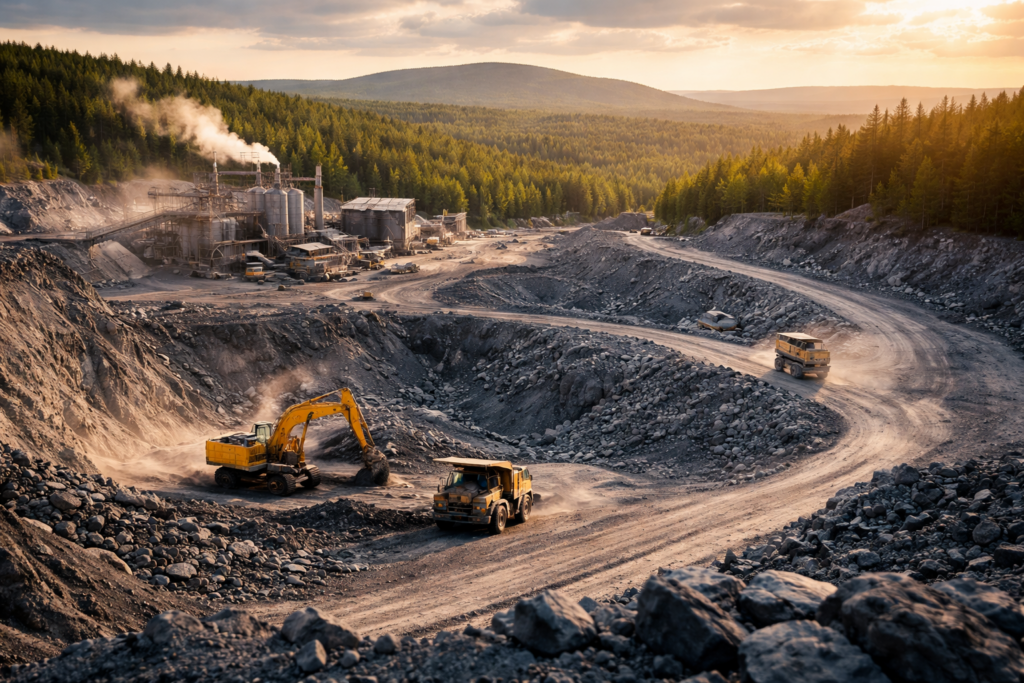
How much dilution is Nouveau Monde Graphite accepting to get Matawinie funded and why might investors tolerate it?
The catch, naturally, is dilution. The private placement calls for the issuance of roughly 115.8 million common shares, while the bought deal public offering adds 45.6 million subscription receipts, each convertible into one common share if release conditions are met. Against a current base of roughly 160.8 million shares outstanding, the combined new issuance is effectively on the order of the existing share count. In plain English, this is not modest dilution. It is the kind of dilution that can make legacy shareholders wince, reach for coffee, and then check whether the project is finally becoming real.
Yet this is exactly why the market may be willing to live with it. Developers that fail to secure full financing often end up returning to the market repeatedly, raising smaller amounts at worse terms, stretching timelines, and eroding confidence with every round. Large one-shot dilution can sometimes be less destructive than years of piecemeal dilution and stalled development. If Matawinie reaches FID and construction begins on a fully funded basis, shareholders may ultimately view this as painful but necessary equity rather than value-destructive desperation.
The pricing also sends a message. Both the private placement and the public offering are priced at US$1.84 per security, below the recent trading price. That discount is not surprising for a deal of this size, but it underscores who held negotiating leverage. Nouveau Monde Graphite needed cornerstone investors more than cornerstone investors needed exposure to Nouveau Monde Graphite. That is normal for a project-finance transition story, but it is worth stating plainly.
What does Eni’s investment and potential graphite offtake say about the future of critical minerals capital flows?
Eni’s role is one of the most revealing features of the transaction. The company is not only investing US$70 million but is also set to receive board nomination and observer rights, plus certain pre-emptive protections tied to future ownership thresholds. That tells you Eni is not treating this as a passive punt on a fashionable mineral. It is seeking strategic optionality.
That matters because the critical minerals sector has been waiting for a broader class of industrial investors to move beyond memorandums and into actual cap table participation. Mining developers have often relied on a narrow mix of specialist funds, export credit agencies, trading houses, or automaker-linked financing. Eni’s entry broadens the universe. If more European energy and industrial groups follow that path, project developers with credible downstream positioning could find financing windows that did not exist a few years ago.
There is also a commercial logic. Graphite remains one of the least glamorous but most essential battery inputs. Lithium gets the headlines, nickel gets the handwringing, and graphite quietly dominates the anode. Nouveau Monde Graphite’s integrated pitch has always been that it is not selling just ore extraction, but a traceable mine-to-material chain in Québec backed by low-carbon power. Eni’s involvement suggests that proposition is beginning to resonate with strategic capital that values supply security and carbon positioning together.
Why is Matawinie’s financing structure important for North America’s battery supply chain ambitions?
Matawinie is not being financed as a standalone mine in the old-fashioned sense. It is being positioned as the first leg of an integrated graphite value chain tied to Bécancour, where Nouveau Monde Graphite is targeting a 13-kilotonnes-per-annum Battery Material Plant for FID in the second half of 2026. That sequencing is important. A mine without a clear downstream path can still be economically relevant, but a mine explicitly linked to battery materials is more likely to attract policy support, offtake interest, and strategic investors.
Nouveau Monde Graphite already has meaningful commercial backing around the broader platform. Company materials indicate that binding supply and marketing agreements with Panasonic Energy, Traxys, and the Government of Canada cover about 75% of Phase-2 Matawinie Mine graphite concentrate production, and earlier agreements with Panasonic Energy and General Motors helped underpin the integrated strategy. That matters because lenders and equity backers generally want to see not just resource quality and feasibility work, but revenue visibility.
In that sense, Matawinie is becoming a live test of whether North America can finance battery mineral projects with the same seriousness it applies to cell plants and manufacturing incentives. Building refineries and gigafactories while relying on fragile upstream supply is strategic cosplay. Financing upstream graphite is harder, slower, and less photogenic, but it is where supply chain rhetoric meets reality.
How is NMG stock trading around the announcement and does the market reaction match the strategic significance?
Nouveau Monde Graphite shares closed at about US$2.35 on April 9, according to live market data, with a 52-week range of roughly US$1.32 to US$6.06 and a market capitalization around US$378 million. The stock’s recent performance has been choppy rather than euphoric. Historical pricing suggests the shares were around US$2.28 on April 3 and around US$2.28 on March 11, implying only modest short-term appreciation into this financing milestone rather than a full-blown rerating.
That muted reaction is understandable. Equity markets rarely celebrate massive dilution on announcement day, even when the underlying strategic logic is sound. Investors are effectively balancing two truths at once. First, Nouveau Monde Graphite appears closer than ever to moving Matawinie into a funded construction phase. Second, the cost of achieving that milestone is substantial share issuance and a long list of execution tasks that still need to go right.
This is where the current valuation becomes interesting. A roughly US$378 million market cap against a project that now looks materially more financeable can be read two ways. Bulls will argue that the market still is not fully pricing the value of a de-risked Western graphite platform with downstream optionality. Bears will argue that pre-revenue mining and materials stories have a long history of burning capital, missing timelines, and asking investors to fund the next milestone before the previous one has translated into cash flow. Both camps have plenty of historical ammunition.
What are the next execution risks after Nouveau Monde Graphite’s financing breakthrough?
The obvious next step is shareholder approval. The company has scheduled an annual and special meeting for May 13, 2026, and the private placement is subject to those approvals along with TSX and NYSE approvals and other customary closing conditions. Panasonic and Mitsui have indicated their intention to vote in favor, which helps, but approvals are only one part of the path.
Construction execution will matter even more. Nouveau Monde Graphite says detailed engineering is well advanced, preparatory site work is complete, key permits are in hand, and the project is shovel-ready. Those are all helpful markers. But the sector is littered with projects that looked clean at FID and then ran into cost inflation, contractor bottlenecks, commissioning delays, or softer-than-expected market conditions. The company’s US$45 million cost overrun facility is a sensible buffer, but buffers exist because overruns happen.
Then there is the broader demand environment. Long-term graphite demand tied to electrification remains compelling, but battery chemistry evolution, Chinese oversupply dynamics, and Western policy shifts can all affect realized pricing and competitive positioning. Nouveau Monde Graphite is trying to differentiate on location, traceability, and carbon profile rather than pure cost leadership. That strategy can work, but only if customers consistently value those attributes enough to support attractive contract economics.
The final risk is strategic sprawl. Matawinie now appears closer to FID, while Bécancour is targeted for a later FID in H2 2026. The integrated vision is what makes the company compelling, but it also creates sequencing complexity. Management will need to prove it can bring the mine forward without overextending capital, management bandwidth, or market patience on the downstream side.
What do the latest financing and offtake signals mean for graphite competitors and Western critical minerals policy?
For competitors, the message is straightforward. Capital is available for critical minerals projects, but not for everyone and not on equal terms. The projects most likely to get funded are those that combine jurisdictional appeal, policy relevance, commercial validation, and some version of downstream alignment. Pure upstream stories without binding customer traction may find the bar rising.
For policymakers, the transaction is a case study in how public capital can help bridge private market hesitation. Canada Growth Fund and Investissement Québec are not merely subsidizing an idea. They are helping assemble a financeable industrial asset that aligns with domestic manufacturing and allied supply security goals. Whether that model scales will depend on project performance. If Matawinie advances smoothly, it becomes evidence that policy-supported industrial strategy can unlock real assets. If it stumbles, critics will call it another expensive experiment in picking winners.
For North America’s battery ecosystem, this is one of those developments that looks technical today but could prove more important in hindsight. Everyone likes to talk about resilient supply chains. Much fewer people enjoy the dilutive, regulatory, debt-heavy, multi-stakeholder work required to build them. Nouveau Monde Graphite has now taken a serious step into that harder phase.
What are the key takeaways from Nouveau Monde Graphite’s US$297 million financing package for Matawinie and the broader graphite market?
- Nouveau Monde Graphite has moved closer to a true project-finance inflection point by pairing a US$297 million equity package with a previously disclosed US$335 million debt commitment.
- The investor mix matters because it combines industrial policy capital, provincial backing, and strategic corporate money rather than relying solely on conventional mining finance.
- Eni’s entry is strategically important because it signals broader industrial interest in battery raw materials as part of long-term energy transition positioning.
- The financing appears to complete the capital stack for Matawinie, which is more important than the headline raise itself.
- Shareholder dilution is severe, but it may be more acceptable than years of smaller, serial raises with no construction certainty.
- Matawinie is being financed as part of an integrated mine-to-anode strategy, which strengthens its relevance to North American battery supply chain policy.
- Existing offtake and marketing arrangements improve bankability and help distinguish Nouveau Monde Graphite from graphite developers still selling only future potential.
- The stock market reaction looks cautious rather than exuberant, reflecting the tension between major de-risking and major dilution.
- The next real test is execution, not fundraising, because approvals, construction discipline, and downstream sequencing now matter more than investor storytelling.
- If Matawinie advances successfully, the deal could become a template for how Western critical minerals projects attract blended public and strategic private capital.
Discover more from Business-News-Today.com
Subscribe to get the latest posts sent to your email.