How did NextDecade Corporation’s stock perform after announcing its latest LNG offtake agreement with EQT?
NextDecade Corporation (NASDAQ: NEXT) saw its shares trade at USD 10.46 at the close of September 4, registering a fractional uptick of 0.01 points or 0.09 percent. The trading day opened at USD 11.06 and ranged between USD 11.27 on the higher end and USD 10.18 on the lower end, underscoring a session of volatility as investors balanced optimism from the firm’s new LNG deal with broader market caution. The after-hours session, however, brought the stock down 2.01 percent to USD 10.25, reflecting some profit-taking and concerns over the timelines for the company’s next final investment decisions.
The energy developer, which is advancing one of the largest liquefied natural gas terminals under construction in the United States, has been a focal point for institutional investors throughout 2025. The stock remains within sight of its 52-week high of USD 12.12 but has gained considerable ground from its 52-week low of USD 4.27. With a market capitalization of roughly USD 2.74 billion, NextDecade Corporation sits in a mid-cap bracket that often attracts investors seeking both growth exposure and project-specific risk. Analysts suggest that the stock’s resilience amid recent volatility signals cautious optimism in the company’s ability to deliver on project milestones.
Why is the 20-year LNG sale and purchase agreement with EQT significant for Train 5 commercialization?
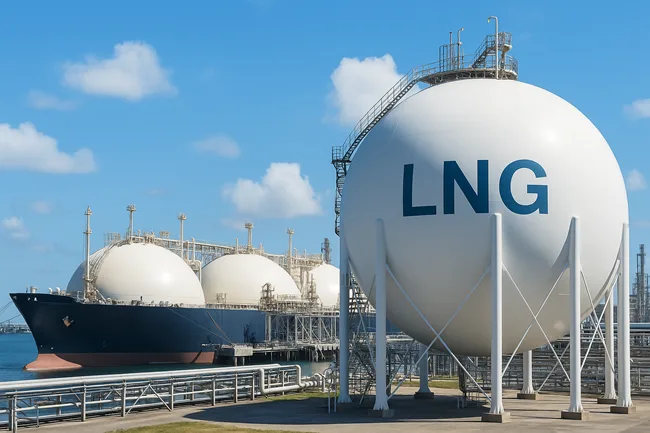
The trading day coincided with NextDecade Corporation’s announcement of a major commercial milestone. The Houston-based LNG project developer signed a 20-year sale and purchase agreement with EQT Corporation (NYSE: EQT), one of the largest natural gas producers in the United States, for the supply of 1.5 million tonnes per annum (MTPA) of LNG from Rio Grande LNG Train 5. The agreement is priced on a free on board basis and indexed to Henry Hub, the benchmark for U.S. natural gas.
The significance of the deal lies not only in the long-term offtake commitment but also in the timing. NextDecade Corporation has now sold a cumulative 3.5 MTPA under long-term contracts for Train 5 and is targeting an additional 1.0 MTPA to reach the threshold required to support a positive final investment decision. Management has indicated that commercialization of Train 5 should be completed in the third quarter of 2025, with a final investment decision expected in the fourth quarter, provided financing is secured.
Market participants interpret this as another step toward de-risking the financing process. The LNG sector has seen increased interest from equity sponsors and state-backed entities, and securing one of the largest independent gas producers in the U.S. as a customer strengthens NextDecade’s narrative of long-term demand visibility.
How are investors weighing the risks and opportunities in NextDecade’s LNG expansion strategy?
Institutional sentiment around NextDecade Corporation is shaped by both optimism and caution. On the opportunity side, Rio Grande LNG is situated in Brownsville, Texas, on a 984-acre site with access to abundant natural gas supply and deepwater shipping channels. The project is designed to be scalable, with permits in place for up to 10 liquefaction trains and nearly 48 MTPA of potential export capacity. Analysts argue that this scalability provides the developer with a multi-decade growth pipeline if global LNG demand continues to expand.
On the risk side, investors are keenly watching the company’s ability to close financing for both Train 4 and Train 5. Earlier in 2025, NextDecade finalized engineering, procurement, and construction (EPC) agreements with Bechtel Energy Inc. for both trains, pegging total project costs at approximately USD 6.7 billion for Train 5 and around USD 4.77 billion for Train 4. While the EPC contract price validity has been extended until November 15, 2025, the deadline places pressure on NextDecade to finalize its financing package before cost escalations erode project economics.
The stock’s muted after-hours reaction reflects these dual considerations. Short-term traders took profits, while long-term holders continue to position around the eventual financial close. Analysts note that the ability to line up additional long-term customers and close financing without significant dilution will determine whether the stock sustains momentum toward its highs.
What role do earlier LNG agreements and EPC contracts play in shaping Train 5’s final investment decision?
The agreement with EQT is not the first major contract tied to Train 5. In May 2025, NextDecade signed a 20-year sale and purchase agreement with JERA, Japan’s largest power utility and a leading LNG importer, for 2.0 MTPA of LNG. That deal added credibility to the project’s international reach, ensuring offtake into Asia while diversifying the customer base.
In June 2025, the American LNG developer executed a lump-sum turnkey EPC contract with Bechtel Energy Inc. for Train 5 at a base cost of USD 4.32 billion, along with owner’s costs, contingencies, financing fees, and interest during construction expected to add another USD 1.8–2.0 billion. In total, project costs are projected to approximate USD 6.7 billion, underscoring the scale of capital commitments required.
For Train 4, the EPC contract is priced at USD 4.77 billion, with similar additional costs anticipated. Commercialization of Train 4 is reportedly complete, with a final investment decision targeted by September 15, 2025, subject to financing. These timelines are closely tracked by equity investors who view Train 4 as a test case for Train 5. If financing is secured for Train 4 on favorable terms, confidence will likely spill over to Train 5.
How does the broader LNG market environment support or challenge NextDecade’s project pipeline?
NextDecade Corporation is advancing its projects against the backdrop of rising LNG demand, particularly in Europe and Asia. Geopolitical tensions and decarbonization efforts have created new demand for flexible U.S. LNG exports. Long-term supply contracts like those with EQT and JERA ensure stable cash flow visibility and align with the needs of utilities and industrial consumers seeking energy security.
At the same time, challenges remain. The global LNG market is competitive, with established players like Cheniere Energy and newer entrants backed by national oil companies competing for the same pool of customers. Additionally, financing requirements for large-scale LNG projects have grown as lenders and investors integrate environmental, social, and governance considerations into capital allocation decisions.
Institutional investors suggest that NextDecade’s strategy of securing anchor customers early, finalizing EPC contracts with transparent cost estimates, and aligning timelines for multiple trains could mitigate some of these risks. Still, the window for final investment decisions is narrow, and delays could impact valuation.
What is the investor outlook for NextDecade’s stock as the company approaches critical milestones?
The outlook for NextDecade Corporation’s shares will be defined over the next two quarters. With Train 4’s final investment decision expected by mid-September and Train 5’s targeted by year-end, the stock is entering a catalyst-rich period. Analysts argue that successful financial closure on either train could provide upside momentum, while delays may weigh on sentiment and trigger short-term corrections.
From a technical perspective, the stock’s current range near USD 10.50 positions it in the middle of its 52-week band, leaving room for upside if investor confidence grows. Liquidity, market capitalization, and institutional positioning suggest that the stock is likely to remain actively traded, with energy transition narratives continuing to influence sentiment.
For long-term holders, NextDecade’s Rio Grande LNG represents one of the few large-scale U.S. LNG projects still in active development with room for expansion. For short-term traders, the after-hours dip to USD 10.25 highlights the risk of volatility around project announcements and financing updates. In both cases, the EQT deal adds another brick in the wall of commercial validation.
Discover more from Business-News-Today.com
Subscribe to get the latest posts sent to your email.