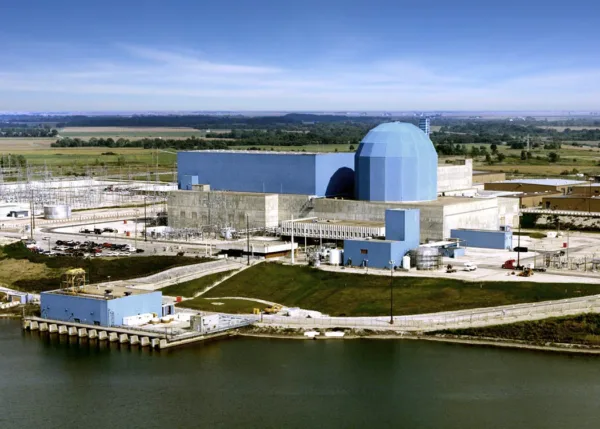
New York Governor Kathy Hochul on June 23, 2025, instructed the New York Power Authority (NYPA) to lead the development of a zero-emission, advanced nuclear energy power plant in upstate New York. The new facility will be the state’s first new nuclear construction in decades and is designed to add at least one gigawatt of clean, dispatchable capacity to New York’s evolving power grid. The move is part of a broader effort to decarbonize the grid, manage increasing electricity demand, and power large-scale industrial development through 2040 and beyond.
New York’s energy policy is undergoing a structural pivot. With fossil fuel plants retiring and renewable intermittency creating new reliability challenges, the Hochul administration has embraced nuclear energy as a critical component of the state’s clean power arsenal. The advanced nuclear project follows her January 2025 State of the State commitment to revive nuclear energy under a framework of public–private partnerships and long-term planning led by the New York State Energy Research and Development Authority (NYSERDA) and the Department of Public Service (DPS).

What steps has New York already taken to initiate advanced nuclear deployment and what does NYPA’s role encompass?
The New York Power Authority will begin immediate site evaluations, technology reviews, and financing studies in collaboration with NYSERDA and DPS. The initiative builds on prior groundwork laid by the Master Plan for Responsible Advanced Nuclear Development, which has evaluated options ranging from light-water small modular reactors (SMRs) to advanced high-temperature gas-cooled reactor systems.
The agency is authorized to work alone or with private-sector operators such as Constellation Energy, which is already pursuing an early site permit for potential future nuclear expansion at the Nine Mile Point Clean Energy Center. The selected project will be designed to add gigawatt-scale capacity in the 2030s, forming part of a diversified, zero-emission energy portfolio.
New York is also participating in the National Association of State Energy Officials (NASEO) and the National Association of Regulatory Utility Commissioners (NARUC) First Movers Initiative, which facilitates knowledge sharing and federal coordination on nuclear technology deployment.
How are institutional investors and the stock market reacting to this nuclear expansion in New York?
Publicly listed nuclear operators like Constellation Energy (NASDAQ: CEG), which owns and operates multiple nuclear facilities across the U.S., were among the first to see modest market upside following New York’s announcement. Constellation shares rose approximately 1 percent on June 24, with the broader sentiment among institutional investors signaling moderate optimism about expanded public sector support for nuclear development.
Analysts have generally assigned a “moderate buy” rating to Constellation stock, with target prices ranging from $325 to $380. The firm’s long-term visibility and participation in both existing reactor operations and new site permitting make it a primary beneficiary of such state-led nuclear initiatives. Analysts also see room for increased revenue certainty if capacity payments or long-term off-take agreements are implemented.
That said, investor caution remains over project timelines and regulatory hurdles. Financial models suggest meaningful returns from new nuclear development may not be realized until late in the decade. In this context, Hochul’s public sponsorship of NYPA as a developer is viewed as a strategic step to de-risk initial phases of project execution and signal long-term policy stability.
What are the strategic benefits and challenges of deploying a 1 GW advanced nuclear plant in upstate New York?
From an energy planning perspective, advanced nuclear reactors provide firm, round-the-clock power that complements renewable generation, especially during times of low wind or solar output. NYISO’s 2025 Power Trends Report highlights that 2.5 gigawatts of new capacity will be needed by 2035, with more than 1 gigawatt required in Central New York alone. Experts believe that a single gigawatt-scale advanced nuclear project can play a vital role in closing that gap.
The manufacturing sector has also welcomed the move. Micron Technology, GlobalFoundries, and other high-tech firms building new fabrication plants in the state emphasized the importance of low-cost, reliable electricity to sustain operations and competitiveness. Executives from chambers of commerce and trade associations echoed similar sentiments, calling the nuclear initiative a “missing piece” in the state’s grid strategy.
Challenges remain, particularly around permitting, community buy-in, long-term capital allocation, and integration with grid infrastructure. Cost overruns and timeline delays—seen in projects like Vogtle Units 3 and 4 in Georgia—underscore the need for structured risk-sharing between public entities like NYPA and private developers.
What are the financial and policy drivers supporting New York’s investment in nuclear?
New York’s policy shift is being supported by favorable national trends. The federal ADVANCE Act, signed in mid-2024, streamlines reactor licensing and expands Department of Energy funding for early-stage development. Advanced reactor demonstrations are already underway in Wyoming and Idaho under separate DOE initiatives, creating valuable deployment models.
In addition, the Inflation Reduction Act of 2022 offers zero-emission credits for existing and new nuclear capacity, while the Department of Energy has committed funding for front-end supply chain security, including uranium conversion and enrichment. New York’s participation in federal planning efforts will help the state secure its share of these incentives, further improving the financial case for development.
State-level policy documents estimate that to reach net-zero emissions by 2040 in the electricity sector, New York will require 15 to 20 gigawatts of dispatchable zero-carbon power. Without nuclear energy, the state would face significant exposure to seasonal and diurnal power gaps. Hochul’s directive aligns with this analysis and accelerates the practical steps needed to build that capacity.
What does the outlook look like—how might this project evolve through its early stages?
The next two years will likely be focused on feasibility studies, community consultations, and early environmental and site permitting processes. According to NYSERDA’s planning documents, a full construction decision is unlikely before 2027, pending reactor technology selection and financing closure. However, pre-development activities—including land acquisition, workforce training initiatives, and private partner identification—are expected to begin in earnest by early 2026.
If executed as planned, the plant could come online in the early-to-mid 2030s, just as electric vehicle adoption, building electrification, and AI-driven industrial growth push statewide demand to new highs. Industry observers believe this nuclear facility could become a model for other states, especially those grappling with similar reliability challenges and limited renewable siting options.
Can Hochul’s nuclear push create a replicable blueprint for state-led clean energy infrastructure?
Governor Kathy Hochul’s decision to direct the New York Power Authority to develop a new advanced nuclear plant may ultimately redefine the role of public power in the energy transition. The initiative positions New York as a national first-mover on gigawatt-scale next-generation nuclear, setting the stage for a decade of clean infrastructure investment aligned with economic and environmental priorities.
With support from state agencies, federal partners, organized labor, and the private sector, the upstate nuclear project is more than just a climate milestone—it’s a foundational step in reshaping New York’s energy and industrial future. If it succeeds, the NYPA-led nuclear power plant may prove that zero-carbon resilience doesn’t have to wait until 2040—it can be built now.
Discover more from Business-News-Today.com
Subscribe to get the latest posts sent to your email.