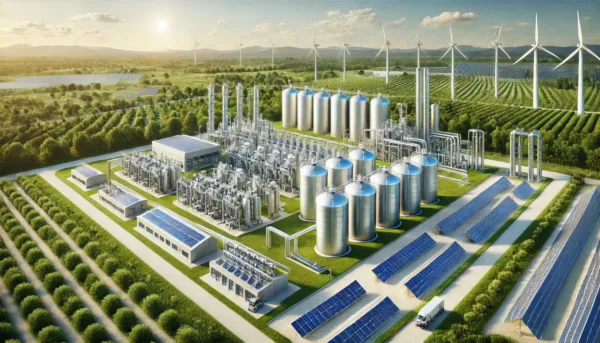
A new substation developed by Potomac Edison, a FirstEnergy Corp. (NYSE: FE) subsidiary, has gone online in Morgan County, West Virginia, improving electricity reliability for nearly 2,000 residents and businesses across Great Cacapon, West Virginia, and Little Orleans, Maryland. The project is designed to reduce outages, speed up power restoration, and enhance grid resilience in an area historically vulnerable to storm-related disruptions.
The $28 billion Energize365 investment program, under which this project was completed, reflects FirstEnergy’s broader strategy to modernize its five-state grid between 2025 and 2029. This initiative is being closely watched by both regulators and investors as utilities across the United States face mounting pressure to replace aging infrastructure and prepare for an era of electrification and rising demand.
Why did FirstEnergy invest in a new Potomac Edison substation in Great Cacapon and how does it address long-standing reliability concerns?
The Great Cacapon substation replaces an older facility that relied on a six-mile power line running through rugged, rocky terrain. That configuration left customers vulnerable to frequent and prolonged outages, particularly during storms when downed lines could not be quickly accessed by crews. By relocating to a safer, more accessible 20-acre site owned by Potomac Edison, the company has created a more reliable setup that not only reduces the risk of outages but also shortens repair times.
The company noted that nearly 1,600 customers in West Virginia and about 320 in Maryland will benefit directly. For rural households and small businesses in these regions, power interruptions are not just an inconvenience but a serious economic burden. In industries such as hospitality, healthcare, and local retail, even a few hours without electricity can result in financial losses that ripple through the community.
This investment demonstrates how utilities are being forced to rethink grid infrastructure to handle weather volatility. Severe storms, floods, and heavy winds have been increasing in the Mid-Atlantic, exposing weak points in the grid. For FirstEnergy, the reputational and financial cost of outages has been a key driver behind pushing reliability upgrades ahead of demand growth.
How does the integration of smart grid technology at the new substation transform outage response and customer service?
One of the standout features of the new facility is its integration of smart grid technology. Automated devices installed at the site can detect and isolate faults in real time, restoring power remotely without requiring field crews. These same systems pinpoint outage locations precisely, allowing repair teams to address problems faster when human intervention is necessary.
The smart technology essentially turns what used to be a reactive maintenance process into a proactive system. Instead of customers reporting an outage and waiting for diagnostics, Potomac Edison can now restore service to unaffected parts of the grid almost instantly, limiting both the duration and scope of disruptions.
For customers, this translates into fewer widespread blackouts and shorter downtimes. From an investor’s perspective, it lowers operational expenses over time, as fewer trucks need to be dispatched and storm recovery costs are reduced. Analysts covering the utility sector have increasingly highlighted grid automation as a critical factor in balancing reliability, regulatory compliance, and cost efficiency.
What role does the Energize365 program play in FirstEnergy’s broader modernization strategy and investor sentiment?
The Great Cacapon project is part of FirstEnergy’s $28 billion Energize365 program, which spans its service territories in Ohio, Pennsylvania, New Jersey, Maryland, and West Virginia. The initiative aims to modernize the grid to meet current consumer expectations while preparing for future growth in electric vehicle adoption, distributed energy resources, and data center demand.
For institutional investors, this program represents both opportunity and risk. On one hand, the scale of capital expenditure demonstrates commitment to long-term growth and regulatory alignment. On the other, it requires careful financial management, as large utilities are often criticized for rate increases tied to infrastructure upgrades.
FirstEnergy’s stock (NYSE: FE) has traded in a relatively narrow range this year, reflecting cautious optimism among investors. While the utility sector has underperformed broader equity benchmarks due to higher interest rates, defensive income-focused investors continue to hold FirstEnergy for its dividend stability. Recent buy-side flows indicate that institutional investors view infrastructure modernization as a value-preserving strategy, even in a high-rate environment.
Sell-side analysts remain divided: some stress the near-term pressure on free cash flow, while others argue that projects such as the Great Cacapon substation could strengthen FirstEnergy’s regulatory relationships and ensure cost recovery mechanisms that protect earnings. For retail investors, the reliability message resonates strongly, particularly in states where consumer advocacy groups have pressured regulators to penalize utilities for repeated outages.
How does FirstEnergy’s approach to regional infrastructure modernization compare with other U.S. utilities undergoing similar grid upgrades?
Utilities across the United States are engaged in similar large-scale grid upgrades. Dominion Energy in Virginia, Duke Energy in the Carolinas, and Exelon in the Midwest have each launched multibillion-dollar modernization programs over the past five years. The emphasis across the sector has been on resilience, digital automation, and storm hardening.
What distinguishes FirstEnergy’s Energize365 program is its focus on rural and semi-rural areas. While many utilities prioritize urban centers with dense loads, FirstEnergy has signaled that reliability for smaller communities is strategically important. The Great Cacapon substation reflects this emphasis, addressing grid challenges in mountainous terrain where storm recovery is more complicated and costly.
The utility sector’s investor narrative is increasingly tied to climate adaptation. As extreme weather events intensify, the pace of investment in substations, undergrounding, and transmission resilience is becoming a competitive differentiator. Analysts suggest that utilities demonstrating strong execution in storm-prone areas could see premium valuations, especially as regulators push accountability.
What could future expansion of Potomac Edison’s grid mean for regional economic development and energy transition goals?
Beyond reliability, infrastructure upgrades are increasingly linked to economic development. Local governments in West Virginia and Maryland have been promoting the region as attractive for small businesses and tourism. Consistent electricity supply is a baseline requirement for both. A modernized grid not only prevents economic disruption but also attracts new investment, including energy-intensive industries that require guaranteed uptime.
Furthermore, FirstEnergy’s modernization is aligned with energy transition goals. While Potomac Edison remains primarily a distributor of electricity, grid resilience improvements position the company to accommodate distributed solar, community wind projects, and electric vehicle charging networks. Regulators have emphasized that grid modernization is not only about avoiding outages but also about creating the backbone for a decarbonized economy.
From an investor standpoint, this adds a growth narrative to an otherwise defensive stock. While utilities are not traditionally seen as high-growth plays, their role in the electrification economy may gradually shift that perception. FirstEnergy’s ability to execute efficiently under Energize365 will be a critical test of whether its long-term strategy aligns with these macroeconomic trends.
The launch of Potomac Edison’s new substation is more than just a technical upgrade—it reflects a larger transformation underway in the U.S. utility sector. Customers in Great Cacapon and Little Orleans will experience fewer disruptions, but investors, too, are watching closely. The balance between reliability, regulatory approval, and financial discipline will determine how well FirstEnergy’s $28 billion bet on modernization pays off.
The project highlights the sector’s dual challenge: delivering dependable service today while building capacity for tomorrow’s electrified economy. As utilities from Maryland to California accelerate storm-hardening and digital upgrades, FirstEnergy’s Great Cacapon substation may serve as a case study in how infrastructure investment can shape both community outcomes and investor sentiment.
Discover more from Business-News-Today.com
Subscribe to get the latest posts sent to your email.