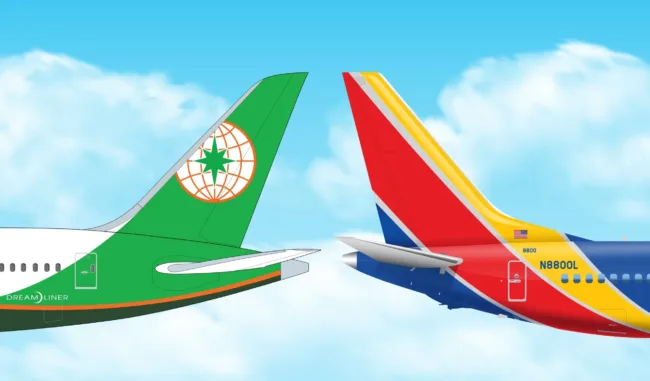
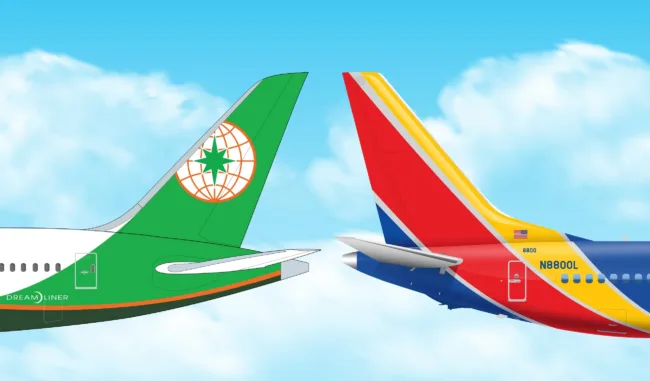
In a move that broadens transpacific connectivity for travelers, Taiwanese airline EVA Airways Corporation (EVA Air) and U.S.-based Southwest Airlines Co. (NYSE: LUV) have officially launched an interline agreement effective immediately. The collaboration enables seamless travel for passengers flying between Asia and North America, integrating EVA Air’s long-haul routes from Asia with Southwest Airlines’ extensive domestic network across the United States.
The agreement covers four major U.S. gateway airports—Los Angeles (LAX), San Francisco (SFO), Seattle (SEA), and Chicago (ORD)—which serve as transfer points between the two carriers. EVA Air passengers arriving at these hubs can now connect to over 100 cities within the U.S. through Southwest-operated flights, streamlining itineraries that previously required separate bookings or multi-step recheck-ins.
According to EVA Air’s North America executive Andrew Su, the move is part of a broader strategy to address the evolving expectations of global travelers. He noted that this is “not just about more flights, but about designing travel that responds quickly to changing market needs.”
How does this interline agreement enhance booking and baggage coordination for passengers?
Under the new agreement, travelers can book itineraries that include flights from both carriers under a single ticket. The partnership includes through-checked baggage services and boarding pass issuance for all legs of the journey at the initial check-in point. This simplifies connections and significantly reduces passenger friction at transfer hubs—an operational efficiency both airlines emphasized as central to the partnership.
Passengers flying from Asia to the U.S. via EVA Air will be able to continue their journey within the United States on Southwest Airlines without having to re-check baggage or go through additional boarding processes at intermediary airports. This integration is particularly beneficial for business travelers, families, and long-haul flyers looking for smoother transitions.
What market gap does this alliance aim to fill in transpacific and domestic U.S. travel?
For EVA Air, which currently operates 89 weekly flights to key North American destinations—more than any other Taiwanese airline—the deal enhances its value proposition by offering customers greater choice and geographic reach. This number is expected to increase to 94 weekly flights by the end of 2025, underscoring EVA’s North American growth ambitions.
Southwest Airlines, on the other hand, gains indirect access to transpacific traffic without operating its own long-haul flights. This symbiosis leverages Southwest’s unmatched footprint in the U.S. domestic market while opening new doors to international connectivity for its passengers through EVA Air.
Andrew Watterson, Chief Operating Officer at Southwest Airlines, characterized the relationship as a leap forward in providing global reach with domestic ease. He suggested that the partnership represents more than logistical coordination—it reflects a strategic alignment of customer-first philosophies between the two carriers.
Which destinations in the U.S. and Asia benefit most from the expanded flight access?
The immediate impact is most visible in the United States, where Southwest’s coverage extends to over 30 cities now reachable by EVA passengers through coordinated transfer, including Las Vegas, Denver, Tampa, Baltimore, and Nashville. For example, an EVA Air customer landing in Seattle can now directly connect to a Southwest flight bound for Salt Lake City or Austin on the same itinerary.
On the Asia side, EVA Air’s robust network includes Taipei as its hub, with nonstop services to Tokyo, Bangkok, Singapore, Manila, and multiple cities in mainland China. With the interline agreement now live, passengers originating in Asia can reach secondary or tertiary U.S. cities previously inaccessible via a single booking. Travel agents, corporate travel desks, and global distribution systems (GDS) will all benefit from the enhanced routing options.
How are analysts viewing this move in the context of post-pandemic travel normalization?
Institutional sentiment around the deal is broadly positive, with analysts pointing out that interline partnerships have become a cost-efficient way for legacy and low-cost carriers to expand footprint without fleet expansion. In a climate where demand for transpacific travel is rebounding—particularly from Southeast Asia and China—this type of interline optimization is seen as a low-risk, high-reward maneuver.
While neither airline is part of a global alliance (EVA Air is a member of Star Alliance, but Southwest is not affiliated with any), this bilateral agreement allows both carriers to sidestep the bureaucracy of alliance-level integration. In doing so, they can move faster and tailor partnerships to mutual operational strengths and route economics.
The interline strategy also follows broader market trends in aviation, where airlines are increasingly focused on passenger convenience and personalization, especially in long-haul travel planning. This is particularly relevant in 2025, as AI-led booking platforms and itinerary management tools are prioritizing frictionless intermodal options.
What implications does this partnership have for EVA Air’s North American market positioning?
With a significant footprint already in the U.S. and Canada, EVA Air is positioning itself not just as a Taipei connector, but as a full-service transpacific bridge for travelers seeking broad U.S. access. The airline’s presence in North America has grown steadily over the past decade, catering to both business and leisure travel across key West Coast and Midwest cities.
Through this tie-up with Southwest Airlines, EVA Air gains access to key Tier 2 and Tier 3 U.S. cities without having to commit aircraft or new routes. That includes cities where Taiwanese or broader Asian diaspora communities reside, such as Phoenix, Kansas City, or Raleigh—offering strategic growth without overhead.
Institutional investors tracking North American aviation may see this as EVA Air’s answer to similar expansions by competitors such as China Airlines or ANA, which have also pursued U.S. domestic integration through partnerships.
What is the outlook for additional airline partnerships of this nature in 2025 and beyond?
As geopolitical pressures, regulatory constraints, and consumer demand continue to evolve, aviation analysts expect more of these interline agreements between full-service international carriers and regional U.S. operators. The goal: fast-track access to global itineraries without costly joint ventures or alliance realignments.
From a pricing perspective, interline cooperation also allows for competitive fare packaging across long-haul and domestic legs—an attractive proposition in the current cost-conscious travel environment. With travel volumes approaching pre-2019 levels and AI-enhanced booking driving new route discovery, EVA Air’s move may catalyze similar pacts from other Asia-based carriers looking to extend their U.S. reach.
Additionally, with U.S. infrastructure bills channeling more investment into regional airports and secondary cities, the relevance of interline strategies is only expected to grow—especially for airlines focused on long-haul Asia–U.S. corridors.
Discover more from Business-News-Today.com
Subscribe to get the latest posts sent to your email.