




In a dramatic shift that could reshape the Israel–Palestine conflict, Prime Minister Benjamin Netanyahu has formally ordered a full occupation of the Gaza Strip, signaling an end to months of targeted military operations and the beginning of an expansive ground campaign into the enclave’s remaining civilian zones. The decision, widely reported across Israeli and international media—including Yedioth Ahronoth, Al Jazeera, and The Guardian—would mark the first full re-entry of Israeli forces into all parts of Gaza since the 2005 disengagement.
A senior official close to the prime minister reportedly told Yedioth Ahronoth, “The die is cast — we are going for a full occupation,” a phrase now echoing across political and military circles as the most definitive declaration of intent since the October 2023 outbreak of war.
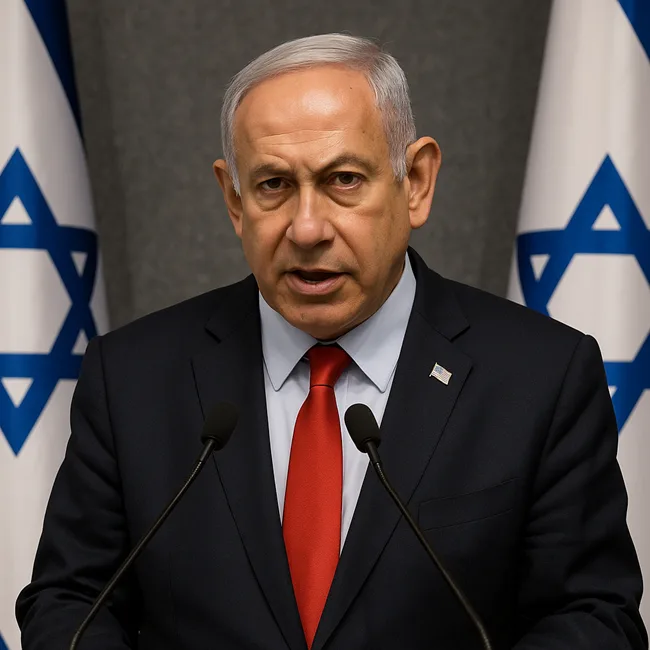
Why Netanyahu’s full occupation decision represents a turning point in Israeli war strategy
Until now, Israel’s ground campaigns had focused primarily on northern and central Gaza, with operations structured around degrading Hamas’s tunnel networks, dismantling weapons caches, and regaining control over urban choke points. But this new order signals a shift toward comprehensive territorial control—including the refugee-heavy southern zones of Khan Younis and Rafah, where significant numbers of internally displaced Palestinians have taken shelter.
Military sources confirm that Israeli forces already occupy more than 75 percent of Gaza, but expanding into remaining zones will likely involve extended troop presence, logistical support for occupation, and governance responsibilities—all of which carry deep operational and political risks.
According to Haaretz, this push is not merely tactical—it reflects Netanyahu’s political need to demonstrate military dominance to his right-wing coalition and nationalist voter base, especially as internal criticism of the war’s pace intensifies.
Israeli military leadership voices sharp resistance, delaying cabinet approval of the plan
Despite the prime minister’s firm stance, internal resistance within Israel’s defense establishment has grown more vocal. Chief of Staff Herzi Halevi reportedly canceled a scheduled visit to the United States and refused to endorse the occupation plan in its current form. He has warned that deeper operations into remaining Gaza territories—especially those thought to house Israeli hostages—could trigger unintended casualties and undermine public trust in the military.
The growing rift between military leadership and political hawks led to the postponement of a key cabinet meeting over the weekend. While Netanyahu has maintained his decision is final, senior sources say internal dissent from top generals has slowed implementation. Some far-right ministers, including Itamar Ben-Gvir and Bezalel Smotrich, have reportedly demanded Halevi’s dismissal if he continues to resist orders.
As of August 5, the occupation order has not yet been formally ratified by Israel’s full security cabinet—but operational groundwork appears to be underway.
Trump administration offers strong support as international concerns mount
In contrast to prior U.S. administrations, the Trump White House has offered unqualified backing for Israel’s new military directive. A senior administration official told Fox News that President Donald J. Trump considers the full occupation a “necessary step to eliminate terrorism and restore long-term security for the Israeli people.”
Trump’s personal relationship with Netanyahu, forged during his first term, has continued to shape U.S. policy. While the U.S. State Department has offered brief statements about the importance of protecting civilian life, no warnings or aid conditions have been issued. Defense analysts say this gives Netanyahu broader latitude to act without fear of American diplomatic consequences.
Internationally, however, criticism is escalating. Egypt, Jordan, Turkey, and Iran have all condemned the occupation order, with Iranian-linked militias in Iraq and Syria warning of possible retaliation if Israeli troops enter zones believed to hold Palestinian or dual-national hostages.
Meanwhile, United Nations officials and humanitarian agencies are warning that the humanitarian situation in Gaza—which has already been described as “beyond catastrophic”—will worsen further. The International Committee of the Red Cross, Médecins Sans Frontières, and the Norwegian Refugee Council have all raised fresh alarms, pointing to critical shortages in water, electricity, and medical supplies, especially in the southern parts of the enclave.
Could this derail ceasefire negotiations and risk regional escalation?
Efforts to mediate a ceasefire, previously spearheaded by Egypt and Qatar, have now stalled indefinitely. Multiple reports confirm that Hamas has withdrawn from indirect talks, citing Israel’s shift toward total occupation as proof that negotiations are futile. The United Nations’ special coordinator for the Middle East Peace Process has called for “urgent de-escalation,” but no new diplomatic track appears viable at this point.
The risk of a multi-front conflict is growing. Hezbollah has already intensified rocket attacks along Israel’s northern border, and U.S. intelligence suggests Iranian proxy forces are preparing contingency operations in Syria and Lebanon should the occupation proceed.
Security analysts warn that the lack of a defined post-occupation plan increases the likelihood of a prolonged and chaotic presence. “If this turns into an indefinite military entrenchment, it may not only shatter the idea of a two-state solution—it could turn Gaza into an arena of permanent instability,” said a senior fellow at the Carnegie Endowment for International Peace.
Netanyahu’s domestic calculations: war strategy or political survival?
Beyond military calculus, Netanyahu’s decision may also reflect domestic political pressures. His coalition government, propped up by far-right and religious-nationalist parties, has grown increasingly restless over what they perceive as an incomplete war effort. Recent polling shows declining public confidence in the government’s handling of the hostage crisis and humanitarian fallout.
Some observers argue that Netanyahu’s legacy, already tarnished by corruption trials and judicial reform protests, is now tied to achieving a “total” victory in Gaza—regardless of the costs.
Former Prime Minister Ehud Barak, a vocal critic, said in an interview that “Netanyahu is playing with the lives of both Palestinians and Israelis to secure his grip on power. This is no longer a security operation. It’s political survival.”
Discover more from Business-News-Today.com
Subscribe to get the latest posts sent to your email.