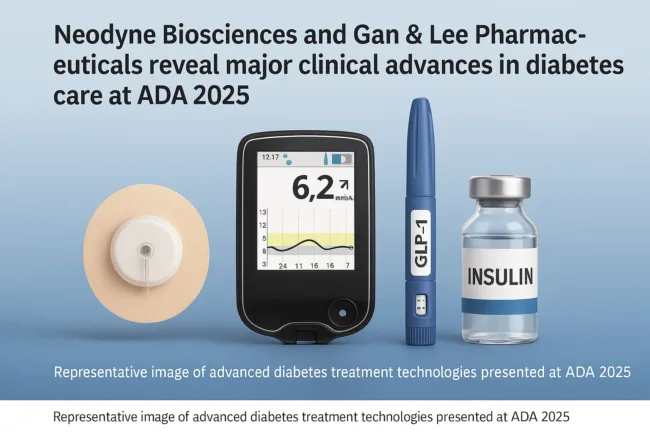
Neodyne Biosciences and Gan & Lee Pharmaceuticals released critical Phase 2 clinical results at the 85th Scientific Sessions of the American Diabetes Association (ADA), held in Chicago from June 20 to June 23, 2025. The findings represent a leap forward in therapeutic innovation for both type 1 and type 2 diabetes patients, addressing injection-site complications and advancing glycemic control through next-generation biologics.
The California-based wound care and medical device developer Neodyne Biosciences presented first-of-its-kind clinical evidence that its embrace® Active Site Care compression patch significantly improves lipohypertrophy (LH), a treatment-resistant tissue complication that impairs insulin delivery. Simultaneously, Chinese pharmaceutical innovator Gan & Lee Pharmaceuticals presented robust Phase 2 trial data for two novel agents: the GLP-1 receptor agonist bofanglutide and the once-weekly insulin analog GZR4, both of which aim to surpass current benchmarks in glycemic management and treatment adherence.
Both companies shared their data through poster and booth presentations at ADA 2025, drawing attention from institutional stakeholders seeking efficacy-driven, scalable advancements in diabetes therapy.
What is the clinical significance of Neodyne’s embrace patch in reversing lipohypertrophy for insulin-dependent patients?
Neodyne Biosciences released results from a 16-week clinical trial involving 29 participants with type 1 diabetes who presented with persistent LH lesions over five years old. The trial was the first to demonstrate statistically significant reversal of LH through a non-pharmacologic, site-targeted treatment. Patients self-applied the embrace® Active Site Care compression patch every ten days to one of their LH sites, which was later compared to an untreated lesion using ultrasound and tissue biopsy.
According to the study presented by Hans DeVries, MD of the Profil Institute for Metabolic Research, treated lesions saw a ~20% average volume reduction relative to untreated sites. Moreover, histological analysis showed a 6.97-fold decrease in lipid accumulation within adipocytes and a marked reduction in connective tissue fibrosis. Importantly, 63% of patients were able to reuse previously exhausted injection zones.
Lipohypertrophy, a buildup of fatty and fibrotic tissue at insulin injection sites, affects over 64% of insulin users globally and leads to erratic insulin absorption, unpredictable hypoglycemia, and elevated A1C values. Despite its widespread impact, no device or drug treatment has ever shown meaningful regression of LH until this study. Neodyne’s embrace patch, previously FDA-cleared for treating post-operative fibrosis and CE-marked in Europe, could now be repurposed in diabetes care with new regulatory and clinical positioning.
Experts attending ADA 2025 noted that the data positions the patch as a complementary intervention capable of improving both insulin pharmacokinetics and patient quality of life. The results may also influence future guidelines on injection-site management and long-term diabetes control.
How does Gan & Lee’s bofanglutide compare to semaglutide in controlling HbA1c and reducing body weight in type 2 diabetes?
Gan & Lee Pharmaceuticals unveiled strong results for its GLP-1 receptor agonist candidate, bofanglutide (GZR18), from two Phase 2 studies, both of which highlighted its clinical edge over semaglutide, commercially known as Ozempic®.
In a 23-week Phase 2a placebo-controlled study, Chinese patients with uncontrolled type 2 diabetes achieved a mean HbA1c reduction of 1.81% on weekly doses of bofanglutide, versus a 0.12% increase in the placebo group. Treated participants also recorded a 9.3% average reduction in body weight (6.92 kg), accompanied by better lipid, glucose, and blood pressure profiles. Safety was consistent with known GLP-1 class effects, primarily involving mild to moderate gastrointestinal symptoms during dose escalation.
A more pivotal 24-week Phase 2b study directly compared multiple bofanglutide regimens—biweekly (Q2W) and weekly (QW) dosing—to semaglutide. The QW 24 mg and Q2W 18 mg arms produced significantly greater HbA1c reductions (up to -2.32%) than semaglutide (-1.60%). Weight loss was also superior, with maximum reductions reaching 6.54 kg. Among drug-naïve patients, those on 18 mg Q2W saw HbA1c drops of nearly 3%, beating semaglutide by nearly a full percentage point.
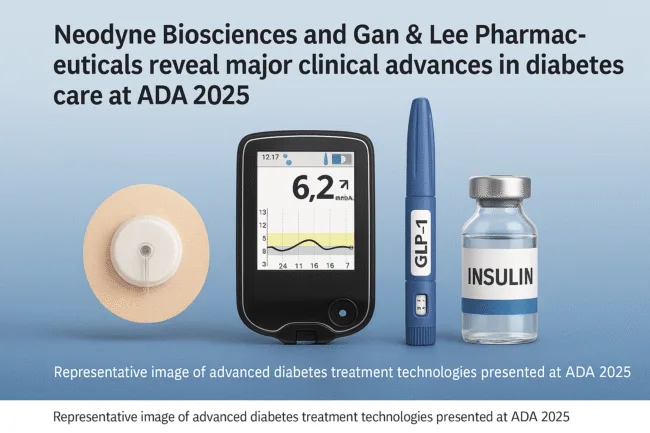
Institutional observers cited these findings as validation of bofanglutide’s competitive viability, particularly in markets seeking alternatives to current GLP-1 brands. While semaglutide remains a global leader, Gan & Lee’s data suggest that bofanglutide could claim market share in both Asia and global expansion zones—especially if confirmed by Phase 3 trials.
What do the Phase 2 results for Gan & Lee’s once-weekly GZR4 insulin analog reveal about long-term basal control?
Gan & Lee also presented data for GZR4, its investigational once-weekly basal insulin analog, comparing its efficacy to insulin degludec (Tresiba®). The Phase 2 trial enrolled Chinese patients with inadequate glycemic control despite oral antidiabetic drug (OAD) use or combined OAD and basal insulin therapy.
In Part A of the study, GZR4 matched insulin degludec in lowering HbA1c (−1.50% vs −1.48%) among OAD-only patients. In Part B, where patients had prior basal insulin exposure, GZR4 outperformed insulin degludec significantly (−1.26% vs −0.87%), with more patients achieving HbA1c thresholds below 7% and 6.5%.
The trial also highlighted pharmacoeconomic advantages: GZR4 required no loading dose and achieved similar or superior results using 40–50% less total weekly insulin compared to insulin degludec. Safety outcomes were equivalent, with no hypoglycemia or serious treatment-related adverse events.
With the global shift toward simplified, long-acting insulin regimens that improve patient adherence and reduce healthcare system burdens, GZR4 could be a timely addition. Analysts tracking biosimilar and innovative insulin market trends suggested that if these findings hold in Phase 3 data, GZR4 may carve out a significant position in both the Chinese national procurement market and export-focused reimbursement systems.
What broader impact could these ADA 2025 presentations have on institutional diabetes care strategies?
From an institutional perspective, the Neodyne and Gan & Lee announcements at ADA 2025 illustrate how device- and molecule-based innovations can coalesce to improve long-term diabetes outcomes. While Neodyne is addressing a quality-of-life and bioavailability bottleneck with the embrace® patch, Gan & Lee is advancing systemic treatment with both injectable biologics and insulin analogs designed for real-world use.
Analysts noted that payers and providers are increasingly incentivizing therapies that show not only metabolic benefits but also reduce treatment burden, improve injection comfort, and lower site complication rates. This aligns directly with Neodyne’s patch, which may soon be incorporated into site care protocols for insulin users.
In parallel, Gan & Lee’s dual-pronged strategy—offering a GLP-1 agent with superior efficacy and a basal insulin with reduced dosing frequency—aligns with shifting treatment algorithms in type 2 diabetes, especially for patients requiring both weight and glucose management.
These data presentations also reflect broader trends: patient-centric device design, data-supported superiority over legacy standards, and geographic diversification of pharmaceutical innovation beyond the U.S. and EU.
What is the expected regulatory and development trajectory for embrace, bofanglutide, and GZR4 over the next 12–18 months?
Neodyne Biosciences, which already holds FDA 510(k) clearance for its embrace® patch for general fibrosis, may seek label expansion or new device indication for LH treatment in insulin users. Given the safety profile and clinical efficacy presented at ADA 2025, the company is positioned to fast-track regulatory discussions and pursue coverage partnerships within diabetes care networks.
Gan & Lee has confirmed it is accelerating large-scale Phase 3 trials in China for both bofanglutide and GZR4, with additional global trial sites under evaluation. Institutional investors expect a 2026–2027 timeframe for possible Chinese National Medical Products Administration (NMPA) approval, followed by broader regulatory submissions in Europe and emerging markets.
The pharmaceutical developer’s growing international footprint—supported by previous FDA and EMA milestones for its delivery devices—also suggests future plans to position bofanglutide and GZR4 in competitive Western markets as biosimilar cost pressures increase.
Both Neodyne and Gan & Lee’s ADA 2025 announcements serve as examples of innovation rooted in patient outcomes, practical use-case improvements, and regulatory foresight. As data from these clinical trials continues to mature, analysts anticipate that real-world adoption could shift longstanding treatment paradigms for over 500 million people globally living with diabetes.
Discover more from Business-News-Today.com
Subscribe to get the latest posts sent to your email.