




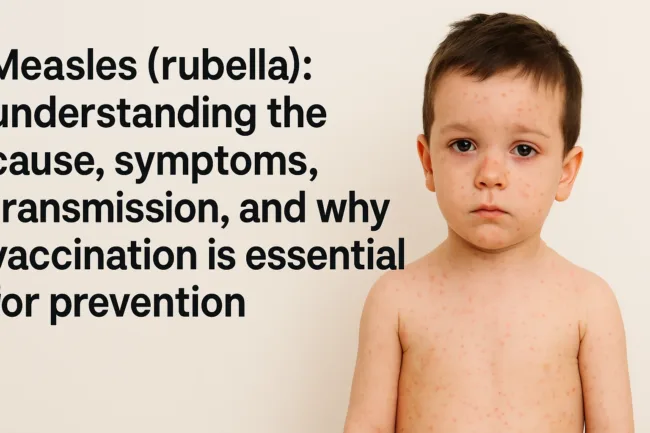
What causes measles and why is the rubella virus considered highly contagious among children and adults?
Measles, also known by its alternate name rubella due to the red rash it causes, is an acute viral disease caused by the paramyxovirus, a member of the Paramyxoviridae family. The term “rubella” comes from the Latin word for red, describing the characteristic spots that appear during infection. Historically, the first detailed clinical description of measles was documented by the Arab physician Abu Baqr, making it one of the earliest recorded infectious diseases in medical history. The virus primarily enters the body through the respiratory system, multiplying in the lining of the throat and lungs before spreading to the bloodstream. Because of its high transmission rate, measles is considered one of the most contagious viral illnesses, posing a significant public health challenge wherever vaccination coverage is low.
The paramyxovirus spreads quickly in populations with no immunity. Unlike bacteria or some other viruses that can remain dormant or carried by asymptomatic hosts, measles has no carrier state. This means every person infected is actively contagious, which explains why outbreaks occur rapidly once the virus enters a community. Young children are especially vulnerable due to their immature immune systems, but adolescents and unvaccinated adults can also contract the disease, making universal vaccination an essential preventive strategy.
How does the measles virus spread through droplet infection and why does isolation matter during outbreaks?
The measles virus spreads primarily through droplet infection, which happens when an infected person coughs, sneezes, or even talks, releasing microscopic droplets containing the virus into the air. These droplets can linger for several hours in closed spaces, allowing transmission even without direct contact. People can also become infected by touching surfaces contaminated with these droplets and then touching their mouth, nose, or eyes. Because the virus multiplies rapidly in the respiratory tract before entering the bloodstream, an infected person becomes contagious several days before visible symptoms, such as rashes, appear.
Isolation is crucial in controlling outbreaks due to the high infectivity of the measles virus. Public health guidelines recommend isolating infected individuals for at least a week after the rash appears. This significantly reduces the chance of spreading the virus to susceptible populations, particularly infants and immunocompromised individuals. During major outbreaks, public health authorities often implement contact tracing and mass immunization campaigns to break chains of transmission.
What are the early symptoms of measles before the rash appears and why is early detection challenging?
The early symptoms of measles usually appear 7 to 14 days after exposure and can be easily mistaken for other respiratory infections. The first signs include fever, sneezing, nasal discharge, persistent coughing, and conjunctivitis, which makes the eyes red, watery, and sensitive to light. These symptoms are often accompanied by a general feeling of malaise, irritability, and loss of appetite, making it difficult to identify measles at this stage.
Because these symptoms are nonspecific, early detection can be challenging, particularly in areas where other respiratory viruses are common. However, a trained clinician may sometimes identify small white spots inside the mouth, known as Koplik’s spots, which are considered an early diagnostic indicator of measles, though they are not always visible in every patient.
What does the measles rash look like, how does it spread across the body, and what does its disappearance indicate?
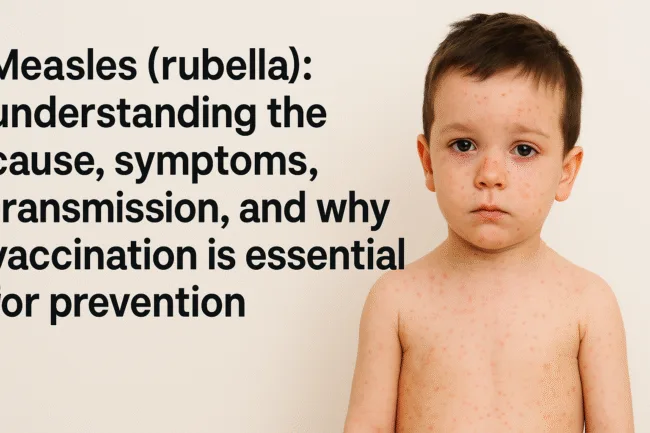
The rash in measles follows a characteristic pattern, beginning behind the ears and gradually spreading to the face, neck, trunk, and limbs over several days. It typically consists of flat or slightly raised red spots, which may merge into larger patches as the infection progresses. By the fourth day, most patients exhibit a classic “measles rash” covering much of the body, accompanied by a high fever.
The disappearance of the rash, along with the reduction in fever, is usually a sign of recovery and the end of the contagious phase. However, in some cases, the rash and fever may persist for longer than expected, which can be a sign of complications or weakened immune response. Persistent fever or rash after the usual recovery period should prompt medical evaluation to rule out secondary infections or other complications.
What complications can occur from measles and why is it dangerous for children with poor nutrition or weak immunity?
While many patients recover fully, measles can lead to severe and sometimes life-threatening complications, particularly in malnourished children or those with weakened immune systems. Prolonged illness can cause weight loss, stunted growth, and reduced immunity to other infections. In some cases, measles can cause brain inflammation, known as post-measles encephalitis, which leads to mental deterioration, neurological damage, or even paralysis. Secondary bacterial infections, such as pneumonia or ear infections, are also common and can be fatal in vulnerable populations.
In regions with poor access to healthcare, measles-related deaths often result from dehydration due to diarrhea or respiratory failure from pneumonia. These risks highlight why vaccination and supportive care are critical, especially in developing countries.
How is measles treated, and why is supportive care and vitamin A supplementation recommended for children?
There is no specific antiviral medication to cure measles, so treatment focuses on relieving symptoms and preventing complications. Supportive care includes adequate rest, hydration, fever management with antipyretic medications like paracetamol or ibuprofen, and maintaining proper nutrition. Vitamin A supplementation is strongly recommended for children with measles, as studies show it helps reduce the severity of the disease and lowers the risk of complications, particularly in malnourished populations.
In severe cases, hospitalization may be necessary, especially for patients with respiratory distress, encephalitis, or significant dehydration. Isolating the patient remains essential throughout the active infection phase to prevent spreading the virus to others.
How effective is the measles vaccine, and why is mass immunization critical for global disease eradication?
The measles vaccine, usually given as part of the combined MMR (measles, mumps, rubella) vaccine, is over 95 percent effective in preventing the disease after two doses. Vaccination not only protects individuals but also contributes to herd immunity, significantly reducing the chance of outbreaks.
Global vaccination programs have led to a dramatic decline in measles-related deaths, with some regions achieving near elimination of the virus. However, sporadic outbreaks continue to occur in communities with low vaccination coverage, highlighting the importance of maintaining high immunization rates. Public health experts emphasize that consistent vaccination campaigns are the most powerful tool for achieving global eradication of measles.
Why is it important to maintain measles awareness in modern medicine despite the availability of vaccines?
Even though measles is preventable, it remains a serious public health concern in areas with low vaccination rates. The virus not only causes acute illness but also temporarily suppresses the immune system, making individuals more vulnerable to other infections for weeks after recovery. For medical students and healthcare professionals, measles serves as an important example of viral pathogenesis, immune system interactions, and the success of vaccination programs in controlling infectious diseases.
Raising awareness about measles and reinforcing vaccination campaigns are crucial steps toward preventing new outbreaks and protecting future generations from its potentially severe complications.
Why measles prevention remains a priority in global health and modern medical practice
Measles, caused by the paramyxovirus, spreads rapidly through respiratory droplets and remains a major public health issue where vaccination rates are low. Early symptoms often mimic other respiratory infections, making early detection challenging until the characteristic rash appears. While most patients recover, complications such as encephalitis, pneumonia, and growth retardation can occur, especially in malnourished children.
Because there is no specific antiviral treatment, supportive care and preventive vaccination remain the best defense. The widespread use of the MMR vaccine has dramatically reduced measles-related deaths, but global eradication requires continued public health efforts, awareness campaigns, and strong immunization coverage. Understanding measles is not only critical for individual health but also essential for broader medical knowledge on infectious disease prevention.
Discover more from Business-News-Today.com
Subscribe to get the latest posts sent to your email.


