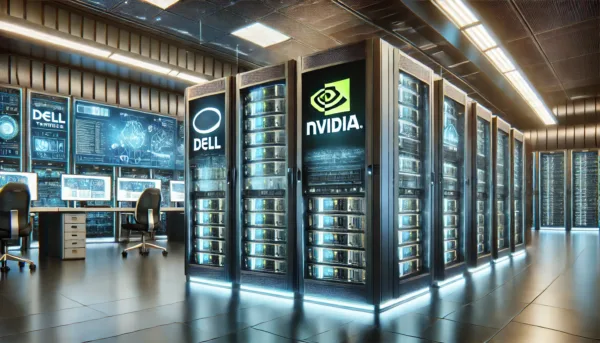
New Era Energy & Digital, Inc. and its joint venture Texas Critical Data Centers LLC moved deeper into the race to build large-format artificial intelligence infrastructure by entering a definitive purchase and sale agreement for an additional 203 contiguous acres in West Texas, expanding the total campus footprint to 438 acres. The transaction signals an assertive push to capture demand for multi-gigawatt AI and high-performance computing development, with the joint venture positioning the expanded site as a future hub for hyperscale operators seeking powered land, energy-integrated buildings, and accelerated time-to-compute deployment. The campus, located strategically near Odessa in Ector County, was described by the companies as a unique aggregation of fiber, natural gas transmission, and CO₂-pipeline corridors that can compress development timelines while enabling more efficient power planning and scalable cooling pathways.
The additional 203 acres give the venture the capacity to host multiple parallel buildouts rather than a single linear development path, a structural advantage as hyperscale clients increasingly look for modular, expandable multi-gigawatt campuses capable of supporting advanced model training and inference. People familiar with the project’s outline noted that this expansion is considered a foundational component of the JV’s long-term vision: a site that blends land, energy, and digital infrastructure into a vertically integrated AI factory. The companies indicated through their announcement that engineering, civil development, and grid-interconnection studies are already underway, and Phase 1 construction is slated for 2026. The rapid sequencing suggests a push to secure early mover advantages in an environment where demand for compute outpaces traditional data center construction cycles.
Why expanding the TCDC site to 438 acres changes the development trajectory for AI infrastructure in Texas’ energy corridor
The acquisition materially alters the scale, design flexibility, and economic potential of the Texas Critical Data Centers project. By adding 203 acres, the joint venture can accommodate denser power distribution loops, phased substation development, and load-balancing strategies designed specifically for GPU-centric workloads. Stakeholders observing the deal suggested that the ability to host multi-gigawatt loads on a single, contiguous footprint aligns with the evolution of AI campus design, where compute clusters, on-site energy generation, battery storage fields, and liquid cooling systems often require larger physical buffers than traditional data center environments.
The campus location further strengthens its value proposition because Ector County sits near a high-capacity intrastate natural gas network, a critical factor for operators weighing long-term cost predictability for power. Developers close to the project described the site as one that can support both conventional power-delivery structures and future hybrid systems, including hydrogen-ready turbines or carbon-optimized gas generation, depending on policy evolution. The combination of fiber accessibility, wide-open land suitable for transmission expansions, and modular road access shapes the campus into a prospective long-horizon AI ecosystem rather than a single-facility asset. This multi-vector energy and compute configuration is particularly important for hyperscale tenants leaning toward proprietary model development, where energy stability and site control are considered strategic assets.
How the acquisition reshapes investor expectations around New Era Energy & Digital’s transition from legacy operations to AI infrastructure growth
Market observers have said that the land deal underscores the company’s pivot away from its legacy energy service footprint toward a modernized digital-infrastructure thesis. The announcement arrived shortly after the company disclosed quarterly results illustrating a business still in the development stage, which heightens attention around capital discipline, project sequencing, and commercial milestones. Analysts tracking the stock noted that New Era Energy & Digital’s shares experienced a noticeable lift after the announcement, reflecting investor enthusiasm for exposure to AI-linked infrastructure and the broader West Texas energy-compute convergence narrative.
Sentiment around the stock shows an early-stage, high-conviction, high-risk profile. Equity holders appear encouraged by the company’s positioning in one of the country’s most energy-advantaged regions, but investor discussions also highlight the execution risks inherent in scaling multi-gigawatt campuses. These include interconnection approvals, construction readiness, anchor-tenant signings, and the broader macro environment for data center capital expenditures. The expansion addresses concerns around long-term land constraints and gives institutional investors a clearer blueprint for phased growth, which can help sustain interest as the company moves through pre-revenue development years. The shift toward a land-and-power platform also aligns with broader sector trends in which energy-proximity sites are increasingly viewed as long-term strategic assets.
What the expanded 438-acre TCDC campus means for future AI, energy, and grid-integration planning across the region
Regional planners and energy-market participants have described the TCDC expansion as part of a broader reshaping of West Texas into a high-density compute corridor where power, land, and long-haul fiber intersect. The larger campus footprint allows for parallel planning across substations, cooling zones, training clusters, and support infrastructure, reducing construction bottlenecks that often delay AI-campus milestones. The companies indicated that the expanded site is expected to support a broad universe of potential tenants, ranging from hyperscale cloud companies to private AI labs and energy-intensive simulation platforms. The project’s timing aligns with a national trend in which demand for AI compute continues to scale faster than traditional data center supply, creating openings for vertically integrated developers that can secure strategic land early in the cycle.
People familiar with regional infrastructure planning say the campus’s proximity to natural gas routes could enable creative approaches to long-duration energy reliability, such as on-site microgrids or integrated gas-to-power systems that serve compute loads directly. This model is increasingly discussed in investor circles, given AI operators’ rising emphasis on predictable and cost-contained power rather than market-priced volatility. The expansion also gives TCDC additional room to prepare for emerging cooling strategies, including immersion systems and high-density cold-plate clusters that require wider mechanical corridors and more water-neutral or hybrid cooling options. The broader implication is clear: the 438-acre site is now configured to be a long-life strategic asset able to adopt new technologies without space-related limitations.
How this transaction positions TCDC among next-generation AI campuses competing for hyperscale tenancy and long-term energy integration
Industry watchers have begun drawing comparisons between the TCDC campus and other mega-campus initiatives in Texas, Oklahoma, and the Southeast that are racing to secure grid capacity, large land banks, and long-term development rights. The expanded site allows the joint venture to pursue more flexible tenant negotiations because it can deliver both powered land and pre-configured shells, a dual strategy that offers hyperscalers shorter deployment timelines. Individuals with insight into the project indicated that the JV is prioritizing a model where compute clusters can be delivered in modular increments, allowing AI customers to scale training capacity as their roadmap evolves. This mix of phased readiness, regional energy advantages, and acreage scale positions the project as a competitive contender in an increasingly crowded landscape of AI-infrastructure developers.
The deal also signals to the market that New Era Energy & Digital and SHARON AI are committed to building a long-term anchor in the Texas AI ecosystem rather than pursuing short-cycle development gains. Companies in similar buildouts often leverage large-scale acquisitions to negotiate priority grid interconnection queues, and the 438-acre size gives the JV sufficient justification for long-term interconnection planning. Observers familiar with the Texas energy market noted that projects of this scale could influence local economic development patterns by attracting suppliers, HVAC specialists, modular-construction teams, and energy-equipment manufacturers to the region. The ability to catalyze local industrial activity is a factor increasingly weighed by public-sector stakeholders evaluating permitting and support programs.
How investor sentiment is shifting as New Era Energy & Digital expands its 438-acre TCDC campus and reshapes expectations for long-term AI infrastructure value
Investor reactions to the transaction reflect a mixture of enthusiasm and cautious evaluation. The stock’s recent upward movement suggests that the market views the 438-acre footprint as a material strengthening of the company’s long-term asset base. Some institutional analysts have mentioned that the company’s pivot toward AI-centric energy infrastructure aligns with the fastest-growing capital-spending category in global technology. However, others underline that until the project secures anchor tenants and power-allocation commitments, revenue visibility remains limited.
The current market environment rewards companies that can demonstrate credible pathways to AI-linked cash flows, and while New Era Energy & Digital is early in its development stage, the expansion supports a scalable foundation. People involved in sector-wide capital flows note that major funds are increasingly prioritizing land-and-grid-controlled projects over traditional speculative data center builds. By strengthening its land position, the JV reinforces its credibility in the eyes of lenders and project-finance partners evaluating multiyear construction cycles.
Discover more from Business-News-Today.com
Subscribe to get the latest posts sent to your email.