



Why is Lyten acquiring Northvolt’s Sweden and Germany battery assets and intellectual property?
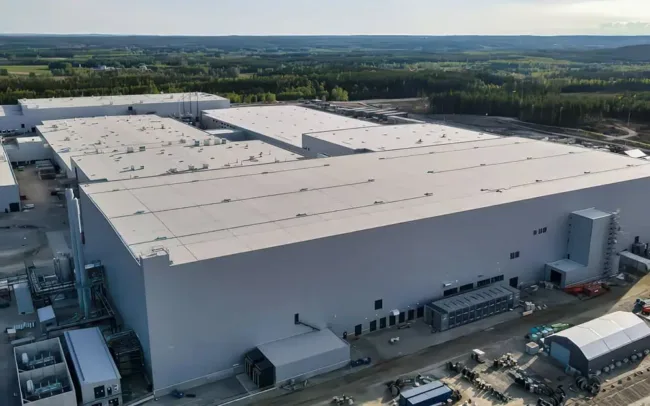
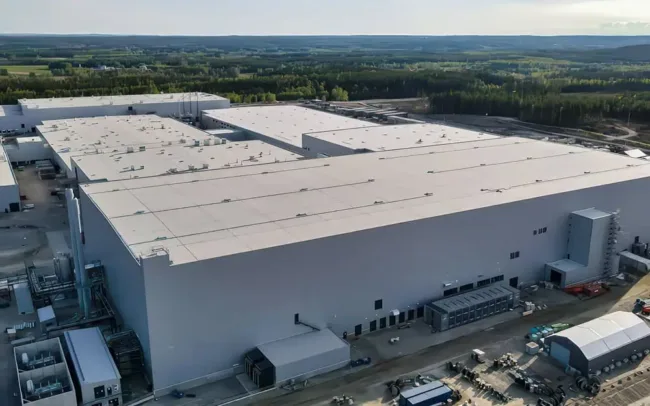
Lyten, the California-based lithium–sulfur battery innovator, has signed binding agreements to acquire the remaining operational and planned European assets of bankrupt Northvolt AB in a deal valued at approximately USD 5 billion. The transaction, announced on August 7, 2025, covers Northvolt Ett and Ett Expansion in Skellefteå, Sweden, the Northvolt Labs R&D center in Västerås, Sweden, and Northvolt Drei in Heide, Germany, along with the entirety of Northvolt’s intellectual property portfolio.
These sites collectively hold 16 GWh of operational battery manufacturing capacity and a further 15 GWh under construction, with the physical footprint and infrastructure to expand beyond 100 GWh. The acquisition positions Lyten as one of the largest foreign operators of European gigafactory assets, a notable shift for a company that was only founded in 2015.
The deal also grants Lyten direct access to the Swedish and German markets, reinforcing its stated ambition to build a trans-Atlantic manufacturing network that can supply next-generation batteries to electric vehicle (EV) makers, grid storage developers, and emerging sectors such as AI-driven data centers and defense-grade energy systems.
What strategic advantages does this acquisition give Lyten in Europe’s competitive battery market?
From a production standpoint, the deal secures Lyten’s entry into large-scale European manufacturing without the time and capital expenditure typically associated with greenfield gigafactory construction. The Skellefteå facility in particular offers established logistics channels, grid connections, and a skilled local workforce, while the Heide project near Hamburg is strategically located to serve both automotive and industrial customers in Germany and Western Europe.
The acquisition of Northvolt Labs in Västerås adds a critical research and development layer to Lyten’s strategy. The facility has historically been used for prototyping, testing, and scaling cell chemistry innovations—capabilities that could accelerate Lyten’s plan to adapt lithium–sulfur chemistry for compatibility with existing lithium-ion production lines. This compatibility could allow a faster, lower-cost transition to more sustainable chemistries that avoid high-cost, supply-constrained metals like nickel and cobalt.
Equally significant is the rehiring of former Northvolt employees, many of whom possess specialized expertise in gigafactory operations, process engineering, and quality control. Retaining this talent pool mitigates operational risk and enables a faster production restart.
How did Northvolt’s financial collapse create this opportunity for Lyten?
Northvolt, once touted as Europe’s flagship homegrown battery champion, struggled for years to meet ambitious production targets despite securing billions in backing from investors and government programs. Its customer roster included global automotive brands and energy storage developers, yet chronic delays, cost overruns, and quality control challenges eroded both investor confidence and working capital.
The company filed for bankruptcy in March 2025, leaving major creditors—including Volkswagen AG and Goldman Sachs—facing substantial write-downs. According to bankruptcy trustee Mikael Kubu, the absence of a viable rescue plan meant that creditors were preparing for “substantial financial losses” before Lyten’s offer emerged.
For Lyten, the distressed-asset sale provided an opportunity to acquire state-of-the-art facilities, equipment, and IP at a fraction of their replacement cost, effectively compressing a decade of potential infrastructure build-out into a single transaction.
How is Lyten funding the deal and what are the next regulatory steps?
Lyten expects to close the acquisition in the fourth quarter of 2025, subject to approvals from Swedish, German, and European Union regulators. The transaction will be financed entirely through equity, with participation from existing strategic investors including Stellantis and FedEx.
The American battery company has already raised more than USD 625 million in equity funding since its inception and secured an additional USD 200 million earlier this year to pursue what it describes as an “aggressive but targeted M&A strategy” in global battery manufacturing. Executives have indicated that no debt financing will be used for this acquisition, a decision aimed at preserving operational flexibility during the integration phase.
What is Lyten’s roadmap for restarting and expanding operations at these sites?
Lyten plans to restart operations at Skellefteå and Västerås immediately after closing, leveraging existing customer commitments and anchor-buyer agreements to secure initial revenue streams. The Skellefteå plant will serve as the company’s primary European manufacturing base, while Västerås will focus on adapting lithium–sulfur cell chemistry to the acquired production lines.
In Germany, Lyten will work with federal and state authorities to continue the development of the Northvolt Drei gigafactory near Heide, which was originally designed for 15 GWh of annual capacity. The facility’s coastal location offers proximity to shipping routes and renewable energy infrastructure, aligning with Lyten’s low-carbon manufacturing goals.
The company will also resume production at Northvolt Dwa in Poland, which it acquired earlier in 2025, creating an integrated European manufacturing corridor. Lyten has additionally expressed interest in acquiring Northvolt Six, a 15 GWh project in Quebec, Canada, currently under construction, further signaling its intent to operate across both sides of the Atlantic.
How have investors and industry observers reacted to the acquisition?
The announcement has been broadly welcomed as a rare instance of value preservation in Europe’s struggling battery sector. Analysts have described the deal as both a strategic coup for Lyten and a lifeline for Europe’s battery manufacturing ambitions. The fact that the assets will remain operational rather than being dismantled or sold piecemeal is seen as a positive outcome for regional employment, supply chain stability, and energy transition goals.
Institutional investors note that Lyten’s lithium–sulfur platform offers a cost and sustainability advantage over conventional lithium-ion chemistries, particularly in a regulatory environment that is increasingly penalizing the use of scarce, environmentally intensive metals. The company’s ability to produce cells without nickel and cobalt aligns with European Union supply chain sovereignty objectives, potentially easing regulatory clearance for the acquisition.
What could this mean for Europe’s clean energy, EV, and technology resilience?
The acquisition directly addresses one of Europe’s most pressing industrial challenges: the loss of domestic manufacturing capacity to overseas competitors, particularly in China and South Korea. By reactivating over 31 GWh of capacity and preserving the option to scale beyond 100 GWh, Lyten is giving Europe a pathway to reduce dependency on imported cells during a period of surging EV adoption and grid-scale storage deployment.
From a geopolitical standpoint, the deal signals deeper trans-Atlantic integration in clean energy supply chains. U.S. capital and technology are being embedded into European manufacturing at a time when both regions are seeking to counterbalance Asian dominance in battery production.
Technologically, integrating lithium–sulfur chemistry into Northvolt’s infrastructure could set a precedent for other manufacturers to retrofit existing lithium-ion facilities, potentially lowering the barriers to commercializing advanced chemistries that promise higher energy density, lower costs, and reduced environmental impact.
Discover more from Business-News-Today.com
Subscribe to get the latest posts sent to your email.