Lundin Mining Corporation (TSX: LUN; Nasdaq Stockholm: LUMI) saw its shares climb to CAD 26.11 at the close of trading on November 28, 2025, marking a 1.71 percent gain for the day and a 5.07 percent rally over the past five trading sessions. The upward movement in the stock came in the wake of a pivotal ruling by the Supreme Court of Canada, which rejected Lundin Mining Corporation’s appeal and cleared the path for a proposed securities class action related to a 2017 incident at the company’s Candelaria Mine in Chile.
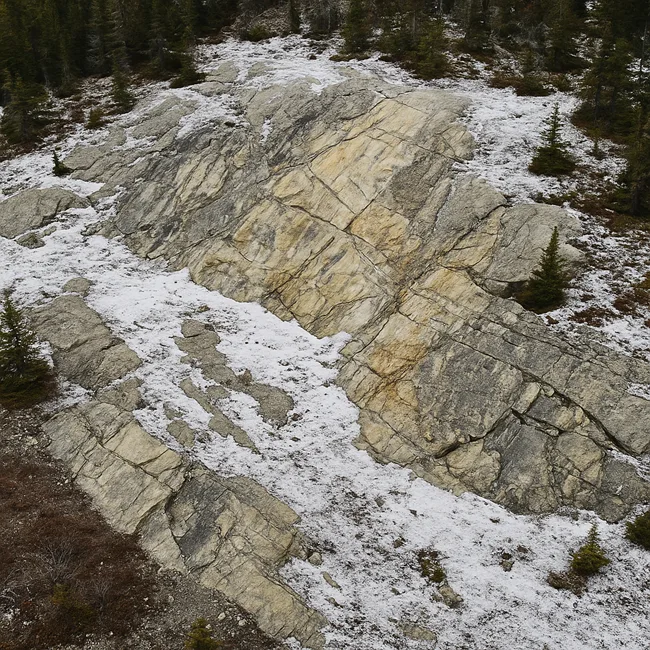
The ruling affirms a 2023 decision by the Ontario Court of Appeal, which found that there was sufficient legal basis for investors to proceed with a class action lawsuit regarding the company’s alleged failure to disclose material operational changes in a timely manner. The case centers around Lundin Mining Corporation’s delayed public disclosure of pit wall instability and a subsequent rockslide at Candelaria, which occurred weeks before the information was eventually included in a scheduled operational update released on November 29, 2017. The day after the disclosure, the company’s share price fell by 16 percent.
The Supreme Court ruling, issued under citation 2025 SCC 39, is seen as a landmark clarification of Canadian securities law, specifically how public companies should interpret and respond to material operational developments that may impact business performance or investor decision-making.
What did the Supreme Court say about disclosure obligations for public companies in Canada?
The majority opinion, authored by Justice Mahmud Jamal and supported by Chief Justice Richard Wagner and Justices Karakatsanis, Rowe, Martin, Kasirer, O’Bonsawin, and Moreau, dismissed Lundin Mining Corporation’s appeal. Justice Jamal stated that the motion judge who originally dismissed the lawsuit had taken an overly restrictive interpretation of the Ontario Securities Act. The Act requires companies to disclose “material changes” immediately, whereas “material facts” may be included in routine updates. The distinction is central to the case, as it determines whether Lundin Mining Corporation was legally obligated to report the Candelaria pit wall instability and resulting operational impacts before its scheduled update.
The judgment emphasized that the Act deliberately leaves terms such as “change,” “business,” “operations,” and “capital” undefined to ensure its applicability across various industries. As such, the court determined that a company’s decision not to disclose information cannot be shielded from legal scrutiny simply by categorizing events as routine or operational unless they are immaterial.
In this instance, the rockslide and the subsequent impact on mine operations—along with Lundin Mining Corporation’s lowered production forecast for the following year—were sufficient grounds to consider the events material changes. This met the statutory “leave test” required to initiate a class action lawsuit under the Ontario Securities Act. According to the court, the purpose of the leave test is to screen out clearly unmeritorious claims, not to prejudge the merits of the case or determine the ultimate outcome.
Justice Suzanne Côté dissented from the majority opinion, arguing that the motion judge’s interpretation should have been upheld. However, her view did not alter the final ruling, which now sends the matter back to the Ontario Superior Court of Justice for further proceedings, including certification of the class action.
Why are investors treating the ruling as a non-disruptive event for Lundin Mining Corporation?
Despite the potential legal implications, investor sentiment around Lundin Mining Corporation remained largely positive in the wake of the court decision. On November 28, the company’s share price rose by CAD 0.44, or 1.71 percent, closing at CAD 26.11. Over a five-day window, the stock has appreciated from CAD 24.85, registering a 5.07 percent gain. This positive price action suggests that markets view the court ruling as a procedural development rather than a material threat to the company’s balance sheet or near-term operations.
The mining company’s shares have traded between a low of CAD 25.75 and a high of CAD 26.22 on the day of the ruling. Its 52-week trading range spans from CAD 8.94 to CAD 26.41, indicating that the stock is currently testing its yearly highs. The firm’s market capitalization stands at approximately CAD 2.23 trillion, while its quarterly dividend yield remains modest at 0.42 percent, with a payout of CAD 0.03 per share.
Market analysts tracking base metals and resource stocks note that Lundin Mining Corporation’s strong position in copper and nickel, which are critical inputs for energy transition technologies, continues to underpin long-term investor confidence. The company maintains operational footprints in Argentina, Brazil, Chile, and the United States, making it one of Canada’s more geographically diversified mining firms. As a result, while legal headlines may create short-term volatility, institutional investors are expected to focus on the company’s earnings outlook, capital expenditure plans, and exposure to global commodity trends.
How might the ruling reshape future securities class actions in Canada?
The Supreme Court’s decision is widely regarded as a turning point in Canadian securities litigation. By allowing the class action to proceed, the court has effectively lowered the barrier for investors to challenge a company’s disclosure decisions during the early stages of litigation. Previously, plaintiffs needed to demonstrate not only that a material change had occurred but also that there was a reasonable chance of success in proving this at trial. The ruling clarifies that the leave-to-proceed threshold is much lower and only requires the plaintiff to show a plausible violation of the Securities Act supported by some evidence.
This will likely prompt legal departments across Canada’s public companies to revisit their disclosure policies. In particular, firms in sectors prone to operational fluctuations such as mining, energy, and infrastructure may need to implement more dynamic internal review mechanisms to assess whether operational incidents constitute material changes. Corporate legal teams and compliance officers are now under greater pressure to err on the side of immediate disclosure if an event can be reasonably expected to influence business forecasts or asset valuations.
The Ontario Securities Act remains a foundational legal instrument for investor protection, and this ruling reinforces its intent by prioritizing transparency over procedural insulation. Although the Supreme Court did not rule on whether Lundin Mining Corporation’s conduct was ultimately unlawful, the decision affirms that the legal system must remain open to shareholder scrutiny when companies delay reporting material operational disruptions.
What lies ahead for Lundin Mining Corporation and the investor class action?
With the Supreme Court having dismissed the company’s appeal, the lawsuit will now return to the Ontario Superior Court of Justice. The next major procedural milestone will be the certification hearing, where the court will determine whether the case can proceed as a class action. If certified, the case could advance toward discovery, where internal documents, board minutes, and operational memos may be subpoenaed to determine whether Lundin Mining Corporation’s disclosure practices complied with securities law.
From a legal standpoint, the case will test the practical boundary between operational updates and material changes, particularly in industries where safety events and production adjustments are commonplace. For investors, the potential for a ruling on the merits could lead to financial compensation if damages from the alleged disclosure delay are quantified and proven.
For now, the stock’s performance suggests that institutional investors are taking a long-term view. Given Lundin Mining Corporation’s asset mix and global production portfolio, market participants appear to be factoring in continued growth in copper demand, especially from energy storage, electric vehicles, and industrial electrification.
What are the broader consequences of this case for Canadian corporate governance?
The outcome of Lundin Mining Corporation v. Markowich sets a new baseline for corporate disclosure expectations in Canada. While the judgment applies specifically to the mining company, its implications are already resonating across sectors. Canadian public companies must now be more vigilant in assessing whether emerging developments qualify as material changes, not just material facts. The ruling also signals to capital markets that courts will uphold the ability of shareholders to test disclosure decisions without being pre-emptively shut down at the leave stage.
The result is a more litigious but arguably more transparent landscape for corporate governance in Canada. Investors seeking accountability have a clearer pathway to initiate claims, while boards and executives face higher expectations to proactively manage and communicate operational risks. In the post-ruling environment, legal exposure from delayed or incomplete disclosures could increasingly be viewed not just as a legal risk, but as a reputational and capital markets risk.
What are the key takeaways from the Lundin Mining legal update and stock reaction?
- The Supreme Court of Canada has upheld the right of investors to sue for delayed disclosure of material operational changes.
- The decision relates to Lundin Mining’s 2017 pit wall instability and rockslide at the Candelaria Mine in Chile.
- Although a lower court initially dismissed the class action, the Court of Appeal reversed it, and the Supreme Court has now confirmed that reversal.
- Lundin Mining shares rose 1.71 percent on the day of the ruling, signaling investor confidence that the ruling poses no immediate financial threat.
- The company’s five-day stock gain stands at 5.07 percent, with the price closing at CAD 26.11.
- The lawsuit will now move forward in the Ontario Superior Court of Justice for potential certification and trial.
- The decision could set a precedent for how Canadian public companies assess and disclose operational risks.
Discover more from Business-News-Today.com
Subscribe to get the latest posts sent to your email.