

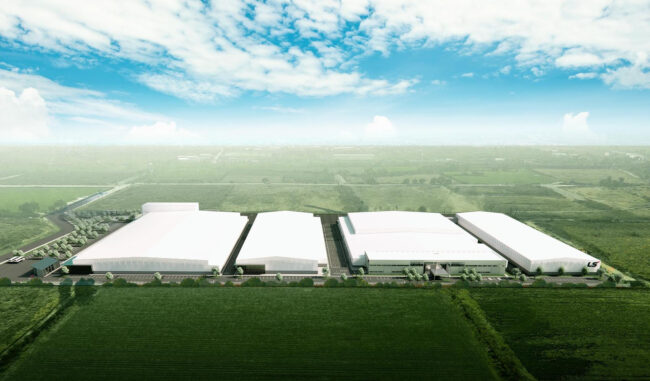
LS Cable & System Ltd. has announced a strategic $156 million investment in its Querétaro-based subsidiary LS Cable & System, S.A. de C.V., accelerating its North American manufacturing footprint. The move elevates the Mexico site from a regional factory into a continental hub for energy, automotive, and AI data center infrastructure—complementing parallel megaprojects in Virginia and Texas that together form a highly integrated production and logistics network.
With this latest move, LS Cable & System is no longer just expanding capacity—it is architecting a geographically diversified, vertically integrated cable manufacturing presence that spans from rare-earth magnets in Chesapeake to AI-ready power distribution in La Porte, Texas, and now automotive and busduct manufacturing in central Mexico. The Querétaro upgrade signals a clear intent: reduce exposure to global trade frictions and deliver locally across growing U.S. and Latin American demand centers.
Why is LS Cable & System investing $156M in Querétaro—and how does it fit into its North American strategy?
The Querétaro investment marks a structural shift in LS Cable & System’s role in the Americas. Previously focused on specific production lines like busducts, the site will now support a wider range of cabling for data centers, industrial infrastructure, and both internal combustion and EV platforms.
Two expansion elements stand out. First, the company is significantly increasing its busduct production to meet surging power distribution demand from hyperscale AI data centers. These modular systems—faster to install and more power-dense than traditional cable—have become essential infrastructure for next-generation compute campuses. Second, LS Cable & System is installing new automotive cable lines that serve legacy OEMs and EV platforms alike, a strategic hedge as North American automakers push toward mixed propulsion portfolios through the late 2020s.
This is not a standalone capacity upgrade. The Querétaro facility is being tightly integrated with the company’s Chesapeake, Virginia, and La Porte, Texas operations. In Virginia, LS Cable & System is investing over $1.3 billion across two adjacent projects: LS GreenLink Phase 1, which includes a 750,000-square-foot subsea HVDC cable facility and 660-foot VCV tower; and a separate copper rod, magnet wire, and rare-earth magnet complex slated for groundbreaking in 2026. Meanwhile, the La Porte logistics center, opened in January 2026, enhances just-in-time delivery for the company’s fast-growing U.S. busway business.
The Querétaro investment effectively completes the triangle—manufacturing in Mexico, magnetics and high-voltage systems in Virginia, and logistics optimization through Texas. This structure allows LS Cable & System to shorten lead times, optimize cross-border inventory flows, and service multiple verticals—data centers, automotive, utilities, and industrials—across two continents.
What’s driving LS Cable & System’s expansion—and how are its target markets evolving?
At the core of this strategy is an anticipated decade-long boom in electricity-intensive infrastructure. The rise of generative AI and cloud-based LLMs is forcing hyperscalers to rethink power distribution at the rack level, with many turning to busducts to handle 10–100 MW loads per facility. Busducts are increasingly seen not just as infrastructure components, but as critical enablers of uptime, safety, and energy efficiency in AI data centers.
Simultaneously, the automotive sector’s gradual shift from IC engines to electrified drivetrains is driving demand for specialized cable assemblies—especially those capable of supporting high-voltage transmission in EV architectures. LS Cable & System’s new Querétaro lines are designed to handle this versatility, appealing to OEMs pursuing dual-platform strategies in the U.S., Mexico, and beyond.
Moreover, U.S. government industrial policy is creating strong pull factors for localized manufacturing. With legislation like the Inflation Reduction Act (IRA), CHIPS Act, and Buy America mandates pushing OEMs and Tier 1 suppliers to de-risk their China exposure, companies like LS Cable & System with credible North American footprints are better positioned to win contracts across sectors. By integrating Mexican operations with Virginia and Texas, the company ensures eligibility for both U.S. infrastructure projects and competitive access to Mexican labor and logistics corridors.
How does this buildout compare with peers—and what does it signal about future investment?
LS Cable & System’s three-pronged expansion places it in an elite cohort of cable manufacturers making long-term North American bets. Powell Industries and Southwire remain significant U.S.-based competitors in the power segment, while companies like Nexans and Prysmian are expanding their HVDC and submarine offerings. But few are making as wide a geographic commitment, with investments simultaneously targeting AI data centers, automotive electrification, and rare-earth reshoring.
The scale of the Virginia investments alone—particularly the rare-earth magnet facility—is worth noting. Rare-earth processing and magnet manufacturing are sensitive sectors, often tied to national security and defense-industrial policy. By localizing magnet wire and permanent magnet production, LS Cable & System is potentially inserting itself into the supply chains of EV motor OEMs, defense contractors, and industrial automation firms seeking U.S.-sourced materials.
The company is also aligning itself with broader Korean industrial diplomacy. Ambassador Kyung-wha Kang noted in December 2025 that Korean firms now rank as the largest greenfield investors in the U.S. The Querétaro announcement deepens that narrative, reinforcing the Korea–U.S.–Mexico triangle as a viable manufacturing corridor for critical infrastructure components.
With Managing Director Patrick Y. Shim hinting at “several more additional investments in the coming months,” LS Cable & System is unlikely to pause here. The company could be preparing for further capacity additions tied to U.S. offshore wind development, EV wiring harness contracts, or modular grid component production.
What execution risks and sector tailwinds could shape LS Cable & System’s North American expansion outcomes in 2026
Execution risk remains a factor, especially in synchronizing logistics and customs flows across three jurisdictions. Workforce scaling in Querétaro may also face competition from other automotive and electronics manufacturers vying for talent in the region.
Permitting and incentive structures in Virginia will determine the pace of the 2026 manufacturing complex rollout. LS Cable & System is currently navigating both federal and state-level approvals for copper, magnet, and rare-earth operations, sectors that carry environmental and trade sensitivity.
On the demand side, hyperscaler data center buildouts are not guaranteed to proceed at 2023–2025 rates. Any slowdown in AI infrastructure spending could challenge near-term busduct order volumes. However, long-term tailwinds remain strong, and LS Cable & System’s diversified product mix and regional supply chain hedges may help insulate it from single-sector volatility.
Capital deployment discipline will also be under scrutiny. With over $1.6 billion already committed across the U.S. and Mexico, investors will be watching for margin improvement and cash flow stability across the group, especially in the face of rising interest rates and global copper price volatility.
What LS Cable & System’s Mexico investment signals for North American manufacturing competition and supply chain power
- LS Cable & System’s $156M Querétaro investment is part of a broader plan to build an integrated North American manufacturing footprint.
- The site will expand into a full-scale production hub for data center busducts and automotive cables serving both EV and IC platforms.
- This expansion complements the company’s $1.3B Virginia investments in HVDC cable, copper, magnet wire, and rare-earth magnet manufacturing.
- A new Texas logistics hub ties the system together, enabling just-in-time delivery across the U.S. and Mexico.
- LS Cable & System is positioning itself as a de-risked, multi-jurisdictional supplier for OEMs navigating post-IRA supply chain mandates.
- Competitors like Prysmian and Nexans may face greater pressure to match LS’s geographic diversification and sectoral breadth.
- The focus on rare-earth magnets and recycled copper signals an intent to capture national-security–aligned contracts and IRA incentives.
- Integration risk across three jurisdictions remains, particularly in workforce scaling, permitting timelines, and capital allocation.
- LS Cable & System may announce further expansion projects in 2026, with hints of new capacity additions across energy and mobility sectors.
- The Querétaro project confirms that AI, EV, and grid sectors are driving the next wave of infrastructure cable investment across the Americas.
Discover more from Business-News-Today.com
Subscribe to get the latest posts sent to your email.