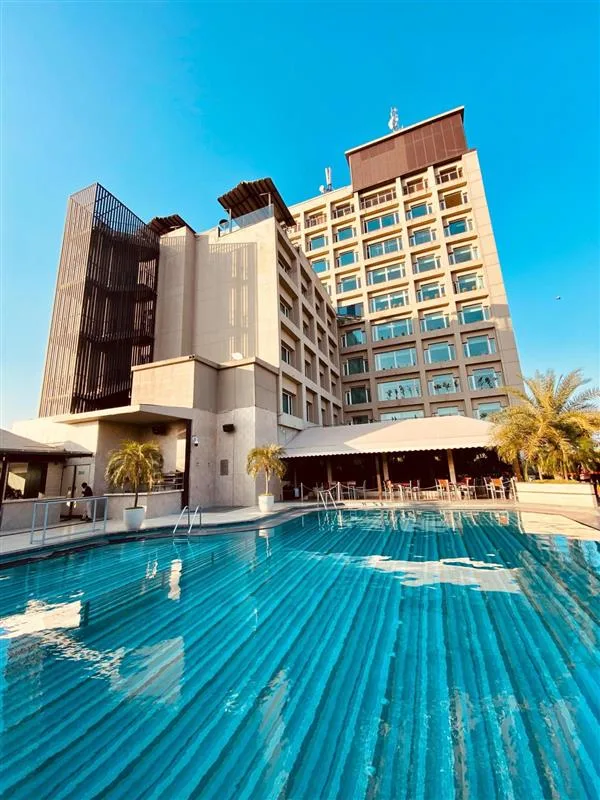
Lemon Tree Hotels Limited (NSE: LEMONTREE, BSE: 541233) has signed a new 50-room property under the Keys Select by Lemon Tree Hotels brand in Bhopal, reinforcing its mid-market expansion strategy across Tier-II cities. This hotel, to be managed by its wholly-owned subsidiary Carnation Hotels Private Limited, marks a continued push by the Indian hospitality group to strengthen its asset-light portfolio in high-growth regional markets. The property will feature 50 rooms, a restaurant, a banquet hall, and dedicated conferencing facilities.
The announcement was made on November 21, 2025, through an official stock exchange filing and came just two days after the company’s Q2 FY26 earnings call. Management used the earnings discussion to outline how elevated operating expenditure related to accelerated renovation efforts, technology transformation programs, and ex-gratia employee payments impacted quarterly margins. Despite the near-term hit, executives emphasized that the groundwork being laid through these investments will yield significant margin expansion from FY27 onward.
The group also confirmed its plan to complete the remaining 1,600-room renovation program in FY26, solidify pricing power across upgraded properties, and further scale the Aurika brand with new greenfield builds. The proposed demerger of Fleur Hotels, the group’s asset-holding subsidiary, is also progressing, with updates expected in the next few quarters.
How does the Bhopal hotel signing align with Lemon Tree’s broader regional strategy?
The newly signed Keys Select hotel in Bhopal is strategically located in the capital of Madhya Pradesh, a state where Lemon Tree Hotels already has four operational properties and nine more in the pipeline. Positioned to serve both business and leisure travelers, the hotel is designed to tap into Bhopal’s growing demand as a destination that blends cultural richness, institutional presence, and natural beauty.
With proximity to key transit hubs such as the Raja Bhoj Airport (23 km) and Rani Kamalapati Railway Station (14 km), the new hotel is expected to cater to tourists, corporate guests, and domestic travelers seeking consistent mid-scale offerings. The brand deployment, Keys Select, is in line with Lemon Tree’s flexible approach to brand strategy, wherein brand selection is driven not by hierarchy but by market fit, expected ARR, and return on investment.
Executives have reiterated that whether a new property carries the Keys Select, Lemon Tree Premier, or Aurika badge depends on local demand, competitive dynamics, and expected internal rate of return. The Bhopal property adds another data point to Lemon Tree Hotels’ ongoing regional diversification push across Tier-II and Tier-III cities in India.
What led to the sharp decline in EBITDA margins for Lemon Tree Hotels in Q2 FY26 despite higher revenue?
For the quarter ending September 30, 2025, Lemon Tree Hotels posted revenue of ₹308 crore, its highest-ever second-quarter top line, reflecting an 8 percent year-over-year increase. However, EBITDA margin narrowed by over 300 basis points to 43 percent. The company attributed this drop to three key cost centers: a one-time ₹20 crore ex-gratia payout to employees, a spike in technology-related operating expenditure, and accelerated renovations across multiple high-performing properties.
Approximately 3,000 rooms have already been renovated across the portfolio, with upgrades underway in major metros including Delhi, Hyderabad, Bengaluru, and Pune. The company has committed to completing the remaining 1,600 rooms in FY26, bringing the total renovation spend to approximately ₹450 crore over three years. The majority of this investment has been accounted for as operating expenditure, directly impacting EBITDA. These upgrades are part of a strategic repositioning effort that the company believes will significantly increase ARR across renovated properties.
The Red Fox Aerocity Hotel in Delhi, post-renovation and rebranding to Lemon Tree Hotel Aerocity, is already seeing improved rates. Likewise, the fully renovated Keys hotel in Pune reported a 47 percent year-over-year increase in RevPAR. Executives noted that while such upfront costs are temporarily depressing profitability, these investments are expected to taper off to just 1.5 percent of revenue by FY28, unlocking margin recovery and earnings growth.
What does Aurika Mumbai’s ramp-up reveal about luxury brand scaling?
Aurika Mumbai Skycity, the group’s flagship premium asset, has now stabilized at 75 percent occupancy with a gradual shift in customer mix from airline crew and negotiated accounts to high-value retail and corporate clients. Average daily rates remain diluted by the volume of crew bookings, but retail demand is scaling rapidly and now commands ARRs above ₹10,000.
Management expects blended ARR to cross ₹9,500 in Q3 and possibly exceed ₹12,000 by winter 2026. The MICE segment doubled in Q2 compared to the previous year, growing from 19 to 41 rooms per day. However, pricing in this segment remains lower, pulling down blended ARR during quarters with higher MICE activity. Still, executives stated that the hotel is now on a clear trajectory to full-rate realization across segments.
The Aurika brand has been earmarked for further greenfield developments, with a major upcoming project at Nehru Place in Delhi. The 550-room hotel, acquired via public auction, is expected to become a high-margin, high-revenue property once operational. Lemon Tree Hotels has modeled IRRs above 15 percent for this site, citing conservative ARR estimates of ₹12,500 and a favorable demand profile due to limited supply growth in the surrounding area.
What is the strategic intent behind the Fleur Hotels demerger?
The company confirmed that the board-level process to demerge Fleur Hotels is underway, with disclosures to follow in upcoming quarters. Once spun out, Fleur will serve as the capital-intensive development arm of the group, taking on large greenfield projects such as Aurika Nehru Place and Aurika Shillong. Lemon Tree Hotels Limited will then focus on brand monetization and asset-light expansion through third-party management contracts and franchise agreements.
The restructuring will allow each entity to pursue differentiated capital allocation strategies. Fleur Hotels will raise its own capital and target a narrower set of high-IRR urban opportunities. Lemon Tree Hotels will leverage its growing brand equity and new technology capabilities to scale managed and franchised properties across India’s fragmented hotel ownership market.
The company is also exploring franchise-only partnerships, particularly in Tier-III towns, where independent hotel owners seek distribution strength without relinquishing operational control. Executives signaled that franchise agreements will become a critical growth lever in the years ahead.
How is Lemon Tree building a tech-enabled operating model?
Lemon Tree has made significant strides in building a digitally enabled hotel network. Through its 100 percent subsidiary, Totally Foxed Solutions, the company is developing an AI-powered revenue management system that dynamically prices rooms every two hours based on market signals. This internal tool, now in MVP2 stage, is expected to go live across properties by the next winter season.
The group is also cleaning up its customer database of over 10 million profiles to re-launch its loyalty program and is using Salesforce with new middleware integrations to enhance B2B sales conversion and pipeline management. Other ongoing tech initiatives include integration of property management systems, personalization tools for repeat guests, and automation of housekeeping, engineering, and front desk functions.
These efforts are intended to improve scalability without a corresponding increase in staff costs, reduce attrition in operational roles, and allow for more targeted marketing and higher yield per guest. Management has earmarked 12 to 18 months as the timeline to realize tangible benefits from these digital investments.
What is the near-term and medium-term outlook for Lemon Tree Hotels?
Despite Q2 margin pressure, Lemon Tree Hotels expects EBITDA margins for FY26 to remain on par with FY25. With the renovation cycle expected to complete by FY26, capex will drop to around ₹25 crore annually by FY28, allowing the group to enter a phase of stable, margin-rich growth.
The pipeline remains robust, with the company expecting to sign 4,000 to 5,000 new rooms in FY27 and beyond. While project openings tend to lag signings due to construction timelines, Lemon Tree Hotels has doubled down on its strategy of building long-term franchise and management agreements to lock in future revenue streams.
Future expansion areas include Navi Mumbai, Jewar Airport, and other upcoming air travel hubs. The company is also exploring expansion into Dubai to tap into outbound Indian travel demand. Meanwhile, upgraded domestic assets such as Lemon Tree Premier Hyderabad, now recording ARRs above ₹12,000, provide early validation of the group’s investment strategy.
What are the key takeaways from Lemon Tree Hotels’ Q2 FY26 results and Bhopal hotel announcement?
- Lemon Tree Hotels Limited signed a new 50-room Keys Select hotel in Bhopal, expanding its footprint in Madhya Pradesh where it now has four operational and nine upcoming properties.
- The property will be managed by Carnation Hotels Private Limited and cater to both leisure and business travelers in the state capital, leveraging proximity to key transportation hubs.
- In Q2 FY26, the company reported record revenue of ₹308 crore, up 8% year-over-year, but EBITDA margin contracted to 43% due to renovation costs, technology investment, and a one-time ex-gratia payment to employees.
- Over 3,000 rooms have been renovated as part of a ₹450 crore portfolio-wide upgrade; the remaining 1,600 rooms will be completed in FY26, with pricing gains already visible in Pune, Delhi, and Hyderabad.
- Aurika Mumbai Skycity has stabilized at 75% occupancy, with retail and MICE business increasing; average ARR is expected to cross ₹12,000 by winter 2026.
- A new flagship Aurika hotel with 550 rooms is under development in Nehru Place, Delhi. It is expected to deliver over ₹150 crore in EBITDA once stabilized.
- The planned demerger of Fleur Hotels will separate asset ownership from hotel operations, allowing Lemon Tree to focus on asset-light, tech-enabled franchising and management.
- Lemon Tree has developed an in-house revenue management engine and is rolling out AI-driven sales and loyalty systems through its tech subsidiary, Totally Foxed Solutions.
- EBITDA margins are expected to remain stable for FY26 and expand significantly from FY27 as renovation expenditure tapers off and ARR improves across the upgraded portfolio.
- The company expects to add 4,000 to 5,000 rooms annually through new signings and is targeting over 40,000 rooms in its operational and pipeline inventory over the next 2.5 years.
Discover more from Business-News-Today.com
Subscribe to get the latest posts sent to your email.