




Laird Superfood, Inc. (NYSE American: LSF) has completed its $38.5 million acquisition of Navitas LLC, a premium organic superfoods brand, funded through a $50 million private placement from Nexus Capital Management LP. The transaction marks a strategic shift for the Colorado-based company as it seeks to scale beyond a niche plant-based product portfolio into a broader functional nutrition platform. The financing structure includes Series A Convertible Preferred Stock issued to Nexus Capital Management affiliates, giving the investment firm a meaningful role in supporting future expansion. For Laird Superfood, the deal reflects both a growth play and a consolidation move in the rapidly evolving health-focused food category.
The acquisition closes a transaction that had already secured shareholder approval earlier in March 2026. With the addition of Navitas, Laird Superfood now integrates two brands centered on minimally processed, nutrient-dense foods that target consumers increasingly prioritizing wellness and plant-based diets.
The strategic logic is clear. Scale remains one of the biggest barriers to profitability for emerging natural food brands. By combining supply chains, product portfolios, and distribution networks, Laird Superfood aims to accelerate market reach while improving operational efficiency.
Why does the Laird Superfood acquisition of Navitas signal consolidation in the functional nutrition market?
The global functional food sector has entered a consolidation phase as consumer demand for plant-based and health-oriented products continues to expand. Brands that once operated as small niche players are now competing for supermarket shelf space and e-commerce visibility alongside multinational food companies.
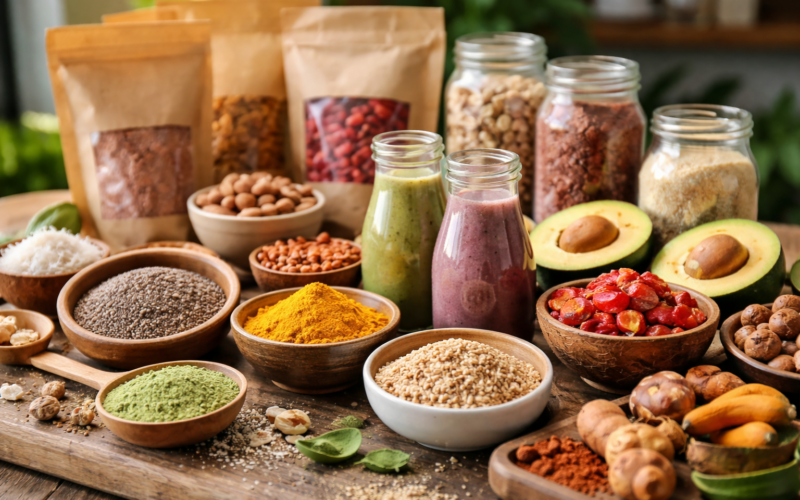
Navitas, founded in 2003, built its reputation on organic superfoods such as cacao, chia, and goji-based products that target health-conscious consumers. Laird Superfood, co-founded by professional surfer Laird Hamilton in 2015, has developed a portfolio that includes plant-based creamers, hydration products, and nutritional blends.
Bringing the two companies together creates a broader product ecosystem spanning beverages, powders, snack ingredients, and functional foods. From a strategic perspective, the merger helps Laird Superfood expand beyond its core beverage and creamer categories into a larger range of nutritional products already established in natural and organic retail channels.
This type of consolidation mirrors developments seen across the health food industry over the past decade. Larger consumer packaged goods companies have steadily acquired smaller natural brands to gain access to fast-growing wellness segments.
Laird Superfood appears to be positioning itself as a scaled independent platform before potential interest from larger strategic buyers emerges later in the industry cycle.
How does Nexus Capital Management’s $50 million investment reshape Laird Superfood’s capital structure?
The simultaneous $50 million investment from Nexus Capital Management LP provides Laird Superfood with both financial flexibility and strategic backing.
Structured as Series A Convertible Preferred Stock, the investment gives Nexus Capital Management a capital position that could eventually convert into common equity depending on performance and strategic outcomes. For Laird Superfood, the financing effectively covers the acquisition cost of Navitas while leaving additional capital available for expansion.
Private equity firms frequently use this type of structure when investing in emerging consumer brands that require both growth funding and operational support.
From a balance sheet perspective, the transaction allows Laird Superfood to avoid heavy debt financing while still completing a sizable acquisition relative to its market capitalization.
The additional capital also creates optionality. According to company leadership, the funding is expected to support future acquisitions and expansion initiatives, potentially turning the combined business into a broader platform for positive nutrition brands.
Can combining two superfood brands create a stronger platform in the premium health food category?
The combination of Laird Superfood and Navitas is fundamentally a platform strategy. Rather than competing with single product lines, the merged company intends to offer a diversified range of functional foods that can be marketed under complementary brand identities.
For consumers, the brands share overlapping values around plant-based ingredients, clean-label formulations, and sustainability. This alignment reduces the risk of brand dilution that sometimes accompanies acquisitions in the food industry.
Operationally, the companies also benefit from similar sourcing models focused on organic agricultural ingredients. Integrating procurement and supply chain operations could generate efficiencies in ingredient sourcing, manufacturing logistics, and distribution.
The consumer packaged goods sector often rewards companies that achieve sufficient scale to negotiate better shelf placement with major retailers and improve margins through higher production volumes.
If integration proceeds smoothly, the combined portfolio could give Laird Superfood stronger bargaining power in both retail and e-commerce channels.
What execution risks could challenge the integration of Laird Superfood and Navitas operations?
Despite the strategic logic behind the acquisition, integration risks remain significant. Combining two consumer brands requires careful coordination across supply chains, marketing strategies, and retail distribution agreements.
Navitas has spent more than two decades building a reputation among organic food consumers. Maintaining that brand identity while integrating it into Laird Superfood’s operations will require a delicate balance.
Supply chain complexity is another factor. Superfood ingredients often rely on global agricultural sourcing, which can expose companies to price volatility and geopolitical risks affecting crop availability.
Consumer trends also evolve quickly in the health food sector. Products that resonate strongly one year can lose momentum the next as dietary trends shift toward new ingredients or wellness frameworks.
Laird Superfood’s management team will need to ensure that product innovation keeps pace with consumer expectations while maintaining operational discipline during integration.
What does this transaction reveal about the evolving competitive landscape in functional nutrition?
The functional nutrition market has grown into a competitive ecosystem that includes startup brands, established organic companies, and multinational food manufacturers expanding into health-focused products.
Companies such as Nestlé, PepsiCo, and Danone have all invested heavily in functional food and wellness categories through acquisitions and internal product development.
Independent brands like Laird Superfood must therefore scale quickly enough to compete in distribution and marketing without losing their authenticity with consumers.
The acquisition of Navitas provides Laird Superfood with a stronger brand portfolio and broader category presence. However, the company still operates in an environment where large consumer goods companies can deploy significantly greater marketing budgets and distribution resources.
The key strategic challenge for Laird Superfood will be maintaining its identity as a mission-driven nutrition brand while achieving the operational scale required to compete with larger players.
Could Laird Superfood use the Navitas acquisition as a foundation for a broader functional food roll-up strategy?
One of the most intriguing aspects of the transaction is the potential for additional acquisitions. Nexus Capital Management’s investment explicitly positions the combined company to pursue further strategic deals.
Private equity-backed roll-up strategies are common in fragmented industries such as consumer packaged goods. By acquiring multiple complementary brands, companies can rapidly expand product portfolios and capture operational synergies.
If Laird Superfood successfully integrates Navitas, it could become a consolidator within the premium nutrition space. Smaller brands focused on specific superfoods or functional ingredients may become acquisition targets.
This strategy would allow the company to grow through both organic innovation and strategic acquisitions, creating a diversified product ecosystem capable of reaching multiple consumer segments.
However, roll-up strategies require strong integration capabilities and disciplined capital allocation to avoid overpaying for assets or diluting brand identity.
Key takeaways on what the Laird Superfood and Navitas transaction means for the functional food industry
- Laird Superfood’s $38.5 million acquisition of Navitas represents a consolidation move in the fast-growing functional nutrition sector.
- The $50 million investment from Nexus Capital Management provides growth capital while limiting reliance on debt financing.
- Combining two superfood brands expands product diversity across beverages, powders, and organic nutritional foods.
- The transaction positions Laird Superfood as a larger platform capable of competing more effectively in premium health food categories.
- Integration risks remain around brand identity preservation, supply chain coordination, and evolving consumer trends.
- The financing structure suggests potential future equity conversion by Nexus Capital Management depending on company performance.
- The deal reflects broader industry consolidation as wellness-focused consumer brands seek scale.
- Larger multinational food companies remain formidable competitors in the functional nutrition market.
- If integration succeeds, Laird Superfood could pursue additional acquisitions as part of a roll-up strategy in the superfoods sector.
- The transaction signals that scale and diversified product portfolios are becoming essential for independent brands in the global health food market.
Discover more from Business-News-Today.com
Subscribe to get the latest posts sent to your email.

