

KEFI Gold and Copper plc (AIM: KEFI) delivered a long-awaited update on September 2, confirming that the full project financing for its Tulu Kapi gold project in Ethiopia is on track to close later this month. The announcement, which outlined a $340 million capital package including a formal $240 million debt facility and assembled equity commitments, marks a critical inflection point for the long-delayed development. Yet despite the milestone, shares of KEFI closed down over 10% at GBX 0.71 on the London AIM market.
The stock is now trading near the lower end of its 52-week range, even as management prepares for full-scale development to begin in October 2025. This disconnect between operational progress and market sentiment may offer a window for forum investors tracking Africa-focused juniors and pre-production plays—especially those watching the Arabian-Nubian Shield.
Why is the $340 million project financing milestone so critical for KEFI and Tulu Kapi in 2025?
The Tulu Kapi Gold Project, long pitched as Ethiopia’s first modern industrial-scale gold mine, has now entered what KEFI called “full development preparation.” The updated $340 million capital estimate—only 6% higher than the prior 2023 forecast—includes a fully offered $240 million debt facility and approximately $100 million in equity-risk capital, which is in the final stages of being structured at the Ethiopian subsidiary level.
Two key things stand out in the announcement: (1) the co-lenders have formally offered the $240 million loan, with documentation in circulation; and (2) equity contributions of at least $40 million have already been confirmed through government, KEFI, and shareholder funding, with the remaining $60 million being finalised through innovative structures.
These include a local preference share placement (“KEFI Ethio Prefs”), a gold stream deal for 2% of reserves, and a traditional equity raise priced on TKGM’s post-financial-close valuation. Once all documents are signed this September, KEFI expects equity drawdowns and procurement activities to commence immediately, unlocking full-scale site construction.
What does the operational timeline for Tulu Kapi look like, and is production still realistic by 2027?
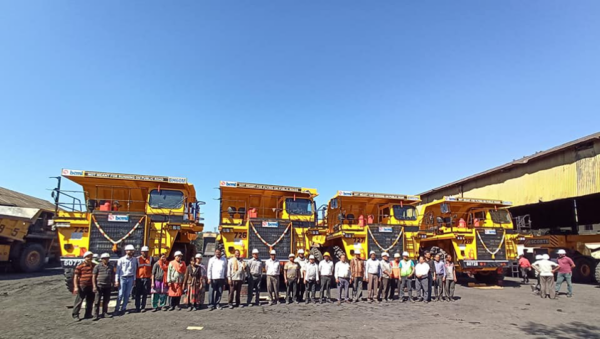
According to KEFI’s current roadmap, Tulu Kapi is pacing toward first full-year production of 160,000 ounces from open-pit operations, beginning in 2027. Mining fleet procurement is scheduled for early 2026, with pre-production mining starting mid-2027.
Notably, the project includes an eight-year open pit (at 2g/t) and is backed by a 94% recovery processing plant. KEFI expects all-in sustaining costs (AISC) to remain within US$1,000–1,100 per ounce—placing it below the marginal cost of many global gold producers.
What may excite institutional gold bulls is the upside potential: management expects production to expand beyond 200,000 oz/year with underground contributions and adjacent resource expansions. Exploration in the greater Tulu Kapi district, previously paused due to political and legal risks, is also set to resume.
How is KEFI structuring local equity participation and why does it matter for de-risking?
KEFI is not only raising project capital, but doing so in a way that satisfies ESG mandates, local stakeholder alignment, and government involvement. The Ethiopian Government, through the Ministry of Finance and two sovereign entities (federal and Oromia regional), already holds equity in TKGM valued at roughly $20 million.
On top of this, the “KEFI Ethio Prefs” and planned equity placements are structured to allow Ethiopian public and private investors—those with a track record in African mining or proximity to Oromia—to participate directly in the project. This creates an embedded risk-sharing model that the company believes will smooth both political and logistical execution.
The government has also begun implementing the Resettlement Action Plan, and the company confirmed that electricity procurement, road access construction, and civil infrastructure work are all scheduled to phase in post-documentation this October.
What’s the market reaction and investor sentiment around KEFI following the announcement?
Despite the extensive and detailed update, shares of KEFI Gold and Copper fell 10.83% on the day of the release, closing at GBX 0.71. This may reflect short-term investor fatigue or continued concern over geopolitical risk and execution delays in Ethiopia.
However, long-term institutional holders may be viewing the current trading levels as a deep value opportunity. If the project achieves its stated first-year net operating cash flows of $200–300 million at prevailing gold prices, KEFI’s valuation could look significantly mispriced against comparable juniors.
Institutional appetite for African gold projects is also rebounding, with Ethiopia reporting a tripling of gold exports this year—jumping from under 10 tonnes to over 30 tonnes. In that context, Tulu Kapi could emerge not only as a flagship mine for KEFI but also a geopolitical proving ground for international gold finance models in emerging African jurisdictions.
What did KEFI management say about the development milestone and gold market outlook?
Executive Chairman Harry Anagnostaras-Adams noted that the project represents the first international project finance closing for Ethiopia. He emphasized the collaborative efforts between private and public entities, calling it a “showcase gold project at the heart of Ethiopia’s highly prospective Nubian Shield.”
He framed the timing of Tulu Kapi’s development as aligning with a “major gold market boom,” adding that KEFI’s team had demonstrated “tireless persistence” in securing the financing needed to begin full development.
His closing sentiment highlighted the environmental and social integrity of the mine, which the company claims carries no legacy issues—a rare claim in frontier gold mining jurisdictions.
What risks could delay the Tulu Kapi gold project—and what happens if KEFI meets its September–October milestones?
With formal document signing for the $340 million project finance package expected by the end of September 2025, and full-scale development mobilisation scheduled for October, the next 30 to 60 days are shaping up to be the most decisive window in KEFI Gold and Copper’s multi-year effort to bring Tulu Kapi into production. This final sprint involves aligning multiple stakeholder groups—co-lenders, contractors, government agencies, and local communities—under strict timelines. Any holdup in legal ratification, co-lender sign-off, or disbursement of funds could trigger cascading delays across the procurement and construction schedule.
Community resettlement is also a key operational gating factor. While KEFI has worked closely with local agencies to implement the Resettlement Action Plan, including early-stage compensation payouts, unforeseen disruptions—whether social, political, or logistical—could delay site readiness. Resettlement timing is tightly linked to the sequencing of civil works, road access construction, power line installation, and ultimately, plant procurement. Investors tracking gold mining timelines in emerging markets will recognise that community engagement is often a make-or-break issue in the transition from funding approval to physical build-out.
On the legal front, KEFI also disclosed that access to certain exploration properties within the broader Tulu Kapi district remains unresolved due to third-party interference. These issues may necessitate legal proceedings, with uncertain timelines and outcomes. While these disputes don’t directly impact the flagship open-pit development, they could affect future reserve expansion and the broader regional exploration narrative that underpins KEFI’s long-term valuation thesis.
Yet if KEFI manages to execute its near-term objectives—signing definitive financial agreements, initiating full development activities in Q4 2025, and maintaining alignment with both government and local stakeholders—the project will formally graduate from a paper-stage feasibility story to a fully financed, development-stage asset. In an era where institutional investors are increasingly looking for scalable, ESG-compliant gold projects with high-grade open-pit potential, Tulu Kapi could emerge as a flagship case study for frontier gold mining done right.
Against the backdrop of rising central bank gold purchases, tight global production pipelines, and renewed investor interest in tangible assets, KEFI’s success in Ethiopia could align perfectly with what many believe is the early innings of a multi-year global gold bull cycle. Forum investors, in particular, may find that the coming weeks present a rare inflection point—where execution risk begins to transition into re-rating potential.
Discover more from Business-News-Today.com
Subscribe to get the latest posts sent to your email.