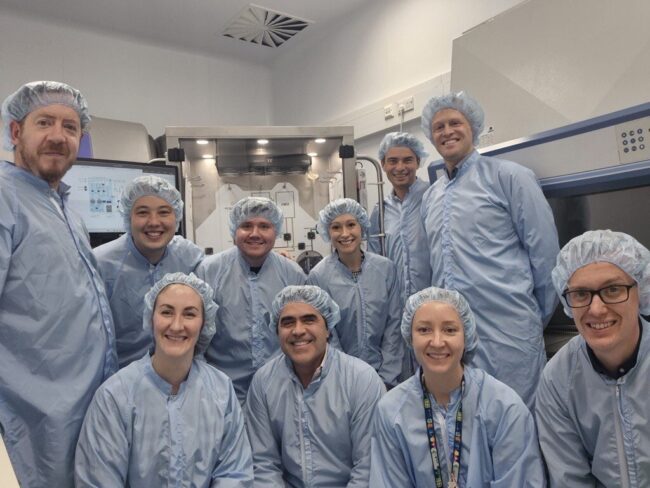
Ontario Bioscience Innovation Organization (OBIO) has backed the deployment of the Trexo Plus robotic mobility device at Hamilton Health Sciences’ McMaster Children’s Hospital, marking a new chapter in pediatric rehabilitation. The integration was funded through OBIO’s Life Sciences Critical Technologies & Commercialization (LSCTC) Centre of Excellence, alongside philanthropic support, and builds on prior validation of the device within Alberta’s Early Adopter Health Network.
The strategic move brings together public health infrastructure, provincial and federal innovation agencies, and a mission-driven startup to accelerate clinical access to robotic exoskeletons for children with mobility impairments such as cerebral palsy. While still in its early rollout phase, the program is being closely watched as a potential national case study in public-private adoption of pediatric assistive robotics.
How does OBIO’s support for Trexo Robotics at McMaster signal a shift in pediatric rehabilitation delivery?
The rollout of the Trexo Plus robotic exoskeleton at McMaster Children’s Hospital is not just an isolated clinical procurement—it signals a broader convergence between government-backed medtech adoption programs and AI-powered pediatric assistive devices. Trexo Robotics, a Mississauga-based startup, builds robotic gait trainers that help children with neurological or musculoskeletal conditions experience assisted walking. The system supports posture, stimulates neuroplasticity, and helps build muscle memory, offering both therapeutic and psychological benefits.
Hamilton Health Sciences’ decision to integrate Trexo into its Developmental Pediatrics & Rehabilitation program follows the device’s early clinical validation through OBIO’s Early Adopter Health Network, with further backing from the Government of Canada’s FedDev Ontario program. The next test, however, is less about mechanical performance and more about integrated outcomes across therapy teams, funding models, and patient-reported improvements.
This represents a shift from innovation theatre to functional deployment. Historically, pediatric robotic rehabilitation technologies have struggled to scale due to capital costs, therapist training gaps, and limited real-world validation outside research centers. OBIO’s model, which blends early funding with system-level adoption infrastructure, aims to close this translational gap.
Can this model of regionalized commercialization accelerate the adoption of pediatric robotics across Canada?
If successful, the McMaster deployment could become a repeatable model for other provincial systems looking to deploy assistive robotics for children. The device’s introduction was not merely a procurement decision—it was structured as a platform-supported adoption, underpinned by OBIO’s LSCTC Centre of Excellence, Alberta’s EAHN pilot, and aligned funding through both FedDev Ontario and Ontario’s innovation ministry.
This framework solves two recurring obstacles in the medtech adoption cycle: the lack of post-validation infrastructure and the difficulty of securing sustained operational funding for clinically effective but high-cost technologies.
Trexo’s path mirrors a new hybrid route to commercialization in Canadian health innovation: not waiting for multi-center randomized trials to drive adoption, but instead proving utility in smaller health networks where clinical champions can drive both integration and storytelling. This is especially relevant in pediatrics, where devices may never reach the scale thresholds preferred by traditional venture investors but carry outsized public health value.
What competitive pressures and sector trends does this deployment introduce for the pediatric rehab technology space?
While large multinationals dominate segments of the broader rehabilitation robotics space—companies like ReWalk Robotics, Ekso Bionics, and Bionik Labs—Trexo has carved out a differentiated niche by focusing exclusively on pediatrics. The smaller form factor, gamified features, and software-hardware integration tailored to children distinguish it from industrial-grade adult rehab devices.
The OBIO-backed deployment also adds strategic pressure on Canadian peer companies in pediatric medical devices to adopt a similar commercialization playbook. By embedding within provincial health systems early—via structured partnership programs rather than conventional sales cycles—smaller startups may find faster routes to institutional credibility.
For larger healthtech players or global robotic rehabilitation firms eyeing pediatric markets, the McMaster-Trexo-OBIO model will be watched for its cost-benefit delivery. If measurable outcomes on patient mobility, therapy hours saved, or caregiver satisfaction emerge, it could provoke platform partnerships, licensing discussions, or even acquisition interest.
What risks remain in scaling pediatric robotic therapy in clinical settings?
Despite the success of this initial deployment, execution risks are substantial. Clinical integration of robotic assistive devices in pediatric care settings must navigate staff training, workflow changes, safety protocols, and emotional expectations from families. Devices like Trexo Plus offer high emotional impact—particularly for families seeing a child walk for the first time—but also carry a responsibility for transparent communication around limitations and expected outcomes.
Another challenge is ensuring sustainability post-deployment. Pilot funding and philanthropy often fund first units, but few health systems have clear reimbursement or operating cost models for pediatric robotics. Unless OBIO and McMaster can demonstrate that the device reduces long-term care burdens, improves clinical efficiency, or delivers patient outcomes justifying recurring investment, replicating this model elsewhere could face resistance.
Additionally, device evolution, software updates, and maintenance infrastructure must keep pace with clinical needs. Pediatric patients outgrow devices quickly, and customization is critical. Trexo will need to prove that it can operate as a long-term partner, not just a single-device supplier.
What does this collaboration say about Canada’s medtech commercialization ecosystem?
Canada’s medtech landscape has long struggled with a paradox: strong innovation at the early stage, but slow, fragmented commercialization pathways. OBIO’s LSCTC and EAHN programs seek to address this by acting as translational bridges—not just validators of technology, but mobilizers of health system readiness.
The Trexo deployment illustrates what’s possible when ecosystem players align across government, nonprofit, hospital, and startup boundaries. It also reinforces the value of mission-driven entrepreneurship in medtech—a reminder that technologies solving deeply human problems often require hybrid capital, empathetic champions, and systems-level thinking.
For OBIO, the Trexo rollout is a proof point of the LSCTC Centre’s mandate to enable high-impact technologies that might otherwise stall in the adoption valley. For Trexo, it validates its patient-first vision in a real-world hospital setting. For McMaster Children’s Hospital, it marks a step forward in embedding innovation into routine care, not as a showpiece but as a standard.
Key takeaways on what this deployment means for the company, its competitors, and the pediatric robotics sector
- Trexo Robotics’ deployment at McMaster Children’s Hospital signals institutional validation of pediatric robotic gait training as a reimbursable and clinically useful therapy.
- OBIO’s LSCTC Centre of Excellence and EAHN programs serve as critical commercialization bridges, offering a new template for how Canadian health innovation can scale from lab to bedside.
- The rollout positions Trexo against global peers by establishing a clinical use case in a leading Canadian pediatric hospital, potentially setting up future scale-up or acquisition pathways.
- Health systems across Canada and similar markets may now view OBIO’s structured adoption framework as a credible pathway to bring in pediatric innovation without high procurement risk.
- The success or failure of this deployment will hinge on demonstrating real-world outcomes—improved mobility, reduced therapy burden, and scalable operating models.
- Pediatric robotic startups in Canada now face pressure to engage with health systems not just as tech vendors but as long-term partners embedded in the care ecosystem.
- Larger medtech players monitoring pediatric rehab will be watching closely for performance metrics that justify broader commercialization or partnerships.
- The collaboration underscores Canada’s shifting posture toward early commercialization, showing that public-private alignment can make high-cost healthtech more viable for systemwide adoption.
Discover more from Business-News-Today.com
Subscribe to get the latest posts sent to your email.