



The United Kingdom may be entering a structurally tougher phase of food antitrust enforcement, and the shift is happening less through headline-grabbing legislative change than through quieter regulatory behaviour. The decision by the Competition and Markets Authority to launch a full Phase 2 investigation into Associated British Foods plc’s proposed acquisition of Hovis is best understood not as an isolated merger review, but as a signal of how cost-of-living politics are increasingly shaping competition policy in essential consumer markets.
What has changed is not the legal framework of UK antitrust, but the context in which it is being applied. Food inflation, household budget pressure, and political sensitivity around everyday staples are now influencing how regulators interpret consumer harm. Bread, milk, fuel, and energy are no longer treated as just another product category. They are becoming policy-sensitive assets.
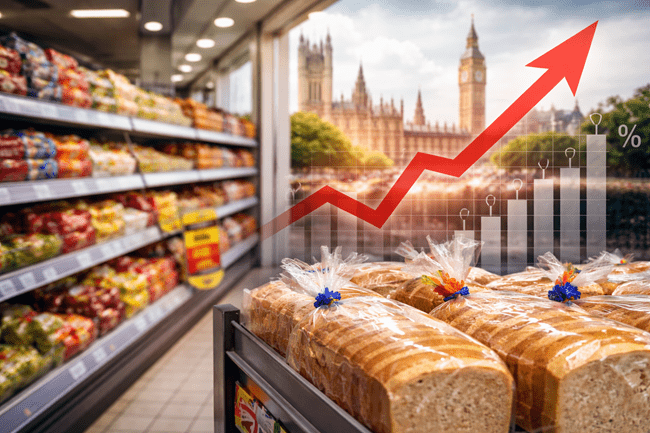
Why food inflation has become a political variable rather than a cyclical one
For decades, food price inflation was treated as cyclical. Input costs rose and fell, margins compressed and recovered, and consolidation was often tolerated as a rational response to structural pressures. That logic is now under strain. Food inflation over the past few years has coincided with stagnant wage growth and rising housing costs, turning supermarket pricing into a political issue rather than a purely economic one.
In this environment, regulators are acutely aware that allowing further consolidation in staple food categories risks being interpreted as regulatory indifference to household pressure. The Competition and Markets Authority does not operate in a vacuum. While formally independent, it is highly attuned to public trust and political legitimacy. A merger that appears technically defensible on efficiency grounds can still be problematic if it concentrates power over products that consumers buy several times a week.
The Hovis case illustrates this dynamic clearly. Bread is cheap in absolute terms, but symbolically powerful. It is one of the most visible indicators of food price movement, and therefore one of the fastest to attract public scrutiny.
How the Hovis investigation reflects a recalibration rather than a crackdown
It would be a mistake to frame the Phase 2 probe into the Associated British Foods plc transaction as an anti-business crackdown. The more accurate interpretation is recalibration. The Competition and Markets Authority is not rejecting consolidation outright, but it is demanding a higher standard of proof that deals will not erode competitive pressure over time.
Historically, UK food mergers could rely on three familiar defences: thin margins, scale-driven efficiencies, and the disciplining effect of supermarkets. All three arguments still exist, but none is being accepted automatically. The regulator is now more inclined to ask whether efficiency gains will translate into consumer benefit, or whether they simply offset inflationary pressures that would otherwise force price rises.
In practical terms, this means deeper scrutiny of internal pricing models, retailer negotiations, and brand-to-brand substitution. It also means greater scepticism toward claims that private label products alone are sufficient to constrain branded suppliers.
Why private label dominance complicates modern food antitrust analysis
One of the most complex aspects of modern food competition is the rise of private label. Supermarkets are no longer neutral distributors. They are vertically integrated competitors with strong incentives to prioritise their own brands. This complicates traditional antitrust analysis, which historically focused on rivalry between manufacturers.
In the Hovis case, the question is not simply whether Kingsmill and Hovis compete with each other, but whether branded bread as a whole is sufficiently constrained by supermarket-owned alternatives. Regulators appear increasingly cautious about assuming that private label automatically solves concentration concerns.
From a consumer perspective, private label may offer cheaper options, but it also changes bargaining dynamics. If branded suppliers consolidate, supermarkets may push even harder into own-label expansion. That can reduce branded choice over time, leading to a market that looks competitive on price but thinner on innovation and differentiation.
This nuance is now central to how the Competition and Markets Authority evaluates food mergers, and it raises the bar for companies attempting to argue that consolidation does not meaningfully reduce choice.
Why essential goods are drifting into a separate regulatory category
An emerging pattern across UK regulation suggests that essential goods are being treated differently from discretionary products. This is not codified in law, but it is increasingly visible in enforcement behaviour. Energy markets, fuel retailing, and now food staples are subject to closer scrutiny than sectors where consumer switching is easier and consequences less immediate.
The underlying logic is political economy rather than ideology. When households feel squeezed, regulators are under pressure to demonstrate vigilance. Food antitrust becomes part of a broader credibility equation. Allowing consolidation in bread while consumers complain about grocery bills is a harder sell than approving a merger in luxury retail or industrial manufacturing.
This does not mean deals will be blocked reflexively, but it does mean timelines will lengthen, remedies will become more likely, and uncertainty will increase. For corporate strategy teams, that changes the risk calculus materially.
What this shift means for food manufacturers planning growth or exits
For food manufacturers, particularly those backed by private equity or pursuing UK-centric growth strategies, the implications are significant. Mergers and acquisitions in staples can no longer be assumed to be straightforward exits or scale plays. Regulatory friction is now a first-order risk, not a tail risk.
This is especially relevant for mid-sized brands seeking strategic buyers. If large incumbents face tougher scrutiny, the universe of credible acquirers narrows. That can depress valuations or push owners toward longer-term operational improvement rather than sale.
For large diversified groups like Associated British Foods plc, the challenge is slightly different. They must decide whether consolidation remains worth pursuing when regulatory outcomes are uncertain and remedies may dilute strategic benefits. In some cases, organic restructuring or portfolio reshaping may become more attractive than headline acquisitions.
How supermarkets quietly shape the outcome without being in the dock
An underappreciated aspect of food antitrust is the role supermarkets play behind the scenes. Retailers are often key witnesses in merger reviews, providing evidence on switching behaviour, negotiation leverage, and promotional dynamics. Their incentives are complex.
On one hand, supermarkets benefit from multiple branded suppliers competing for shelf space. On the other, they benefit from supplier scale when negotiating logistics, reliability, and national promotions. Regulators must weigh this carefully, and recent cases suggest a growing willingness to interrogate retailer claims rather than accept them at face value.
In effect, the Competition and Markets Authority is increasingly aware that supermarkets can act as both competition enforcers and competition distorters, depending on circumstances. That awareness feeds into a more cautious stance on approving further consolidation upstream.
Is this a temporary response to inflation or a lasting policy shift?
The most important strategic question is whether this tougher stance will persist once inflation subsides. There is a strong case that some of the regulatory assertiveness is cyclical, driven by heightened sensitivity during a cost-of-living crisis. However, once enforcement norms shift, they rarely revert fully.
Institutional memory, precedent, and public expectation all matter. If the Competition and Markets Authority establishes a track record of closer scrutiny in food staples, future cases will be judged against that baseline. Companies that assume a return to lighter-touch enforcement may find themselves misjudging the landscape.
In that sense, the Hovis investigation could be remembered less for its outcome than for what it normalised: the idea that food antitrust is politically salient and strategically consequential.
Discover more from Business-News-Today.com
Subscribe to get the latest posts sent to your email.