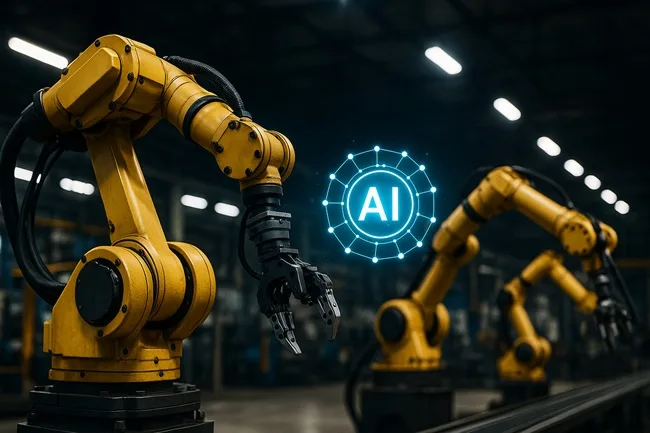
SoftBank Group Corp. is no longer content being a diversified technology investor. Instead, it appears to be building what may soon be the largest vertically integrated artificial intelligence holding company in the world. Backed by major capital commitments and a sharpened focus on AI hardware, software, and robotics, SoftBank Group Corp. is orchestrating an ecosystem that stretches from chip design and industrial robotics to foundational AI models.
Recent announcements signal a seismic shift in the conglomerate’s long-term strategy. These include a planned USD 30 billion investment in OpenAI, a USD 6.5 billion deal to acquire Ampere Computing Holdings LLC, and a USD 5.4 billion agreement to buy the robotics division of ABB Ltd. If these transactions proceed to completion, SoftBank Group Corp. will hold strategic assets across the three critical layers of the modern AI stack: compute infrastructure, foundational model development, and robotics.
Why is SoftBank Group Corp. now doubling down on AI from all sides of the value chain?
SoftBank Group Corp. has long positioned itself as a technology-forward investment house, but its latest moves suggest it is shedding the passive venture capital skin and stepping into an operating role as an AI infrastructure aggregator. The acquisition of Ampere Computing Holdings LLC gives the company a foothold in semiconductor design for AI-centric workloads. Ampere designs high-performance, Arm-based processors that are purpose-built for cloud and AI inference tasks. By owning Ampere outright, SoftBank Group Corp. aims to internalize a part of the computing backbone that its other portfolio companies and future AI bets may depend on.
In parallel, the USD 30 billion investment commitment to OpenAI spans both equity interests and forward contracts. The structure of the deal means SoftBank Group Corp. is gaining exposure not just to OpenAI’s future valuation but also to its internal economic engine, including convertible rights and performance-linked instruments. This puts SoftBank Group Corp. in a uniquely powerful position to benefit from the commercial trajectory of generative AI models like ChatGPT and their downstream enterprise applications.
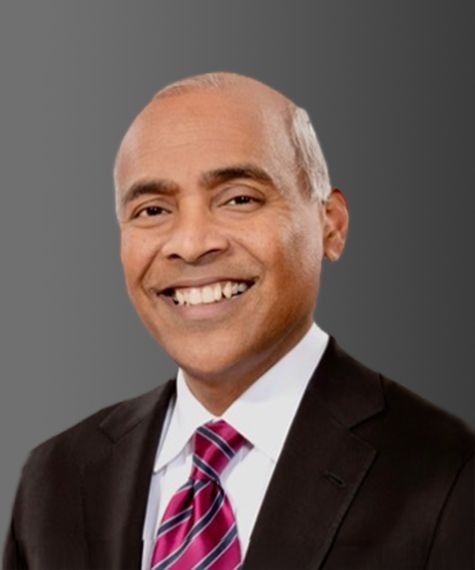
Meanwhile, the planned acquisition of ABB Ltd.’s robotics business is expected to close in 2026, pending regulatory approvals. ABB’s robotics division generated over USD 2.3 billion in 2024 sales and includes a 7,000-employee global operation. SoftBank Group Corp. has publicly stated that its goal is to fuse AI with physical automation, creating what founder Masayoshi Son calls “smart robotics” capable of autonomous, context-aware operations across industrial sectors.
This triad of compute, cognitive software, and robotic embodiment could create a closed-loop AI ecosystem wholly owned and monetized by SoftBank Group Corp.
How do the financial commitments compare to peers in the AI investment landscape?
The scale of SoftBank Group Corp.’s repositioning stands out even against tech giants. While Microsoft Corporation has invested heavily in OpenAI through infrastructure and multi-year support agreements, it does not own chip companies or robotics divisions. Alphabet Inc., through Google DeepMind, has invested in foundational AI research, but its robotics strategy has been fragmented and scaled back in recent years. Amazon.com Inc. has chips through AWS (e.g., Trainium and Inferentia), but its AI exposure remains mostly cloud-platform-centric.
In contrast, SoftBank Group Corp. is adopting a diversified control-based model, absorbing infrastructure, IP, and platform capabilities under its own balance sheet. Analysts view this as an echo of Berkshire Hathaway Inc.’s sectoral plays, but for AI and automation rather than insurance or railroads. The Ampere acquisition, once finalized, will offer end-to-end integration with Arm Holdings plc’s chip IP portfolio, in which SoftBank Group Corp. maintains a substantial equity stake. This strengthens the company’s potential to customize or vertically integrate AI workloads from silicon to software.
At over USD 40 billion in aggregate commitments across its AI pillar transactions, SoftBank Group Corp. is rivaling the scale of sovereign wealth funds or major institutional investors but with a much more concentrated thematic lens.
What does market sentiment indicate following the latest AI moves?
The sentiment among institutional investors has notably improved following SoftBank Group Corp.’s Q2 FY2025 earnings report, which revealed a ¥2.16 trillion investment gain from OpenAI-related instruments. The company also announced a four-for-one share split and completed a significant buyback program, both of which signaled confidence in forward earnings growth and price stability. Share prices responded positively, with a 1.98 percent jump on the Tokyo Stock Exchange immediately after the results were published.
Analysts, however, remain cautiously optimistic. The primary concern stems from the derivative-heavy nature of some of these gains. A substantial portion of the OpenAI-related uplift was booked via fair value changes in forward contracts, which introduces volatility and makes earnings more sensitive to external revaluations. Moreover, the use of margin loans secured by Arm shares introduces leverage and counterparty risk that could tighten SoftBank Group Corp.’s financial flexibility if valuations fall or regulatory restrictions shift.
Despite these caveats, buy-side interest has increased, particularly from technology-focused hedge funds and crossover investors. The company’s strategic clarity and commitment to large-scale thematic investment has differentiated it from other conglomerates whose exposure to AI remains indirect or passive.
What are the strategic risks involved in building a vertically integrated AI empire?
While SoftBank Group Corp.’s vision is bold, execution remains a considerable challenge. First, regulatory clearance for the Ampere and ABB deals is not guaranteed. The Committee on Foreign Investment in the United States has already approved the Ampere acquisition, but antitrust bodies in multiple jurisdictions still need to weigh in. The ABB deal will also require scrutiny from the European Union and Chinese authorities, given the cross-border nature of industrial technology transfer.
Second, integration risk is elevated when acquiring complex, hardware-centric businesses with different operational cultures. SoftBank Group Corp. has had mixed results with previous integration efforts, most notably in its failed attempt to merge WeWork into a broader workplace automation vision. Applying AI to robotics is not simply a matter of linking software and hardware but requires long-term product development, workforce alignment, and end-market traction.
Third, market cycle risk looms. The AI sector is currently trading at premium valuations, and any pullback could affect the value of SoftBank Group Corp.’s holdings, especially where unrealized gains have been booked based on recent comparables or secondary transactions.
Lastly, SoftBank Group Corp.’s continued reliance on derivatives and financial engineering could complicate its efforts to build long-term trust with institutional investors. While these instruments offer upside capture, they also add opacity and may not be repeatable at the same scale or return profiles.
What are the broader implications for the AI investment landscape?
If successful, SoftBank Group Corp.’s approach could serve as a new model for capitalizing on artificial intelligence across the stack. Unlike traditional venture capital firms, which rely on syndicates and eventual exits via IPO or acquisition, SoftBank Group Corp. appears intent on owning, operating, and monetizing the infrastructure directly. This may crowd out smaller players or change the dynamics of startup formation, especially in hardware-heavy segments like edge computing, robotics, and semiconductor design.
It also sets a new benchmark for other conglomerates and sovereign funds contemplating exposure to the AI boom. A successful integration of Ampere, OpenAI, and ABB’s robotics business could prompt other global investment groups to pursue similar top-down thematic acquisitions rather than indirect portfolio strategies.
SoftBank Group Corp.’s playbook indicates that the age of AI may not be dominated solely by hyperscalers or software platforms, but by hybrid capital allocators with the conviction to build across layers.
Key takeaways from SoftBank Group Corp.’s AI transformation strategy
SoftBank Group Corp. is attempting to become the most comprehensively positioned AI holding company in the world by acquiring and integrating assets across compute infrastructure, foundational model development, and robotics. Its planned USD 30 billion commitment to OpenAI, USD 6.5 billion acquisition of Ampere, and USD 5.4 billion deal for ABB’s robotics division signal a deliberate strategy to dominate the physical and software stack of AI. Market reaction has been cautiously supportive, with increased institutional interest and share price strength following earnings announcements. However, SoftBank Group Corp. must navigate regulatory, financial, and integration risks while avoiding overexposure to derivative-led earnings. If executed successfully, this pivot could redefine how investors access and build around artificial intelligence infrastructure on a global scale.
Discover more from Business-News-Today.com
Subscribe to get the latest posts sent to your email.