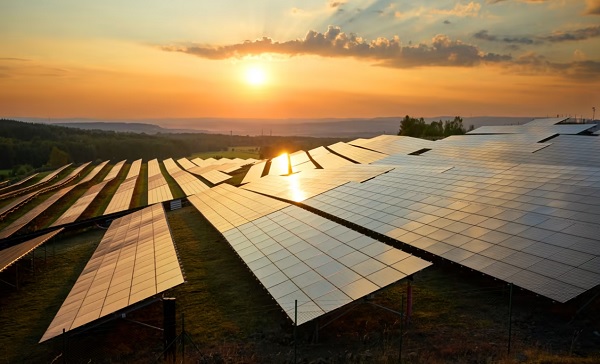





Polaris Renewable Energy Inc. (TSX: PIF, OTC: RAMPF) has executed a dual strategic move blending leadership renewal with strengthened liquidity. The company has appointed Alba Seisdedos Ballesteros as its new Chief Financial Officer and secured a US$13.5 million credit facility from the Canadian Imperial Bank of Commerce and Export Development Canada.
The announcement, effective October 9, 2025, includes a US$3.5 million working capital line and a US$10 million letter of credit facility. Both are aimed at enhancing near-term liquidity and supporting Polaris’s expansion across Latin America and the Caribbean. The company positioned the move as a proactive step to sustain growth while preserving balance-sheet flexibility, with its third-quarter 2025 earnings call scheduled for October 30, 2025.
In parallel, long-serving CFO Anton Jelic, who has held the position since 2018, will transition to Chief Administrative Officer. His new role will oversee areas such as IT, human resources, governance, and risk, marking a deliberate shift from capital markets focus to enterprise-scale management.
Why did Polaris Renewable Energy change its finance leadership now, and what does the new facility reveal about its capital priorities?
The timing of the CFO transition and credit facility is closely linked to Polaris’s operational and financing evolution. By elevating Alba Seisdedos Ballesteros — previously Vice President, Legal & Taxation — to the CFO role, Polaris reinforces its emphasis on financial discipline and compliance integrity. Her background in taxation and legal structuring gives the company a more holistic approach to managing complex, multi-country operations in emerging markets.
Polaris operates in regions where regulatory frameworks, tax regimes, and currency exposure can shift quickly. A CFO experienced in both legal and financial matters provides the oversight needed to keep governance tight while enabling faster deal execution. The dual structure of the credit facility — combining a revolving working capital line and a letter of credit — reflects this same pragmatism. It gives Polaris room to meet near-term cash requirements, issue guarantees for project obligations, and respond to opportunities without resorting to costly equity dilution.
The company underscored that the agreement extends its long-standing relationships with CIBC and EDC, partners that have supported its financing needs since 2015. This continuity signals lender confidence in Polaris’s asset base and reinforces its standing as a dependable mid-cap clean-energy operator.
How does Polaris Renewable Energy’s diversified asset base position it for resilience in a volatile renewables market?
Polaris’s strength lies in its diverse mix of technologies and geographies. The company operates around 182 megawatts of renewable capacity, split across geothermal, hydro, solar, and wind projects. Its geothermal portfolio, anchored in Nicaragua, provides stable baseload generation that supports long-term cash flow predictability. Meanwhile, run-of-river hydro assets in Peru and Ecuador, alongside solar and wind sites across Panama, the Dominican Republic, and Puerto Rico, offer seasonal and regional balance.
This diversification helps Polaris cushion fluctuations from weather variability and local policy shifts, which are common risks in emerging-market renewables. The new credit facility adds another layer of flexibility, allowing the company to bridge timing gaps in project cash flows and cover procurement or interconnection obligations. Analysts following the stock have highlighted this combination of balance-sheet prudence and operational reach as key factors behind its resilience in a challenging capital environment.
What financial details will investors focus on ahead of Polaris Renewable Energy’s Q3 2025 results?
Attention is likely to center on the utilization strategy for the new facility, the associated cost of funds, and its potential impact on dividends. While Polaris has not disclosed interest rates or covenant terms, its relationship with top-tier Canadian lenders suggests competitive pricing and manageable conditions. Investors will look for clarity on whether this credit capacity will support specific new projects or function mainly as liquidity insurance.
The upcoming quarterly results will provide the first insight into how management intends to deploy the credit line. Market watchers expect commentary on cash reserves, leverage ratios, and near-term project milestones. The next investor call will also likely detail how the facility interacts with existing debt and whether it opens space for future green bond issuance or joint ventures.
On the trading side, Polaris shares have been moving near their 52-week high of about CAD 13.9 on the Toronto Stock Exchange, marking roughly a 13 percent gain year-over-year. The company’s market capitalization sits near CAD 300 million, and its annualized dividend yield remains close to six percent. That mix of modest growth and consistent yield continues to attract income-focused investors seeking steady exposure to clean energy.
How has the stock market reacted, and what signals are institutional investors watching next?
The market’s initial response has been calm but constructive. Trading volumes across both the Toronto and U.S. OTC lines show little volatility, suggesting that investors see the dual announcement as evolutionary rather than transformative. For most institutional shareholders, the update signals governance maturity and prudent financial management rather than an overhaul.
Fund managers and analysts are now focusing on three interconnected signals. The first is governance continuity. Reassigning an experienced CFO to a senior administrative role while promoting an internal leader ensures stability during expansion. The second is liquidity preparedness. The new credit facility demonstrates that Polaris can access cost-effective capital despite tighter global credit markets. The third is execution visibility. The company’s ability to translate liquidity access into project acceleration, debt optimization, and dividend consistency will shape institutional sentiment going into 2026.
Polaris has consistently positioned itself as a disciplined mid-tier renewables platform rather than an aggressive developer. That clarity of identity continues to reassure investors who prioritize predictability and payout reliability over high-risk growth.
Why does a US$13.5M facility matter in the 2025 renewables financing environment?
Even though the dollar figure may seem modest, in today’s macro context it represents an important validation of lender confidence. Interest-rate volatility and global capital tightening have made it harder for mid-cap developers to secure flexible credit. For Polaris, having a revolving line and letter of credit facility from established institutions offers operational breathing room. It ensures uninterrupted cash cycles between construction, commissioning, and payment collection.
Moreover, such facilities play a crucial role in regulatory compliance. In markets like Peru and Ecuador, energy regulators often require credit guarantees for interconnection or PPA security. Access to letter-of-credit capacity lets Polaris move faster through contracting stages, reducing administrative bottlenecks. The fact that CIBC and EDC remain active counterparties suggests Canada’s institutional backing for regional energy transition projects remains intact.
This facility, therefore, is less about quantum and more about signaling credibility. It strengthens Polaris’s standing among local governments, suppliers, and investors as a reliable, well-financed partner.
Does Polaris Renewable Energy remain a buy, sell, or hold after these announcements?
Market consensus leans toward holding or accumulating the stock on dips. The dual announcements indicate operational continuity, stable dividends, and improving liquidity — all qualities favored by long-term investors. At current levels, the valuation already reflects optimism about future cash flow stability, but the stock’s six percent yield provides an attractive cushion.
Retail investors focusing on yield and income stability are likely to maintain positions. For institutional portfolios, Polaris fits neatly within the mid-cap renewable income category, appealing to funds seeking predictable distributions rather than speculative upside. Unless the October 30 results reveal unexpected leverage pressure or reduced payout ratios, the base case remains constructive.
Given its Canadian listing, foreign institutional inflow metrics such as FII/DII participation are not directly applicable. Instead, market sentiment will be best measured through price behavior and volume trends around the earnings call and dividend announcements.
What should investors expect from the upcoming earnings call, and what could shift sentiment afterward?
The October 30 earnings call will be pivotal in shaping short-term sentiment. Investors will expect detailed commentary on the credit facility’s pricing grid, tenor, and security package. Clarity around cash flow generation from the geothermal and hydro portfolios will be equally critical. Management’s tone on growth projects — including any updates on energy storage or hybrid systems — could influence whether the stock extends its current rally.
Dividend guidance will also be closely watched. If management reaffirms the existing payout and indicates improved liquidity coverage, confidence in the stock’s income profile could strengthen. However, if borrowing costs or maintenance downtime weigh on free cash flow, investors may reassess near-term upside. The company’s credibility with long-term funds now hinges on maintaining transparency and consistency across both financing and operations.
How does this development fit within broader sector dynamics across Latin America’s renewable landscape?
Polaris’s update comes at a time when Latin American renewables face mixed conditions. Political transitions, power market reforms, and shifting hydrology patterns have increased operational complexity. In this environment, firms with diversified assets, disciplined financing, and cross-border expertise have a competitive edge.
Polaris’s partnerships with CIBC and EDC also align with Canada’s growing policy emphasis on supporting renewable infrastructure in the Americas. For the company, this connection brings not just credit access but also reputational leverage when bidding for government-backed projects or negotiating with utilities.
The CFO reshuffle complements this regional strategy by strengthening compliance and finance capabilities. With Alba Seisdedos Ballesteros overseeing both taxation and treasury, Polaris appears better equipped to manage cross-jurisdictional financial flows and pursue incremental acquisitions or hybrid expansions without jeopardizing balance-sheet integrity.
Why the CFO transition and credit facility together mark a quiet inflection point for Polaris Renewable Energy
The dual announcements mark Polaris’s shift from consolidation to disciplined expansion. Appointing a new CFO with legal and taxation depth signals forward-looking governance, while the concurrent credit line underscores lender trust and liquidity preparedness. Former CFO Anton Jelic’s move into the Chief Administrative Officer role ensures operational oversight remains robust.
Together, these steps position Polaris for its next growth phase without sacrificing its conservative financial DNA. The new facility may not transform the company’s scale overnight, but it strengthens its foundation for larger financing or partnership opportunities in 2026.
If the company maintains dividend continuity, delivers operational updates with precision, and uses the facility judiciously, Polaris Renewable Energy could sustain its near-record stock levels while broadening its institutional following. For now, the update represents measured progress — exactly the kind of steadiness that income-oriented investors reward.
Discover more from Business-News-Today.com
Subscribe to get the latest posts sent to your email.