




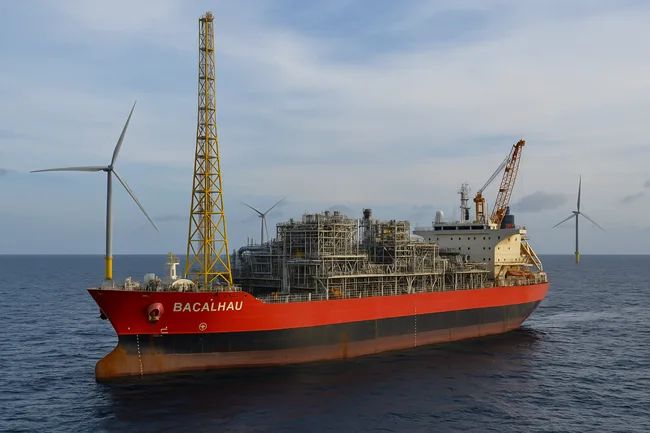
Equinor ASA (NYSE: EQNR) appears to be reshaping its Latin American upstream portfolio with a sharper focus on high-margin growth and capital discipline. The Norwegian energy major announced the sale of its interest in the Peregrino field in Brazil for USD 3.5 billion in Q2 2025—just months before the highly anticipated startup of the Bacalhau project. Combined with progress on the Raia gas development and new exploration acreage in the Santos Basin, the moves suggest a deliberate shift toward streamlined, higher-return assets.
Analysts say this realignment could unlock both cash flow and strategic clarity, reinforcing Equinor’s broader approach of “high-grading” its international portfolio as energy transition pressures mount. Institutional investors have taken note, with some interpreting the USD 3.5 billion divestment as an early monetization of mature assets to reinvest into capital-light growth areas.
Why did Equinor exit Peregrino—and what does the USD 3.5 billion deal mean for its capital strategy?
The Peregrino field, operated by Equinor since 2011, was a major Brazilian oil producer with a complex heavy oil profile. The divestment of Equinor’s 60 percent operated interest comes as the field approached the mature phase of its lifecycle, despite continued Phase 2 development. By exiting now, Equinor has crystallized significant value and freed up capital at a time when its capital distribution targets are under increased investor scrutiny.
Institutional analysts view the USD 3.5 billion sale as both opportunistic and strategically coherent. It allows Equinor to recycle capital into upstream projects like Bacalhau and Raia, which are expected to offer lower breakevens, higher margins, and potentially lower carbon intensity. It also reinforces Equinor’s ability to sustain its USD 9 billion shareholder return program—including buybacks—while continuing to invest in select energy transition projects.
What makes Bacalhau a cornerstone project in Equinor’s Brazilian portfolio?
Located in the Santos Basin, the Bacalhau project is expected to begin production later in 2025, with peak output forecast above 220,000 barrels per day. The development is one of the largest deepwater projects globally and is designed with carbon efficiency in mind. Unlike Peregrino’s heavy oil and complex processing needs, Bacalhau targets light oil with straightforward reservoir characteristics and a simpler FPSO configuration.
Equinor holds a 40 percent operated interest, with ExxonMobil and Chinese national oil company CNODC as partners. Institutional sentiment around Bacalhau has remained bullish, largely due to its high return profile, scalability, and alignment with Equinor’s strategy of investing in projects that remain competitive in a net-zero world.
Analysts expect Bacalhau to become a major cash flow contributor by 2026, reinforcing Equinor’s shift toward international assets that deliver both scale and capital efficiency.
How does the Raia gas project fit into Equinor’s broader strategy in Brazil?
In parallel with Bacalhau, Equinor is advancing the Raia gas development, another Santos Basin asset with growing strategic relevance. Raia is part of Equinor’s longer-term vision to integrate gas as a transition fuel within both its Norwegian and international portfolios. While details on the final investment decision timeline remain limited, early exploration success and regulatory progress in Brazil suggest a supportive environment.
Institutional investors are watching closely, especially those focused on the energy transition. Raia’s gas profile could serve as a bridge for regional energy needs while creating optionality for Equinor to enter Brazil’s gas-to-power or LNG markets, depending on infrastructure and offtake developments.
What does this portfolio shift signal about Equinor’s international upstream strategy?
Equinor’s Brazil moves align with a broader pattern of divesting late-stage assets and doubling down on scalable, high-return projects. Recent exits from Nigeria and Azerbaijan in 2024 follow a similar logic: reduce exposure to complex, higher-risk geographies while consolidating in markets with stable regulatory environments and greater operational control.
Institutional sentiment remains positive toward this “high-grading” strategy, particularly as Equinor maintains one of the strongest balance sheets among European majors. With a net debt ratio of 15.2 percent post-buyback, investors view Equinor’s capital discipline as critical to sustaining its dividend and renewables investment posture.
What is the outlook for Equinor’s Brazil portfolio heading into 2026?
If Bacalhau ramps as planned and Raia advances to FID, Brazil is likely to become Equinor’s largest non-Norwegian upstream contributor by 2026. Analysts expect that by consolidating its position in the Santos Basin and exiting more complex assets like Peregrino, Equinor can drive both margin expansion and reduced portfolio volatility.
For now, Brazil appears to represent the blueprint for Equinor’s international upstream strategy: light oil, scalable developments, manageable geopolitical risk, and strong project economics.
Discover more from Business-News-Today.com
Subscribe to get the latest posts sent to your email.