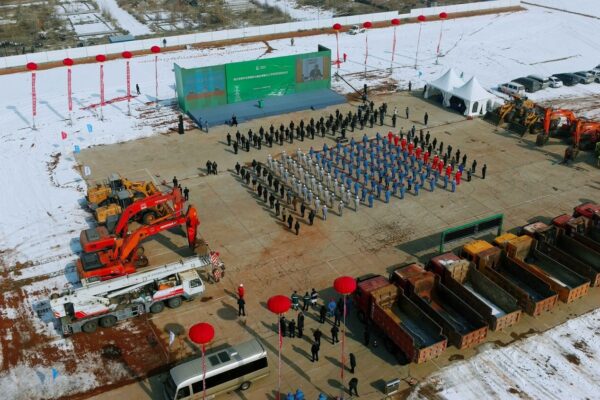




Iron Oak Energy Solutions LLC, a privately held multi-basin proppant supplier headquartered in The Woodlands, Texas, has finalized the acquisition of Northern White Sand assets from HC Minerals, Inc. in a deal aimed at significantly expanding its production capacity and distribution footprint in the Appalachian natural gas market. The transaction, announced on August 11, 2025, includes HC Minerals’ Wyeville, Wisconsin production facility and a network of strategically located terminals serving the Marcellus and Utica shale plays.
The acquisition elevates Iron Oak Energy’s total Northern White Sand production capacity to more than twelve million tons annually, while boosting its total proppant output across all product lines to 37 million tons per year. With direct Class I railway access and a strengthened logistics network, the company aims to deliver faster, more efficient supply to operators in the largest U.S. natural gas-producing basins.
How does the HC Minerals acquisition expand Iron Oak Energy’s ability to serve the Marcellus and Utica shale plays?
Iron Oak Energy’s latest acquisition builds on its recent history of strategic consolidation, following the integration of Black Mountain Sand, Covia Energy, and High Roller Sand into its portfolio. The Wyeville facility, a cost-efficient dredge mining operation with direct Union Pacific Railroad connectivity, adds over three million tons per year of high-quality Northern White Sand to the company’s supply chain.
By acquiring HC Minerals’ four terminal distribution assets in the Appalachian region, Iron Oak Energy gains a critical last-mile advantage for Marcellus and Utica operators. These terminals, positioned in proximity to drilling activity, reduce transportation time and costs for customers, enabling more reliable supply in a competitive and weather-sensitive market.
The company’s leadership emphasized that the combination of production scale, expanded terminal access, and Class I rail connectivity will help meet growing demand from customers seeking consistent, high-quality proppant for hydraulic fracturing operations in the Appalachian Basin.
Why is demand for Northern White Sand in natural gas basins expected to increase over the next decade?
Iron Oak Energy President and Chief Executive Officer Michael Segura pointed to structural growth drivers in U.S. natural gas consumption, including rising power generation needs, the expansion of energy-intensive data center infrastructure, and the continued buildout of liquefied natural gas (LNG) export capacity.
Northern White Sand, prized for its crush strength and conductivity, remains the preferred proppant in certain high-performance completion designs, particularly in deep and high-pressure gas wells. With the Marcellus and Utica shale plays supplying a significant portion of U.S. natural gas, operators are expected to maintain strong demand for premium-grade sand despite the industry’s growing use of in-basin brown sand in oil plays.
Industry observers note that while cost remains a factor in completion design, the production uplift from premium proppants can justify the higher transport and handling costs, particularly in the context of high-volume, high-intensity fracture stimulations common in Appalachian wells.
How does the acquisition affect Iron Oak Energy’s market position and operational scale?
With the addition of the HC Minerals assets, Iron Oak Energy now operates ten production facilities across North America, supplying every major shale basin. The company’s balanced exposure to oil and natural gas basins—supported by production in the Permian Basin, Eagle Ford Shale, Bakken, DJ Basin, and now expanded Appalachian operations—provides resilience against commodity price volatility.
The deal also strengthens Iron Oak Energy’s role as a diversified supplier capable of meeting both in-basin and premium sand demand. This flexibility allows the company to pivot volumes between basins in response to market conditions, leveraging its nationwide logistics capabilities.
Institutional sentiment around the transaction appears positive, with industry participants viewing it as a well-timed move to capture long-term demand growth in natural gas basins, particularly given the Appalachian Basin’s role as a low-cost, high-volume gas producer.
How was the acquisition financed, and what does it mean for Iron Oak Energy’s financial flexibility?
To support the transaction, Iron Oak Energy secured a new term loan facility from Chambers Energy Capital and GoldenTree Asset Management. The financing package includes a committed delayed draw feature, enabling the company to access additional capital for future expansion or operational investments.
Iron Oak Energy Chief Financial Officer Jeff Wood said the company’s leverage remains conservative, with debt levels “well below a single turn of EBITDA” following the transaction. This positions the company to pursue further strategic opportunities without compromising balance sheet strength.
By partnering with Chambers and GoldenTree, the company gains institutional backers experienced in energy sector financing, providing both capital support and potential strategic insight for future growth initiatives.
What does HC Minerals’ leadership say about the transition to Iron Oak Energy ownership?
HC Minerals Chief Executive Officer Dirk Hallen described the sale as the culmination of a nearly five-year growth journey for the Wisconsin-based producer, made possible by its employees, clients, and private equity backers Clearlake Capital and Whitebox Advisors.
Hallen expressed confidence in Iron Oak Energy’s leadership, noting the cultural and operational alignment between the two companies. This endorsement suggests a smooth integration process, with Iron Oak Energy benefiting from HC Minerals’ operational expertise in premium sand production, rail logistics, and supply chain efficiency.
What is the long-term strategic outlook for Iron Oak Energy after this acquisition?
Looking ahead, Iron Oak Energy’s management believes the expanded Northern White Sand platform will position it to capture incremental market share in the Appalachian Basin, particularly as operators prioritize reliable, large-scale suppliers capable of meeting high-volume completion schedules.
The company’s growth strategy appears focused on selective acquisitions that enhance its geographic reach, production scale, and logistics capabilities. Given the industry’s fragmented supplier base, analysts suggest there may be further opportunities for consolidation, particularly among mid-sized producers seeking capital or operational synergies.
If natural gas demand forecasts hold—fueled by domestic power generation growth, the rapid expansion of energy-intensive data centers, and rising LNG exports to global markets—Iron Oak Energy’s expanded premium Northern White Sand capacity could see sustained high utilization rates over the next decade. This long-term demand outlook may also support stable pricing in Appalachian supply chains, enhancing the company’s revenue visibility. However, the proppant supplier will need to navigate structural headwinds, including competitive pressure from lower-cost in-basin sand producers, fluctuating rail freight rates that can impact delivered costs, and evolving regulatory requirements governing mining, transportation, and environmental compliance across multiple states.
Discover more from Business-News-Today.com
Subscribe to get the latest posts sent to your email.