




How could the XtalPi–DoveTree collaboration redefine the potential of AI, robotics, and biology in modern drug discovery?
In a move that underscores the accelerating convergence of artificial intelligence, robotics, and advanced biology, Hong Kong-listed pharmaceutical technology developer XtalPi Inc. (HKEX: 2228) has entered a strategic alliance with biotechnology firm DoveTree Medicines Inc., founded by industry veteran Dr. Gregory Verdine. Valued at up to US$5.99 billion, the partnership is among the largest collaborations yet in AI-driven drug discovery.
Rather than framing the tie-up as a one-off research contract, both companies have presented it as a long-term co-creation model—blending XtalPi’s computational and automation capabilities with DoveTree’s biological and translational medicine expertise. The alliance’s target areas—oncology, immunological and inflammatory diseases, neurological disorders, and metabolic dysregulation—are among the most commercially significant and scientifically challenging in biopharma.
For the wider industry, the agreement signals that AI in drug discovery has matured to the point where large-scale, milestone-heavy financial commitments are now on the table, backed by expectations of eventual pipeline-defining therapies.
Why is the structure of the XtalPi–DoveTree deal designed to balance ambition with risk?
The financial terms reflect both the promise and the uncertainty of pioneering drug development. DoveTree will receive an upfront payment of US$51 million, supplemented by US$49 million in near-term milestone payouts. The majority—up to US$5.89 billion—will come from development, regulatory, and commercial success milestones, alongside royalties on any marketed products.
DoveTree will take on exclusive global commercialisation rights, managing later-stage development, manufacturing, and go-to-market strategies. XtalPi retains a royalty interest and an option to co-commercialise in certain geographies, allowing it to participate directly in selected markets if the products achieve commercial viability.
Institutional observers note that such a structure serves as a hedge: it minimises near-term financial exposure for XtalPi while giving DoveTree substantial incentive to move programs forward. The back-loaded payments also indicate that both parties understand the long timelines and inherent risks of clinical development—particularly for novel targets.
How will the integration of AI, quantum simulations, and automated synthesis shape the collaboration’s output?
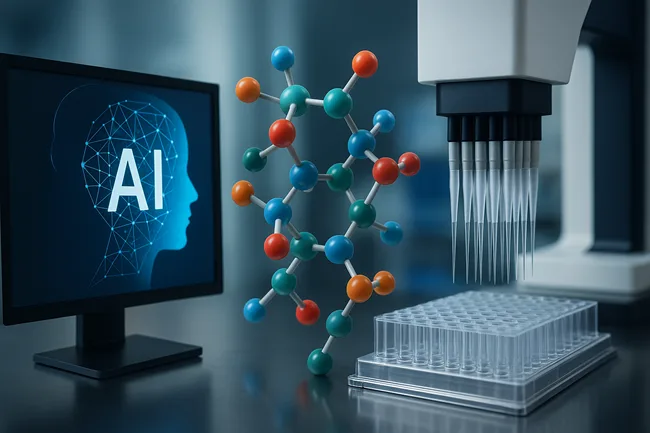
At the centre of XtalPi’s contribution is its Intelligent Digital Drug Discovery and Development (ID4) platform, which merges quantum physics-based molecular simulations with AI models and high-throughput robotics. This enables a closed-loop “design–make–test” cycle, where potential compounds are designed, synthesised, and tested with minimal human intervention, significantly shortening early-stage development timelines.
DoveTree’s role is equally pivotal. Founded in 2024, the company brings deep expertise in protein design, structural biology, and translational research, guided by Dr. Verdine’s track record in launching companies such as Wave Life Sciences and his academic career at Harvard University. Its approach to designing protein-targeting drugs is intended to expand the therapeutic reach into biological targets that have historically been deemed undruggable.
Together, the pairing could produce an R&D engine capable of taking on high-value, high-complexity disease targets—an area where traditional medicinal chemistry often struggles to deliver results.
What does this deal reveal about the evolving role of AI in pharmaceutical R&D?
The biopharma sector has been steadily increasing its investment in AI to address the cost, speed, and success-rate challenges of drug discovery. Early AI applications often focused on molecule screening and drug–target interaction predictions, but platforms like XtalPi’s go further by integrating wet-lab automation into the computational process.
The near-US$6 billion scope of the XtalPi–DoveTree collaboration places it among the largest AI-powered drug discovery deals to date, suggesting heightened investor and strategic confidence. This is notable in a market where AI in biotech has moved from experimental pilot projects to capital-backed, multi-program pipelines.
Competitors such as Insilico Medicine, Exscientia, and Schrödinger have demonstrated the commercial and scientific viability of AI-based design, but XtalPi’s inclusion of quantum simulation and robotics sets it apart as a full-stack solution from computation to synthesis.
How has the market reacted, and what does it mean for both companies’ growth trajectories?
XtalPi’s shares on the Hong Kong Stock Exchange saw a modest uptick following the announcement, reflecting measured optimism. Investors appear to view the collaboration as a strategic long play, with the potential to build a sustained drug pipeline rather than deliver short-term revenue boosts.
For DoveTree, still privately held and venture-backed, the deal provides both capital inflow and market visibility. Industry analysts suggest that the association with a publicly traded partner of XtalPi’s profile could accelerate fundraising opportunities, particularly if early-stage results demonstrate technical proof-of-concept.
Investor sentiment in the biotech sector more broadly points to this as a model that could inspire further large-scale collaborations—especially in cases where AI platforms have proven computational power but lack deep biological development capacity.
What hurdles must the XtalPi–DoveTree partnership overcome to deliver on its vision?
Despite the promise, both companies face well-known roadblocks. Translating AI-generated molecules into safe, effective, and commercially viable drugs requires not just laboratory validation but also success in multi-phase clinical trials, each stage carrying significant attrition risk.
Moreover, while AI and robotics can compress discovery timelines, they cannot bypass the biological complexity of human disease, nor the regulatory scrutiny required for approval. Market watchers will also monitor how efficiently the two companies integrate their processes and manage intellectual property—a critical factor in high-stakes pharmaceutical collaborations.
The scale of potential payouts means that execution risk is high, but so is the reward. Success would validate both the technology and the partnership model, while underperformance could prompt more cautious deal structures in future AI–biotech tie-ups.
Could this alliance influence broader trends in AI adoption for complex disease areas?
If the collaboration yields multiple clinical candidates—especially in challenging fields such as oncology and neurology—it could accelerate industry-wide acceptance of AI as an indispensable tool for drug discovery. This may encourage regulators to evolve approval frameworks for AI-enabled R&D, potentially shortening the path from lab to market.
For investors, the deal strengthens the case that AI is not a speculative add-on but a core enabler of next-generation biopharma innovation. That shift in perception could lead to more capital flowing into platform companies with proven ability to integrate computation, automation, and biology into cohesive development pipelines.
What could this partnership signal for the next decade of AI-enabled therapeutics?
The XtalPi–DoveTree collaboration is more than a headline-grabbing US$6 billion figure—it is a test case for whether AI, quantum simulations, and robotics can meaningfully shift the economics and timelines of drug discovery. By uniting complementary strengths in computation and biology, the partnership positions itself to take on diseases that have historically been resistant to traditional drug development approaches.
While the road to market will be long, the deal’s structure, scale, and strategic vision suggest that both companies are prepared to navigate that journey. If successful, it could redefine how AI platforms and biotech innovators work together, setting a precedent for the next wave of partnerships in the sector.
Discover more from Business-News-Today.com
Subscribe to get the latest posts sent to your email.

