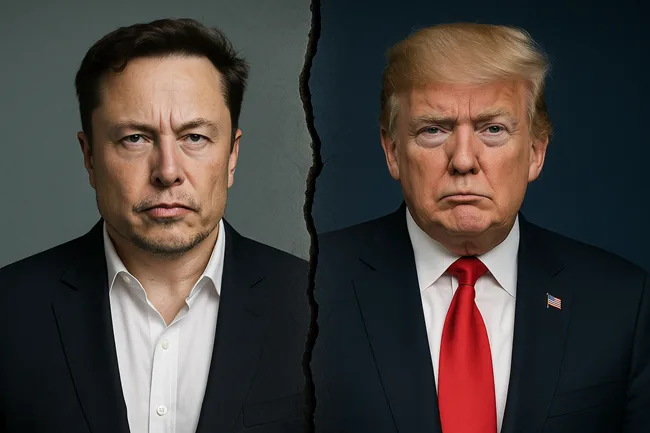



India moved quickly on July 30, 2025, after U.S. President Donald Trump announced a sweeping 25 percent tariff on Indian imports starting August 1, along with unspecified “penalties” tied to India’s ongoing purchase of Russian oil and defense hardware. New Delhi said it was “studying the implications” and reaffirmed its commitment to a “fair, balanced and mutually beneficial bilateral trade agreement” with Washington while making it clear that the protection of farmers, micro, small and medium enterprises (MSMEs) and entrepreneurs was non‑negotiable.
The Ministry of Commerce and Industry underscored that it would “take all steps necessary to secure our national interest” as Indian trade officials brace for economic shocks in labor‑intensive export categories and continued volatility in financial markets.

What historical and geopolitical context explains India’s response to Trump’s tariff escalation and added penalty measures against New Delhi?
India’s reaction is rooted in a decade-long history of tariffs and counter‑tariffs that have punctuated relations with successive U.S. administrations. The 25 percent tariff on Indian goods aligns with broader U.S. trade actions Trump has pursued in his second term, including duties on EU, Japanese, Indonesian and Philippine exports.
The White House has justified its latest move by citing India’s applied tariff levels—averaging nearly 39 percent on agricultural products and reaching 45 to 50 percent on specific items like vegetable oils, apples and corn—alongside what U.S. Trade Representative Jamieson Greer described as “the most strenuous and obnoxious non‑monetary trade barriers anywhere in the world.”
Trump himself, while calling India a “good friend,” criticized its trade practices and said the tariff decision was aimed at “resetting the playing field” after talks stalled on sensitive areas such as dairy and farm market access. Senior officials framed the action as a necessary step to conclude a larger U.S.–India trade deal, according to reporting from the U.S. Trade Representative’s office and Indian media.
The inclusion of an unspecified penalty for India’s purchase of Russian oil and military hardware also carries geopolitical undertones. Washington has repeatedly signaled frustration with India’s continued transactions with Moscow even as Western allies push sanctions tied to the Ukraine war.
How are Indian financial markets and institutional investors reacting to the tariff news and what are the immediate economic repercussions?
The announcement sent immediate shockwaves through Indian financial markets. Gift Nifty equity futures dropped by over 170 points in pre‑market trade, signaling a sharp risk‑off turn among foreign portfolio investors. The rupee slumped past ₹87 to the U.S. dollar—the weakest level in four months—fueling fears of imported inflation and capital outflows.
Currency traders warned that without Reserve Bank of India (RBI) intervention, the rupee’s slide could accelerate. Meanwhile, benchmark equity indices are expected to remain under pressure as export‑heavy stocks in gems and jewellery, auto components, textiles and electronics face direct earnings downgrades.
Market economist Madhavi Arora of Emkay Global told institutional clients that “the optics are negative and the currency shock could persist,” while PwC India partner Ranen Banerjee said the tariff shock had “shifted market sentiment sharply towards caution” even though broader trade talks remain on track.
Why is the government emphasizing the protection of farmers and MSMEs while continuing to push for a trade agreement with the United States?
New Delhi’s emphasis on farmers and MSMEs reflects both political and structural realities. Agriculture continues to employ nearly half of India’s workforce, and MSMEs account for over 30 percent of GDP and 45 percent of exports. Any perception of compromising these groups’ interests in a trade deal could trigger domestic backlash.
Officials from the Ministry of Commerce and Industry reiterated that agriculture, dairy and small‑business segments are “sacrosanct” and will not be opened beyond existing safeguards. Trade sources confirmed India would not yield on these sectors despite U.S. pressure, which has included calls for greater dairy market access and lower farm tariffs.
Industry bodies such as the Federation of Indian Chambers of Commerce and Industry (FICCI) and the Federation of Indian Export Organisations (FIEO) expressed disappointment at the tariff move but backed the government’s negotiating stance. FICCI president Anish Shah said exporters were “deeply concerned but hopeful that an interim deal can be reached to avoid lasting damage,” while FIEO called for accelerated efforts to diversify markets.
Which Indian export sectors are most exposed to Trump’s tariff action and what diversification strategies is New Delhi deploying?
Market analysts identify gems and jewellery, textiles, footwear, steel, electronics and auto components as the most vulnerable sectors. Gems and jewellery exports to the U.S., valued at over $10 billion annually, face potential contraction as the new tariff reduces competitiveness.
Steel and automotive component makers are at risk of losing market share to competitors in Southeast Asia, particularly Vietnam and Indonesia, which have signed fresh trade agreements with Washington this summer. Electronics exporters could also face margin compression and slower order flows.
In response, India is accelerating export diversification strategies. Trade officials are actively seeking new bilateral trade agreements in Africa and Latin America and deepening ties with Gulf Cooperation Council (GCC) nations. Efforts to enhance competitiveness include production‑linked incentive (PLI) schemes in electronics, solar and advanced manufacturing to reduce dependence on any single market.
What are the broader diplomatic implications for India–US trade negotiations and how durable is the negotiation framework post‑tariffs?
Despite the tariff shock, New Delhi has avoided inflammatory rhetoric and confirmed it will host a U.S. delegation in early August to resume talks. Commerce Minister Piyush Goyal said discussions are “at an advanced stage” and reiterated India’s preference for a “comprehensive and balanced” trade agreement.
Diplomatic observers note that this calibrated tone is designed to keep the negotiation track alive. Agneshwar Sen, trade policy leader at Ernst & Young India, said in a client note that “both sides appear determined to complete the deal this year” even though tariffs will “cast a shadow on the process in the near term.”
Emkay Global’s Madhavi Arora framed the conflict as “more geopolitical than purely economic,” pointing to the added penalty for Russian oil purchases as a signal that Trump’s trade tools now extend beyond traditional tariff leverage.
What do experts believe India must prioritize to limit economic damage and achieve a favorable trade deal with the United States?
Analysts say India’s response reflects a balance of short‑term damage control and long‑term positioning. By maintaining firmness on agriculture and MSME protection, New Delhi is signaling that domestic economic sovereignty is non‑negotiable even as it keeps diplomatic channels open.
Trade economists warn, however, that prolonged tariff uncertainty could delay liberalization efforts, particularly in sensitive sectors. “If tariffs remain elevated through FY26, India will likely double down on export diversification and self‑reliance initiatives, which may slow the broader reform agenda,” a Mumbai‑based economist said.
At the same time, the episode could catalyze policy changes. Investors expect India to intensify structural reforms to attract foreign direct investment (FDI) in high‑value manufacturing and reduce exposure to tariff‑sensitive sectors.
Why India’s calibrated response may determine the outcome of trade negotiations
India’s measured response underscores its dual imperatives: preserving political capital at home while sustaining momentum in a high‑stakes trade negotiation. The government’s reaffirmation of farmer and MSME protection is strategically aligned with its domestic base, but it is also aware that a protracted standoff could hurt exports, weaken the rupee further and erode investor sentiment.
For the United States, Trump’s move is consistent with his tariff‑first approach. Yet, imposing punitive measures on a strategic partner risks complicating broader Indo‑Pacific security cooperation. How quickly both sides can bridge gaps on agriculture, dairy, tariffs and market access will determine whether the trade dispute morphs into a prolonged economic drag or a short‑term negotiating tactic.
Discover more from Business-News-Today.com
Subscribe to get the latest posts sent to your email.