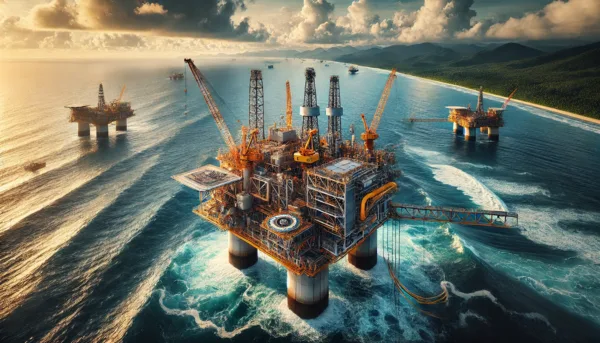
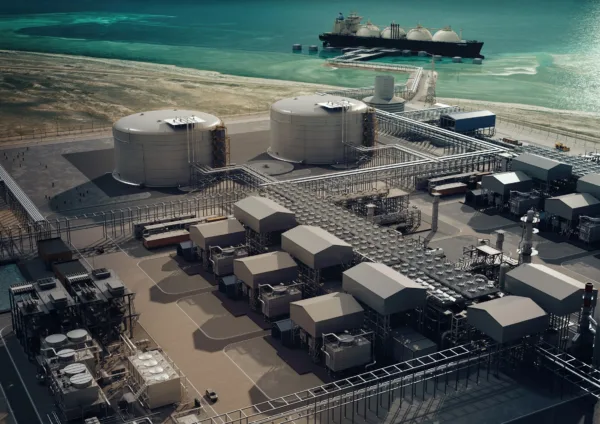
Safe & Green Holdings Corp. (NASDAQ: SGBX) is entering one of the most consequential chapters in its history as it begins operating under a unified energy vision shaped by Olenox’s first full year of stewardship. The company outlined this transition in a detailed shareholder update that explained how Safe & Green has moved beyond its identity as a modular-construction business and is now building an integrated, technology-enabled energy platform. The strategy presents a cohesive narrative that brings together the firm’s natural-gas assets, oil production base, container-manufacturing license, refining ambitions, modular digital infrastructure, and emerging crypto-mining capabilities.
The company’s exit from the modular-home segment was framed as an important structural reset rather than a retreat. Leadership noted that modular-home construction simply no longer fit the strengths or direction of the combined Safe & Green–Olenox platform. By eliminating this line of business, the company freed up capital, focus, and operational bandwidth. Meanwhile, the recycled-container construction license remains in force and is now being repurposed as a strategic manufacturing advantage. Instead of building housing, Safe & Green will use the same modular container frameworks for data centers, generator units, micro-refineries, mobile crypto-mining sites, and distributed power systems. This reuse of assets helps accelerate the pivot and reduces the cost of entering new verticals.
The company also emphasized that the transformation comes after a year of debt reduction, cost realignment, and the removal of operational inefficiencies that had weighed down performance. Safe & Green described 2024–2025 as a period of foundational rebuilding that made the new strategy possible. Investors watching the company’s latest moves have responded with cautious optimism, interpreting the shift as a sign that Safe & Green is positioning itself toward higher-growth categories that combine energy production with digital infrastructure demand.
How the company’s new platform plans to convert natural gas and oil output into higher-value energy products and digital workloads
A major pillar of the integrated strategy is the conversion of natural gas into electricity for data centers, crypto-mining operations, or small-scale industrial power users. Instead of simply selling raw hydrocarbons into commodity markets, Safe & Green wants to capture more value by pairing its energy production with modular processing and computing capacity. This creates a direct link between the firm’s upstream fuel sources and emerging demand for AI workloads, cloud computing, and high-density digital processing.
The company’s plans for containerized micro-refineries highlight another dimension of the model. These mobile units could convert oil production into diesel and other refined fuels at distributed sites rather than relying on external refineries. This type of on-site refining is gaining traction in global markets where smaller, more flexible refining solutions can help producers control pricing, logistics, and distribution. Safe & Green intends to use its container-manufacturing license to produce these micro-refineries in scalable, fast-deployment formats.
Leadership also suggested that the integrated approach allows for either in-house fabrication or licensed partnerships, depending on the project. This flexibility reduces manufacturing risk while still allowing Safe & Green to leverage its modular expertise. The company is presenting itself not only as an energy producer but as a developer of turnkey energy-and-data systems.
This approach fits a broader macro trend: AI-oriented data-center developers are increasingly looking for energy sources that are reliable, low-cost, and not dependent on grid constraints. Natural-gas-co-located data centers and crypto-mining sites are emerging in multiple regions as the digital economy’s appetite for power continues to grow. Safe & Green’s new direction aligns directly with that demand, offering a value chain that begins with hydrocarbon extraction and ends with power, cooling, compute, and digital output.
Why investors are watching the execution timeline for early signals that the transformation is working
Safe & Green’s shareholder letter highlighted progress in reducing debt, shedding non-core assets, and stabilizing cash usage during the first year under Olenox oversight. The market response showed signs of renewed investor interest, with recent trading sessions reflecting higher volatility and stronger volume. While the stock has traded near the mid-single-digit levels, the sentiment appears slightly more favorable now that a coherent energy-forward strategy has been articulated.
Even so, institutional analysts typically evaluate these transformations based on execution milestones rather than strategy statements alone. Investors will be looking for signals such as commercial purchase agreements for containerized power units, early deployment of micro-refineries, or pilot installations of modular data centers powered directly by Safe & Green–owned natural-gas assets. Transparent updates on production output, refining throughput, and signed customer commitments would further solidify confidence in the pivot.
The company acknowledged the need to deliver these milestones, noting that the next phase of its journey involves converting its vision into repeatable commercial outcomes. Market watchers generally agree that Safe & Green must demonstrate operational consistency to avoid concerns that the strategy is too broad or too capital intensive. Companies attempting energy-to-digital integration often face challenges related to permitting, equipment sourcing, project financing, and talent acquisition. Success will likely depend on disciplined execution and measured scaling rather than aggressive expansion.
While the firm has begun repositioning itself for long-term growth, the upcoming quarters will determine whether Safe & Green can successfully transition from strategic planning to revenue-generating deployment. Analysts covering small-cap energy and digital-infrastructure convergence plays typically watch for incremental wins rather than sweeping announcements. Each early contract or operating site brings validation and helps shape institutional sentiment.
How Safe & Green’s transformation fits into broader market trends shaping the next era of distributed energy and digital infrastructure demand
The company’s new identity emerges at a moment when crossovers between energy and computing are becoming a defining theme in global infrastructure. Artificial intelligence workloads are driving unprecedented demand for power, cooling, and distributed compute capacity. Natural-gas-based power hubs, remote data pods, and containerized server farms are increasingly seen as viable ways to address grid congestion, permitting delays, and rising electricity prices. Safe & Green’s pivot directly targets this convergence.
The company’s recycled-container construction capabilities are particularly relevant because modular deployments remain the fastest-growing category in data-center and mining infrastructure. Containerized units can be delivered, installed, and commissioned in a matter of months, appealing to customers facing rapid-scaling requirements. This trend shows no signs of slowing as AI models grow larger and enterprise GPU demand expands across financial services, defense computing, manufacturing analytics, and real-time intelligence workloads.
Safe & Green’s emphasis on distributed micro-refineries adds another angle to the strategy. These facilities allow producers to refine fuels close to extraction sites, reducing transport costs and creating more localized economic ecosystems. As geopolitical tensions and supply-chain pressures continue to influence global oil markets, the need for flexible refining capacity is increasing. The company’s entry into this space aligns with shifts toward smaller, modular, lower-footprint refining operations.
Investors monitoring the energy sector also note that vertical integration—moving from extraction to processing to end-use applications—can create more stable margins and reduce exposure to commodity volatility. By linking hydrocarbon production to digital infrastructure, Safe & Green is attempting to build a buffer against pricing swings and to anchor revenue in higher-value markets with long-term structural demand.
By linking hydrocarbon production to digital infrastructure, Safe & Green is attempting to build a buffer against pricing swings and to anchor revenue in higher-value markets with long-term structural demand. The company’s ability to scale this model will depend on how quickly it can demonstrate integrated sites that tie fuel output directly to computing and refining operations. If Safe & Green succeeds in proving that distributed energy, modular fabrication, and digital workloads can operate as a unified system, it could carve out a distinctive position in the evolving energy-tech landscape while appealing to customers seeking flexible, fast-deployment solutions in an increasingly capacity-constrained data economy.
Discover more from Business-News-Today.com
Subscribe to get the latest posts sent to your email.