




China’s Power Construction Corporation of China (POWERCHINA), a state-owned infrastructure giant, has accelerated its footprint in Eastern Europe with two milestone projects in Bosnia and Herzegovina (BiH). The Ivovik 84-megawatt wind farm and the Ulog hydropower plant represent not only significant renewable capacity additions but also a symbolic bridge between Chinese engineering and European climate transition goals.
How does the Ivovik wind project reshape Bosnia and Herzegovina’s renewable capacity pipeline?
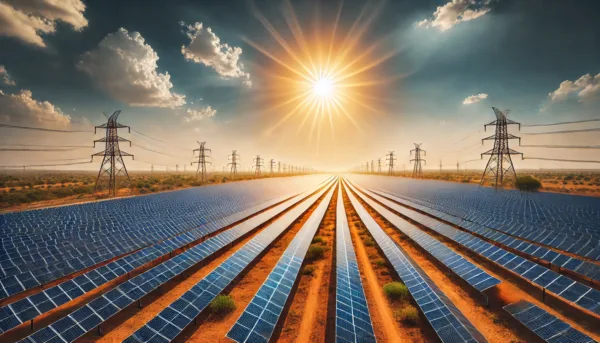
The Ivovik wind farm, located in southwestern BiH, is poised to become the country’s largest renewable generation facility upon completion. Developed under the first foreign concession for energy in BiH, the project stands out as the nation’s inaugural renewable initiative spearheaded by a Chinese company. Once fully operational, Ivovik is projected to generate 259 million kilowatt-hours annually, a contribution large enough to displace about 240,000 tons of carbon dioxide emissions each year.
For BiH, where hydropower has long been the dominant renewable source, the Ivovik wind farm broadens the energy mix and accelerates alignment with European Union decarbonization directives. Although BiH is not yet an EU member, the Energy Community Treaty obliges it to harmonize its power sector with EU sustainability frameworks. Analysts note that integrating large-scale wind projects not only diversifies supply but also improves grid resilience, especially in a country historically dependent on coal and hydro.
POWERCHINA’s decision to localize 90 percent of the project’s engineering, procurement, and construction reflects a strategy of embedding Chinese know-how while leveraging regional labor and supply chains. Observers in Sarajevo and Brussels interpret this as a calculated move to counter criticism of Chinese projects being overly insular.
Why is the Ulog hydropower plant considered a landmark for Chinese engineering in Europe?
In Kalinovik, Republika Srpska, the Ulog hydropower project signals another turning point. It is the first hydro development in BiH to be undertaken by a Chinese company and POWERCHINA’s debut hydropower EPC contract in Europe. While hydroelectricity already accounts for a large portion of BiH’s domestic generation, Ulog’s significance lies in the deeper integration of Chinese technical standards with European regulatory frameworks.
Hydropower projects in the Balkans have historically been politically sensitive due to environmental concerns, including impacts on river ecosystems and biodiversity. Environmental groups have frequently challenged projects along the Neretva River Basin, where Ulog is situated. POWERCHINA has emphasized that the project will conform to both local and EU environmental standards, presenting it as a test case for how Chinese companies can navigate European regulatory scrutiny.
When operational, Ulog will contribute zero-emission baseload generation to BiH and its neighbors, supporting regional power trading across Central and Eastern Europe. With rising demand from industrial hubs in nearby Croatia, Serbia, and Montenegro, the project positions BiH as a potential net exporter of renewable electricity.
How do POWERCHINA’s European ventures fit into China’s wider global energy transition strategy?
China has been exporting renewable infrastructure expertise aggressively since the Belt and Road Initiative (BRI) expanded into the energy domain in the mid-2010s. Initially focused on coal and large-scale hydro projects, the strategy has pivoted in recent years toward wind, solar, and small-scale hydro, reflecting Beijing’s climate commitments.
POWERCHINA, as one of the country’s flagship engineering firms, has delivered wind and hydro assets in Africa, Southeast Asia, and Latin America. Its entry into Europe—especially the Balkan Peninsula—marks a natural extension of this global portfolio. The Balkans are strategically positioned as a gateway between Asia and the EU power market, making BiH’s projects not just local developments but also components of a broader energy corridor.
Experts point out that aligning Chinese construction methods with European Union technical and safety standards is central to Beijing’s soft power ambitions. The localization rate in Ivovik and the regulatory compliance at Ulog are part of a calculated demonstration that Chinese companies can adapt to European frameworks rather than circumvent them.
What are the implications for investor sentiment and energy sector competition in Eastern Europe?
Although POWERCHINA itself is not publicly traded, its parent ecosystem influences listed subsidiaries and peer firms in both Shanghai and Hong Kong markets. Investors in Chinese renewable engineering stocks have historically treated European contract wins as validation of international competitiveness. In August 2025, renewable infrastructure shares on the Shanghai Stock Exchange Renewable Index rose about 3 percent following announcements of European project milestones, with analysts attributing part of the momentum to deals such as Ivovik and Ulog.
Sentiment analysis of institutional flows shows that foreign institutional investors (FIIs) have been selectively increasing exposure to Chinese construction and energy equipment suppliers tied to overseas renewable expansion. Meanwhile, domestic institutional investors (DIIs) remain cautious, citing foreign exchange risks and potential regulatory friction with the EU.
In BiH itself, investor sentiment is more mixed. Local utilities and policymakers have welcomed the capital inflows, while some Western European institutions have raised concerns about long-term governance and debt sustainability in infrastructure contracts. Analysts suggest that European utilities, particularly in Austria and Germany, may respond by intensifying partnerships or acquisitions in the Balkan renewable space to counterbalance Chinese influence.
How could these projects shape Bosnia and Herzegovina’s path toward European integration?
BiH’s path to EU accession has long been complicated by political fragmentation between the Federation of Bosnia and Herzegovina and Republika Srpska. Energy policy has often been a battleground between local autonomy and EU harmonization. By delivering projects that align with EU renewable directives, POWERCHINA indirectly accelerates BiH’s compliance trajectory.
European policymakers are likely to view the success or failure of Ivovik and Ulog as litmus tests for BiH’s readiness to manage foreign partnerships under EU regulatory expectations. If the projects achieve grid integration smoothly, BiH may strengthen its case for faster EU accession talks. Conversely, if environmental or financial disputes emerge, they could be cited as evidence of governance gaps.
For China, the symbolism is clear. By embedding itself in BiH’s energy transition, Beijing signals that it can be a constructive partner in Europe’s climate goals, even as geopolitical tensions continue elsewhere.
Why do these developments matter for the broader European energy transition?
Europe’s energy transition has been shaped by two competing imperatives: reducing dependence on Russian fossil fuels and scaling renewables fast enough to meet 2030 emissions targets. The Balkans, with untapped hydro and wind resources, are increasingly viewed as part of the solution. Projects like Ivovik and Ulog help close the gap between ambition and capacity.
Moreover, they set precedents for how non-EU players can integrate into Europe’s clean-energy architecture. If POWERCHINA’s projects are deemed successful, other Chinese firms may follow, bringing capital and construction speed. European policymakers will need to balance the benefits of faster decarbonization with concerns about dependency on Chinese infrastructure.
From a market perspective, successful execution could boost confidence in cross-continental supply chains for renewable equipment. That has ripple effects for listed firms supplying turbines, grid systems, and related technology—both in Europe and in China.
Discover more from Business-News-Today.com
Subscribe to get the latest posts sent to your email.