



In a year where energy transition rhetoric collided head-on with winter supply anxiety, one country has emerged as the quiet constant in Europe’s energy equation: Norway. With a combination of political stability, low-emission production, infrastructure-ready discoveries, and trusted commercial practices, the Nordic nation is becoming Europe’s last dependable gas engine.
Norwegian gas has not only replaced significant volumes lost from Russia. It is also gaining favour among utilities, traders, and policymakers across the continent who now place a premium on reliability, emissions profile, and geopolitical alignment. While much of the attention remains on LNG megadeals from Qatar or the shale surge from the United States, it is the pipeline-fed, infrastructure-rich gas from Norway that is quietly powering Europe’s baseload needs.
Equinor ASA (OSE: EQNR), the country’s largest energy company, embodies this shift. Its recently announced twin discoveries in the North Sea—Lofn and Langemann—may not be blockbusters in volume. But they reinforce a model that is becoming central to Europe’s gas security: low-risk, low-emission, near-infrastructure gas development.
Why Norway’s gas exports are increasingly critical to European energy security in 2025
Following Russia’s invasion of Ukraine and the subsequent collapse of pipeline gas deliveries to Europe, the continent scrambled to diversify its energy inputs. LNG imports rose sharply, new regasification terminals were commissioned in Germany, and alternative suppliers from the United States, Algeria, and Qatar were brought into longer-term arrangements.
Amid this frantic realignment, Norway stood out for different reasons. It did not need to overhaul trade flows. It did not demand long-dated offtake contracts with rigid destination clauses. It simply delivered more. Reliably and cleanly.
In 2023 and 2024, Norwegian pipeline gas became the single largest source of natural gas imports to the European Union. Countries such as Germany, Belgium, and the Netherlands doubled down on pipeline connectivity to Norwegian fields. With strong governmental backing, export volumes from Norway stabilized at over 110 billion cubic meters annually, and the country became a core anchor for the European Commission’s REPowerEU gas resilience goals.
By 2025, Norwegian gas is no longer seen as a bridge fuel. It is increasingly viewed as a permanent, policy-aligned pillar in Europe’s diversified supply strategy, especially in scenarios where renewables intermittency and declining domestic production persist.
How infrastructure hubs like Sleipner, Troll, and Ormen Lange give Norway a long-term edge
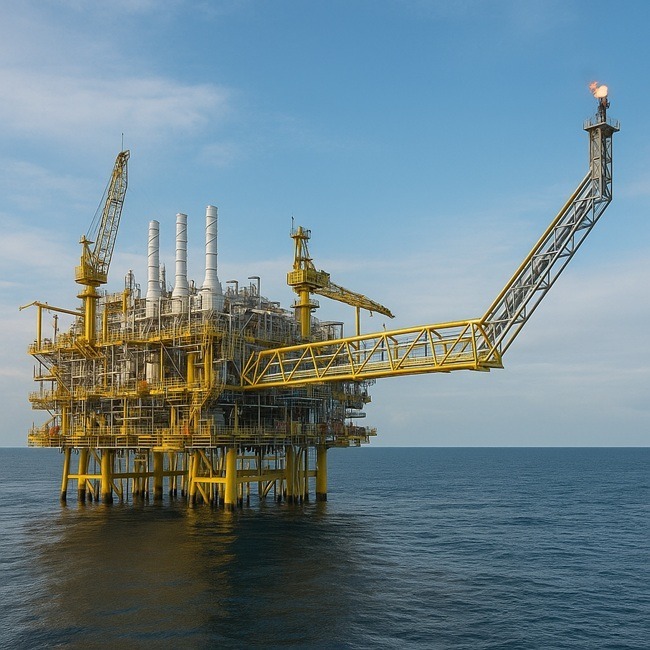
What sets Norway apart from other gas exporters is not just reservoir quality or policy alignment. It is the sheer maturity and efficiency of its offshore infrastructure. Fields like Troll, Sleipner, and Ormen Lange are not just production centers. They are integrated export hubs with compression platforms, CO₂ management systems, and deepwater pipelines that feed directly into the European grid.
The Troll field, operated by Equinor, remains the largest gas field in the North Sea. Its Phase 3 development, completed in 2021, extended its production life to beyond 2050. Ormen Lange, operated by Shell, taps deepwater gas reserves and feeds the Nyhamna processing plant before exporting via the Langeled pipeline directly to the UK.
Sleipner, though smaller, plays a strategic role due to its ability to process gas from multiple satellite fields including Gudrun and Gungne. It is also one of the few gas hubs globally that incorporates carbon capture and storage directly into its operations. Over 25 million tonnes of CO₂ have been sequestered there since the late 1990s.
These hubs give Norway what other exporters often lack: flexibility. As new discoveries like Lofn and Langemann come online, they can be tied back to existing systems within two to three years without the need for new midstream buildout. This not only reduces development costs but also emissions and permitting timelines, making Norwegian gas more competitive and responsive to market needs.
What sets Norway’s gas strategy apart from other exporters in terms of emissions and trust
While most natural gas producers now speak the language of emissions mitigation, few match the practical implementation seen in Norway. The country has applied carbon pricing to offshore emissions since 1991 and enforces some of the strictest environmental standards globally for subsea operations.
As a result, Norwegian gas boasts one of the lowest upstream CO₂ footprints per megajoule of energy delivered. Operators like Equinor and Aker BP ASA (OSE: AKRBP) routinely invest in electrification of offshore platforms, reinjection of associated CO₂, and low-flaring policies. These initiatives do more than meet ESG targets. They increase the bankability of Norwegian gas for European buyers now subject to Scope 3 reporting obligations and emissions import taxes.
Trust also plays a central role. In an era when geopolitical considerations weigh heavily on energy trade, Norway’s position as a stable democracy, NATO member, and EU-aligned partner makes it a preferred counterparty. No European buyer is worried about contract renegotiation, resource nationalism, or political interference when dealing with Norwegian gas exports.
In 2025, that reliability has become currency. While other exporters seek to lock in buyers through long-term offtake rigidity, Norway’s value proposition is flexibility, transparency, and regulatory alignment.
How Equinor’s new North Sea discoveries reinforce the narrative of scalable, low-carbon supply
The December 2025 announcement of gas and condensate discoveries at the Lofn and Langemann wells in the North Sea underscores Norway’s ability to continue delivering incremental, emissions-compliant volumes.
With an estimated combined resource base of 30 million to 110 million barrels of oil equivalent, the finds may seem modest in a global context. But their true value lies in the development model. Both fields are located near the Sleipner hub and can be tied back through existing subsea infrastructure, ensuring rapid monetisation and minimal environmental impact.
Equinor’s strategy, anchored in infrastructure-led exploration, is emblematic of Norway’s broader approach. Rather than chase billion-barrel elephants in frontier regions, the company is extracting overlooked value from known basins using advanced seismic imaging and digital reservoir models to reduce risk.
These discoveries, and others like them, enable Norway to keep its export promise while reducing carbon intensity. They also enhance supply security for Europe, particularly during periods of seasonal volatility or demand spikes when LNG cargoes may be delayed or redirected.
What institutional investors and policymakers expect from Norway’s future gas roadmap
From an institutional standpoint, Norway is increasingly seen as the most investable gas jurisdiction in the world. It offers stable returns, transparent permitting, and a policy regime aligned with both climate and energy security goals. This is particularly attractive in an era where upstream oil and gas projects face heightened scrutiny and investor activism.
Analysts expect Norway to continue playing a central role in Europe’s supply mix through at least 2040, especially as domestic production in countries like the Netherlands and Germany declines. The European Union’s upcoming Methane Strategy and Carbon Border Adjustment Mechanism are likely to favour pipeline-fed, low-methane, low-CO₂ gas sources. On those metrics, Norway is uniquely positioned.
On the policy front, Norway has reaffirmed its commitment to responsible exploration. The government’s 2025 licensing round focused heavily on mature basin potential and tie-back viability, ensuring that future production remains efficient, fast-cycle, and ESG-aligned.
With Europe now defining “energy resilience” in terms of both reliability and emissions performance, Norway finds itself in a rare position: able to deliver on both counts without overpromising or overreaching.
Discover more from Business-News-Today.com
Subscribe to get the latest posts sent to your email.