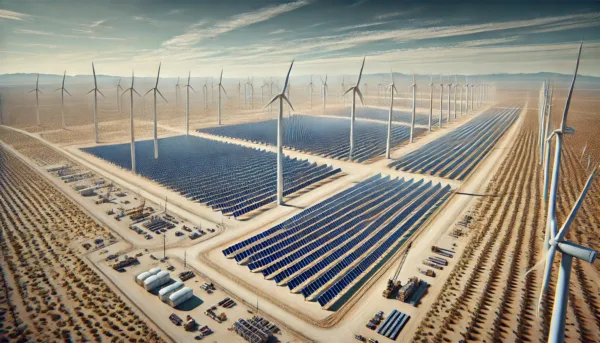
Energy Vault Holdings, Inc. (NYSE: NRGV) has officially closed the acquisition of the 125 MW/1,000 MWh Stoney Creek Battery Energy Storage System (BESS) in New South Wales, Australia, following final sign-off from the country’s Foreign Investment Review Board (FIRB). The transaction, announced earlier in 2025, is among the largest single-site battery deals in the Asia-Pacific region this year, positioning Energy Vault as a leading operator in Australia’s high-growth long-duration storage segment.
Strategically located to serve both the National Electricity Market (NEM) and New South Wales’ regional load centres, Stoney Creek will provide critical balancing services as the state accelerates the retirement of coal generation assets. Energy Vault CEO Robert Piconi described the completion as a “transformational moment” for the company’s build-own-operate (BOO) portfolio, signalling a long-term operational commitment in “one of the world’s most dynamic clean energy markets.”
What is the scale and technical profile of the Stoney Creek BESS and why is its long-duration capability significant?
The Stoney Creek facility will deliver 125 MW of power with a total energy storage capacity of 1,000 MWh, enabling up to eight hours of full-load discharge. This firmly places the asset in the long-duration storage category, a segment increasingly sought after to provide reliability in renewable-heavy grids.
The system will serve multiple market roles, including shifting surplus midday solar into evening demand peaks, providing frequency control ancillary services (FCAS) during instability events, and firming renewable portfolios to achieve baseload-equivalent delivery. The installation will use lithium-ion technology from Tier 1 suppliers, integrated with Energy Vault’s EVx™ energy management platform to optimise dispatch across wholesale and ancillary service markets.
Why does FIRB approval matter for international investment in Australian energy infrastructure?
FIRB is Australia’s primary regulator for foreign investment in critical infrastructure. Approval confirms that the acquisition aligns with national interest and security considerations, particularly in sensitive energy generation and storage sectors.
Industry observers note that FIRB clearance is widely regarded as a sign of regulatory confidence in a company’s ability to meet Australia’s stringent governance and operational standards for critical infrastructure. Such approval is often seen as a strategic advantage for foreign investors seeking to expand their role in the country’s fast-growing clean energy and grid-stability markets.
How does the acquisition align with Energy Vault’s shift to a BOO strategy?
Originally known for its gravity-based storage R&D, Energy Vault has expanded into a diversified Independent Power Producer (IPP) model. The BOO strategy focuses on developing or acquiring utility-scale storage in growth markets, integrating proprietary control software, and retaining operational ownership to secure recurring revenue streams.
Stoney Creek now joins a 1.5 GW global BOO pipeline spanning North America, Europe, and Asia-Pacific, strengthening Energy Vault’s revenue visibility and execution track for 2026–2027.
How does Australia’s market context enhance the project’s revenue potential?
New South Wales is preparing for the closure of multiple coal plants by 2029, creating a substantial need for firming capacity. The Australian Energy Market Operator (AEMO) projects the NEM will require 19 GW of new storage by 2035.
In this environment, large-scale long-duration BESS assets can capture value through wholesale arbitrage, FCAS revenues during grid stress, and long-term offtake contracts with retailers, corporates, and state agencies. Stoney Creek’s eight-hour profile offers a competitive edge in securing multi-year capacity and reliability contracts.
How are competitors positioning in Australia’s large-scale storage sector?
The Australian grid-scale storage market is competitive, but multi-hour systems remain scarce. Fluence Energy has recently delivered the 150 MW/300 MWh Hazelwood BESS in Victoria, Tesla continues Megapack deployments including the 300 MW/450 MWh Victorian Big Battery expansion, and Powin Energy is advancing multi-GWh projects in Queensland and South Australia.
However, few match Stoney Creek’s eight-hour capacity, giving Energy Vault an early-mover advantage in long-duration dispatch.
How is the project financed and what returns are targeted?
While the purchase price remains undisclosed, industry benchmarks estimate capital costs for an eight-hour system of this scale at between A$1.0–1.2 billion. Financing is expected to combine Australian bank project debt under green finance mandates, equity from Energy Vault’s recently announced US$300 million Asset Vault preferred equity raise, and potential state-level renewable incentives.
The company is understood to be targeting a low-teens internal rate of return (IRR) through a mix of merchant market participation and contracted cash flows.
What is the institutional and analyst sentiment on the acquisition?
Macquarie Asset Management said Energy Vault’s vertically integrated approach into Australia differentiates it from pure-play technology vendors. UBS reaffirmed a “Buy” rating on NRGV, citing a “de-risked execution pathway” from BOO assets driving earnings growth from 2026.
However, analysts also flagged the need for robust augmentation plans to mitigate lithium battery degradation over long-term operation.
What is the project’s construction timeline and expected grid impact?
Mechanical completion is targeted for late 2026, with commercial operations planned for Q1 2027. Once online, Stoney Creek is expected to power approximately 150,000 homes for eight hours, reduce peaking gas reliance, cut an estimated 450,000 tonnes of CO₂ annually, and enhance resilience during extreme weather and generator outages.
Why the Stoney Creek BESS acquisition could define Energy Vault’s long-term success in Australia’s fast-growing battery storage market
The acquisition of the 125 MW/1,000 MWh Stoney Creek Battery Energy Storage System represents more than just another project in Energy Vault’s portfolio — it is a pivotal move that could shape the company’s competitive position in Australia’s grid-scale storage sector for the next decade. By securing a long-duration asset in New South Wales, the company has gained immediate scale in a market where multi-hour storage capacity is still in short supply but in high demand due to the country’s rapid coal plant retirements.
Regulatory clearance from Australia’s Foreign Investment Review Board (FIRB) adds another layer of strategic value. FIRB approval not only legitimises Energy Vault’s operational credentials in one of the world’s most scrutinised infrastructure markets, but it also signals confidence from policymakers in the company’s ability to operate assets that are critical to national energy security. This validation can be a differentiator when competing for future projects, joint ventures, or government-backed capacity programs.
From a commercial perspective, Stoney Creek is ideally positioned to capture multiple high-value revenue streams — from wholesale arbitrage during solar and wind variability, to frequency control ancillary services (FCAS) during grid instability, to long-term firming contracts with retailers and commercial-industrial customers. Its eight-hour storage duration opens doors to lucrative capacity tenders that shorter-duration assets may not qualify for, creating a moat in an increasingly competitive storage landscape.
However, execution risk will remain a central focus. Timely delivery of the project by late 2026, effective integration of the EVx energy management platform, and proactive battery augmentation planning will determine whether the asset delivers its projected returns over its lifetime. Additionally, navigating Australia’s evolving market rules — from potential reforms to FCAS frameworks to changes in renewable integration policy — will require agile operational and regulatory strategies.
If delivered on schedule and operated to its full technical potential, Stoney Creek could become the flagship example of Energy Vault’s transformation from a technology licensor into a fully integrated, global owner-operator of grid-critical energy storage assets. For investors and industry watchers, its performance in the first years of operation will serve as a benchmark for the viability of long-duration BESS projects in Australia’s transition-era electricity market.
Discover more from Business-News-Today.com
Subscribe to get the latest posts sent to your email.