



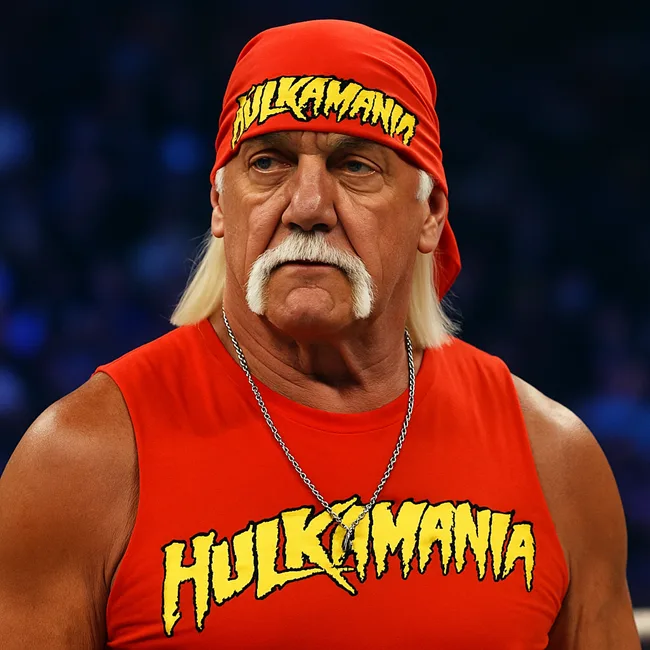
The wrestling world still talks about Hulk Hogan’s shocking heel turn at Bash at the Beach 1996, a moment that completely changed professional wrestling’s creative direction. Hogan, who died at 71 on July 24, 2025, will forever be remembered for his heroic “Hulkamania” persona. But for many fans and industry insiders, his decision to embrace villainy as the leader of the New World Order (nWo) remains his boldest and most influential career move.
What happened at Bash at the Beach 1996 that made Hulk Hogan’s heel turn an industry-defining wrestling moment
On July 7, 1996, at WCW’s Bash at the Beach pay-per-view in Daytona Beach, Florida, Hogan stunned fans by betraying his allies during a six-man tag team match. Entering late into the bout, Hogan attacked Macho Man Randy Savage with his signature leg drop, aligning himself with Scott Hall and Kevin Nash. This shocking move officially introduced the New World Order, a faction that portrayed itself as an invading force aiming to “take over” World Championship Wrestling.
The audience reaction was unprecedented. Fans who had cheered Hogan for more than a decade suddenly erupted in anger, pelting the ring with trash, soda cups, and even food. Broadcaster Bobby Heenan’s iconic commentary—“Whose side is he on?”—captured the disbelief that swept across the arena. Hogan’s post-match promo, where he declared the nWo was “the future of wrestling,” turned him into one of the most hated villains in wrestling history almost overnight.
Why did Hulk Hogan abandon his Hulkamania hero persona, and how did fans respond in the weeks after the heel turn
Hogan’s decision to abandon his clean-cut, all-American persona was motivated by declining fan interest. By the mid-1990s, audiences had grown tired of the traditional hero archetype. Younger viewers were gravitating toward edgier stars, and Hogan’s once-beloved yellow-and-red attire was starting to feel outdated.
The heel turn redefined his character. Rebranded as “Hollywood Hogan,” he traded his bright ring gear for black and white nWo colors, complete with a black beard dyed with white streaks. His mannerisms changed too, with Hogan mocking fans, boasting about his Hollywood fame, and cheating to win matches. The transformation worked instantly. Despite the boos, Hogan’s merchandise sales surged, proving that his reinvention had tapped into the anti-hero trend dominating 1990s pop culture.
How did Hulk Hogan’s New World Order storyline change professional wrestling storytelling and influence future WWE stars
Hogan’s heel turn and the formation of the nWo are widely credited with sparking the Monday Night Wars, the heated ratings battle between WCW’s Monday Nitro and WWE’s Monday Night Raw. Under the nWo storyline, WCW portrayed Hogan, Hall, and Nash as outsiders “invading” the company. This blurring of scripted storylines and reality captivated fans, making WCW the top-rated wrestling show for 83 consecutive weeks.
The nWo narrative also popularized larger wrestling factions and inter-promotional storylines, influencing how wrestling companies approached long-term booking. WWE would later replicate this success with groups like D-Generation X, Evolution, and The Shield, all of which used elements of rebellion and dominance pioneered by the nWo.
Modern wrestling stars, including Roman Reigns and Cody Rhodes, have acknowledged Hogan’s heel work as foundational for understanding character psychology. Wrestling historians argue that without Hogan’s heel turn, the anti-hero boom of the late 1990s—led by Stone Cold Steve Austin and The Rock—might not have happened in the same way.
What were the commercial and cultural impacts of Hulk Hogan’s nWo run during wrestling’s Monday Night Wars
The nWo storyline revitalized WCW financially. Merchandise featuring the black-and-white nWo logo became best-sellers, surpassing even WWE’s top products at the time. Pay-per-view buyrates increased significantly, with events like Starrcade 1997, where Hogan defended the WCW World Heavyweight Championship against Sting, becoming one of WCW’s most successful shows ever.
Culturally, Hogan’s heel turn reflected the 1990s fascination with rebellious, anti-establishment figures. The character of Hollywood Hogan mirrored real-life shifts in entertainment, where audiences favored flawed, complex characters over traditional heroes. This alignment with broader pop culture trends helped wrestling penetrate mainstream media, with nWo segments frequently covered by sports and entertainment magazines.
Why Hulk Hogan’s heel turn remains relevant to WWE storytelling and modern wrestling audiences even decades later
Even decades later, Hogan’s heel turn remains one of the most referenced storylines in wrestling history. WWE frequently uses clips of Hogan’s nWo run in documentaries, and his 2020 induction into the WWE Hall of Fame as part of the New World Order acknowledged its lasting legacy.
Today’s wrestling promotions continue to borrow from the nWo formula. WWE’s Bloodline storyline, led by Roman Reigns, echoes the same themes of dominance, family loyalty, and manipulation of power that Hogan’s nWo faction pioneered. Fans and analysts often cite Hogan’s willingness to reinvent himself as a lesson in staying relevant, proving that even a beloved hero can become a compelling villain if the timing is right.
Discover more from Business-News-Today.com
Subscribe to get the latest posts sent to your email.