



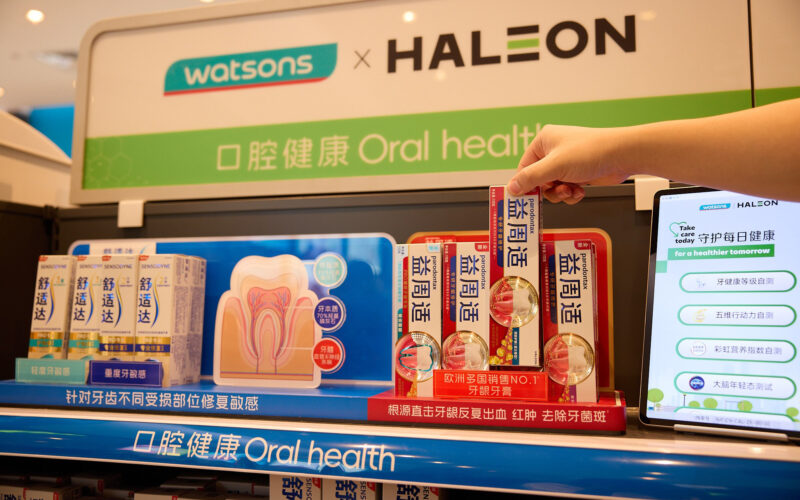
Haleon plc (LSE: HLN; NYSE: HLN) has announced a £65 million investment to build a new oral health manufacturing facility in Shanghai, a move designed to accelerate its expansion in China’s fast-growing consumer healthcare market. The plant will support the production and distribution of oral care products including Sensodyne and parodontax while enabling the company to deepen its presence in China’s rapidly expanding gum health segment. The decision reflects Haleon plc’s broader strategy to localize supply chains, strengthen manufacturing resilience, and capture rising demand for preventative healthcare among Chinese consumers. For investors and industry competitors alike, the development highlights how global consumer health companies increasingly view China as a pivotal long-term growth market rather than simply a distribution opportunity.
The facility will be located in Shanghai’s Lingang New Area, an industrial hub that has attracted substantial investment in advanced manufacturing and healthcare industries. By expanding its local production footprint, Haleon plc aims to shorten supply chains, respond more quickly to evolving consumer preferences, and increase its ability to scale new products within the country. The project also aligns with the company’s ambition to reach one billion additional consumers globally by 2030 while generating roughly £800 million in productivity gains over the next five years through operational efficiencies.
Why is Haleon plc investing £65 million in Shanghai to capture China’s rapidly expanding gum health market?
The strategic rationale behind Haleon plc’s Shanghai investment begins with the scale and trajectory of China’s oral healthcare market. China is currently the world’s largest gum health market, estimated to be worth approximately £860 million. At the same time, awareness of preventative oral care is rising rapidly as consumers increasingly adopt daily healthcare routines influenced by both digital health education and a broader shift toward wellness.
More than seventy percent of adults in China reportedly experience some form of gum-related issue such as bleeding, swelling, or sensitivity. Historically, many consumers relied on traditional remedies or general toothpaste formulations that focused primarily on freshness and whitening rather than targeted gum treatment. In recent years, however, demand has shifted toward clinically validated products that address underlying dental conditions.
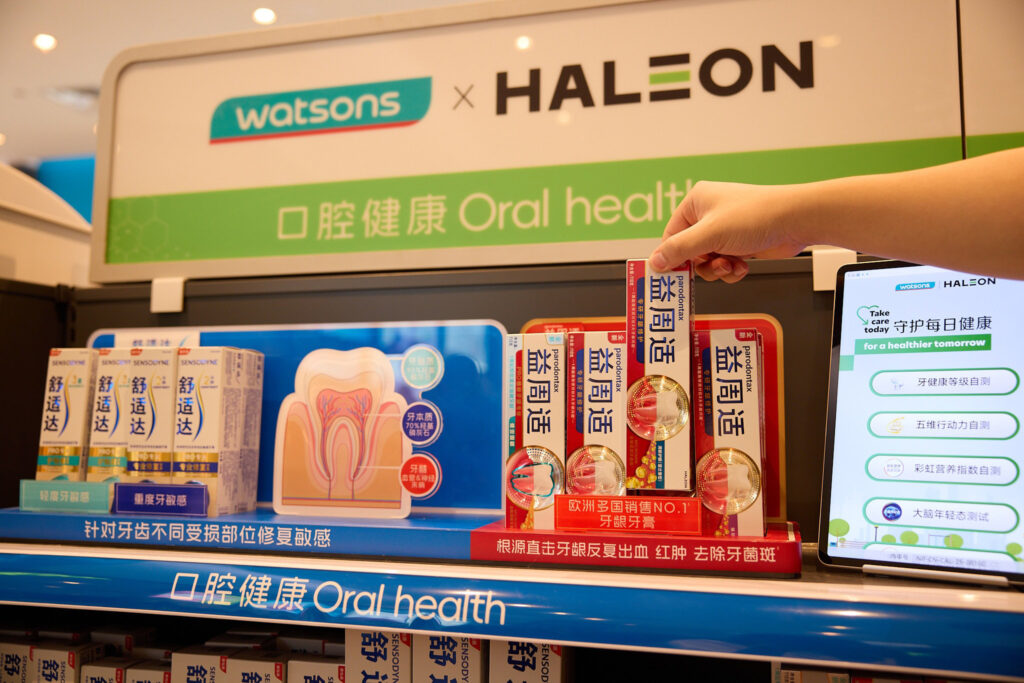
For Haleon plc, this shift plays directly into the strengths of brands such as parodontax, which is positioned as a scientifically formulated toothpaste designed to tackle the root causes of bleeding gums by removing plaque buildup. The company has identified gum health as one of the most attractive growth segments within oral care globally, and China provides an unusually large addressable market.
The new manufacturing plant therefore serves as both a production facility and a strategic anchor that supports the scaling of gum health products across a country where rising disposable income is transforming consumer purchasing behavior.
How does the parodontax brand expansion reflect changing consumer health behavior in China?
The growth trajectory of parodontax in China illustrates a broader transformation in consumer health preferences. As disposable incomes increase across both urban and emerging metropolitan regions, consumers are increasingly willing to pay a premium for products perceived as medically effective or endorsed by healthcare professionals.
Haleon plc has observed that Chinese consumers are incorporating preventative oral care into everyday routines, a shift that parallels trends seen earlier in Western markets. Rather than viewing dental health as something addressed only when problems occur, consumers are increasingly treating it as part of a broader wellness lifestyle.
However, introducing a globally standardized healthcare product into China requires significant localization. Parodontax toothpaste, for example, contains sodium bicarbonate as its primary active ingredient. While clinically effective at breaking down plaque, the compound creates a distinctive taste profile that differs markedly from the sweeter or floral flavors commonly found in Chinese toothpaste brands.
To address this challenge, Haleon plc’s research and development teams collaborated with local sensory scientists to adjust flavor profiles without compromising the core formulation. The adapted version maintains its therapeutic functionality while delivering a brushing experience that aligns more closely with local consumer preferences, including a foamier texture and more aromatic taste.
Packaging design has also been refined to emphasize the product’s clinical positioning while appealing to China’s increasingly sophisticated retail environment, where consumers are often influenced by both aesthetic presentation and perceived medical credibility.
Why is Haleon plc targeting China’s tier two and tier three cities for oral care growth?
A particularly notable element of Haleon plc’s strategy involves its focus on expanding into China’s tier two and tier three cities rather than concentrating solely on established metropolitan markets such as Beijing, Shanghai, and Guangzhou.
These secondary cities represent one of the most significant consumer growth opportunities in China’s healthcare sector. Rising middle-class populations, improving healthcare awareness, and expanding retail infrastructure have created a rapidly developing market for premium health products.
Haleon plc plans to extend distribution of parodontax to approximately thirty Chinese cities by the end of 2027. Combined, these markets represent a consumer base exceeding 250 million people. For multinational consumer health companies, this segment of the Chinese market offers an attractive balance of strong demand growth and relatively lower competitive saturation compared with major metropolitan areas.
Distribution will rely on a multi-channel retail model that integrates e-commerce platforms such as Douyin alongside traditional retail channels including pharmacies and warehouse club stores. This hybrid retail approach reflects how Chinese consumers increasingly move fluidly between online and offline purchasing environments.
Pharmacy networks remain particularly important for oral health products because recommendations from dental professionals can significantly influence consumer purchasing decisions. Haleon plc has therefore maintained strong relationships with dental practitioners who frequently recommend its gum health products to patients experiencing early symptoms of gum disease.
How does localized manufacturing strengthen Haleon plc’s China supply chain strategy?
The Shanghai manufacturing facility represents more than simply additional production capacity. It reflects a broader strategic shift toward localized supply chains within consumer healthcare.
Historically, multinational healthcare companies often supplied China through imported products manufactured in Europe or other global production hubs. While this model offered economies of scale, it also created longer supply chains that could slow responsiveness to market trends.
By bringing production closer to consumers, Haleon plc expects to reduce lead times, adapt formulations more rapidly, and improve overall supply chain resilience. The strategy also allows the company to integrate local research and development capabilities more directly with manufacturing operations.
China’s healthcare regulatory framework increasingly favors companies that demonstrate long-term commitment to local production and innovation. Establishing a manufacturing base within Shanghai’s Lingang industrial zone therefore positions Haleon plc more favorably within China’s broader industrial and healthcare development policies.
Local production also enables the company to manage cost pressures more effectively while preserving margins in a market where premium products must still remain competitively priced relative to domestic brands.
What does Haleon plc’s China investment signal about the future of the global consumer healthcare industry?
The £65 million investment should also be interpreted within the broader strategic transformation of Haleon plc itself. The company was created through the separation of the consumer healthcare business previously operated jointly by GlaxoSmithKline plc and Pfizer Inc., and it now operates as a focused consumer health company with a portfolio spanning oral health, vitamins and supplements, pain relief, respiratory health, digestive health, and therapeutic skin health.
For Haleon plc, China represents one of the most important international growth markets as it seeks to expand beyond traditional strongholds in North America and Europe. The company’s long-term strategy revolves around building strong category leadership across several high-growth health segments, and oral care remains one of its most globally scalable franchises.
The China investment follows another major strategic move completed in 2025 when Haleon plc acquired full ownership of its TSKF joint venture in China through an investment of approximately £700 million. That transaction gave the company direct control over its over-the-counter healthcare business in the country, removing previous partnership constraints and allowing for more integrated strategic planning.
Taken together, the acquisition and the new manufacturing plant demonstrate a consistent commitment to establishing China as a core pillar of Haleon plc’s long-term growth strategy.
For the broader consumer healthcare industry, the move reflects an increasingly competitive race to capture rising healthcare spending across Asia’s largest economies. Companies that can combine global scientific credibility with localized product development are likely to secure a meaningful advantage in this evolving market.
Key takeaways on what Haleon plc’s China investment means for global oral care competition
- Haleon plc’s £65 million Shanghai manufacturing investment signals that China has become a central pillar of the company’s global growth strategy.
- China’s gum health market, valued at approximately £860 million, represents one of the largest opportunities within the global oral care sector.
- Rising awareness of preventative healthcare among Chinese consumers is driving increased demand for clinically validated oral care products.
- Localization of product flavor profiles and packaging highlights the importance of adapting global healthcare brands to regional consumer preferences.
- Expansion into tier two and tier three cities provides access to a rapidly growing middle-class consumer base exceeding 250 million people.
- The new manufacturing facility strengthens Haleon plc’s supply chain resilience and improves its ability to respond quickly to market demand.
- Integration of e-commerce platforms and pharmacy networks reflects the hybrid retail model that increasingly defines China’s consumer healthcare landscape.
- The investment follows Haleon plc’s £700 million acquisition of its Chinese joint venture, demonstrating sustained long-term commitment to the market.
- Competitors in consumer healthcare will likely accelerate their own localization strategies as China’s oral care market becomes more competitive.
- The development reinforces the broader trend of multinational healthcare companies building regional manufacturing capabilities to support future growth.
Discover more from Business-News-Today.com
Subscribe to get the latest posts sent to your email.