




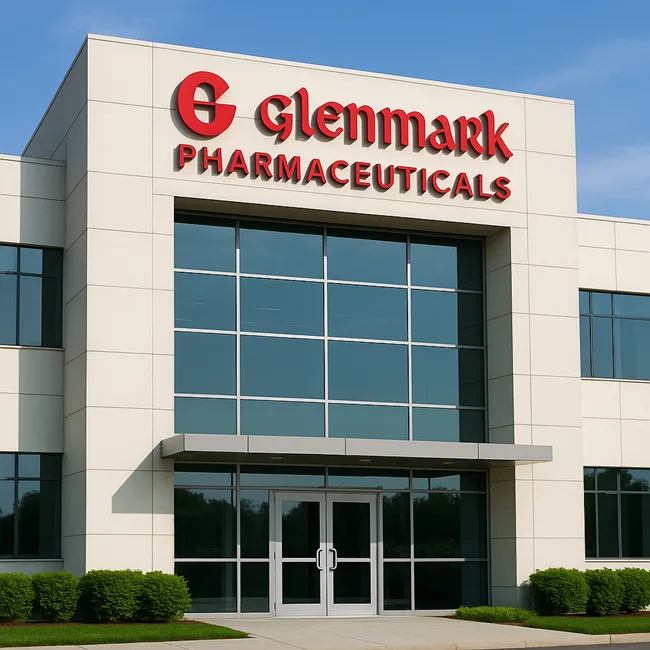
Why did Glenmark Pharmaceuticals’ stock hit the 10% upper circuit on July 11, 2025?
Glenmark Pharmaceuticals Limited (NSE: GLENMARK, BSE: 532296) saw its share price surge 10% to ₹2,094.40 during morning trade on July 11, 2025, hitting the upper circuit and marking a new 52-week high. The rally followed the announcement of a strategic licensing and commercialization agreement between its wholly-owned subsidiary, Ichnos Glenmark Innovation Inc. (IGI), and the U.S.-based global biopharmaceutical giant AbbVie Inc. (NYSE: ABBV) for the oncology asset ISB 2001. With this move, Glenmark aims to strengthen its oncology footprint across emerging markets while partnering with AbbVie for development and commercialization in North America, Europe, Japan, and Greater China.
The stock opened at ₹2,094.40, matching its day’s high, low, and volume-weighted average price (VWAP), implying heavy accumulation and absence of selling pressure. The counter clocked a traded volume of 2.02 lakh shares, with a total traded value of ₹42.38 crore. A massive buy quantity of over 38 lakh shares was seen on the order book with zero sell-side availability, confirming a locked upper circuit.
What is ISB 2001 and why is it central to Glenmark’s oncology expansion strategy?
ISB 2001 is a first-in-class trispecific T-cell engager engineered using IGI’s proprietary BEAT protein platform, currently in Phase 1 clinical development for relapsed/refractory multiple myeloma. It is designed to simultaneously target BCMA and CD38 on myeloma cells and CD3 on T cells. This unique design is intended to improve efficacy at low antigen expression levels while reducing the toxicity risks typically associated with first-generation bispecific antibodies.
Recent data presented at ASCO 2025 showed that ISB 2001 achieved an overall response rate of 79% and a complete or stringent complete response rate of 30% at active doses of ≥50 µg/kg in a heavily pretreated population. With Fast Track and Orphan Drug Designations from the U.S. Food and Drug Administration already secured, the drug is seen as a high-potential candidate for accelerated approval and expanded trials.
What are the terms of Glenmark’s partnership with AbbVie and how are responsibilities divided?
Under the exclusive licensing agreement, Glenmark Pharmaceuticals, through IGI, will retain rights to develop, manufacture, and commercialize ISB 2001 in emerging markets. These include India, the rest of Asia, Latin America, Russia/CIS, the Middle East, Africa, Australia, New Zealand, and South Korea. AbbVie will assume responsibility for development, manufacturing, and commercialization across North America, Europe, Japan, and Greater China—regions that collectively represent the bulk of the global oncology market.
Executives from both sides highlighted that the deal would maximize reach by leveraging AbbVie’s commercial presence in developed markets and Glenmark’s regulatory and operational strength in emerging regions. Christoph Stoller, President – Europe and Emerging Markets at Glenmark Pharmaceuticals, emphasized that this was a strategic fit with the company’s experience in launching oncology blockbusters such as BRUKINSA, TEVIMBRA, and QiNHAYO in India and other underserved geographies.
How are institutional investors and analysts interpreting Glenmark’s strategic oncology shift?
Institutional sentiment has turned decidedly bullish following this announcement. Market participants see this deal as a value unlock for Glenmark’s biotech subsidiary IGI, which has been quietly building a pipeline of multispecific immunotherapies. The collaboration validates Glenmark’s innovation capabilities and gives it a credible commercial path in oncology, a segment that traditionally garners premium valuations compared to its core respiratory and dermatology portfolios.
Analysts believe the potential for out-licensing milestone payments, royalties, and geographic exclusivity could translate into long-term revenue streams, especially if ISB 2001 succeeds in later-phase trials. The deal could also position Glenmark Pharmaceuticals as a key mid-cap oncology player from India, with several institutions expected to revisit their forward earnings and valuation models in light of this pipeline monetization.
What is Glenmark Pharmaceuticals’ current financial and market position after the rally?
Post-rally, Glenmark’s market capitalization stood at ₹59,104 crore, with a free float market cap of ₹31,450 crore. The stock now trades at an adjusted P/E of 33.93, significantly below the Nifty Midcap 100 average symbol P/E of 51.31, suggesting room for further rerating. Its 52-week low of ₹1,275.50 was seen as recently as February 28, 2025, meaning the stock has rallied over 64% in just over four months. Notably, the adjusted price and intraday trading data show uniformity at ₹2,094.40, indicating a complete buyer-dominated session with no exit liquidity available.
While no price band was applied, the stock’s annualized volatility of 37.25% and daily volatility of 1.95% may warrant monitoring by institutional desks for short-term positioning risk. The deliverable volume stood at 26.41% of total traded quantity, reflecting moderate long-term accumulation amidst momentum-driven inflows.
How does Glenmark plan to scale its oncology pipeline beyond ISB 2001?
Glenmark’s strategy, articulated through IGI’s leadership, involves using the BEAT multispecific platform to expand beyond just T-cell engagers. The platform enables the design of multispecific antibodies capable of engaging diverse immune cells, including T cells, NK cells, and myeloid cells, across multiple antigens. By maintaining a proprietary light and heavy chain pairing architecture, IGI is aiming for strong therapeutic stability, longer half-lives, and reduced immunogenicity—key attributes for next-gen immuno-oncology drugs.
With ISB 2001 serving as the spearhead, Glenmark is now expected to accelerate pipeline expansion into hematologic malignancies and potentially solid tumors. Institutional observers are tracking Glenmark’s moves for potential pipeline disclosures in upcoming quarterly investor updates or scientific conferences, as the company looks to leverage its AbbVie deal momentum into broader platform licensing or spinout valuations.
What is the future outlook for Glenmark Pharmaceuticals following the AbbVie collaboration?
The deal is widely seen as a structural turning point for Glenmark Pharmaceuticals. While the company has long been regarded as a diversified generics player, this move sharpens its profile in high-margin oncology biologics. The dual commercialization approach also de-risks development costs while ensuring revenue participation across a wider global footprint. Analysts expect that if ISB 2001 progresses to Phase 2 and beyond with continued strong efficacy and safety signals, it could become Glenmark’s most valuable clinical asset by 2026.
Moreover, Glenmark’s improved ESG credentials, as one of the few Indian pharmaceutical firms with Science Based Targets initiative-approved GHG emission goals, further enhances its attractiveness to sustainability-oriented institutional funds. Coupled with its CSR reach to over 3.3 million lives and presence in 80+ countries, the AbbVie deal signals not just scientific momentum—but a broader organizational transformation.
Discover more from Business-News-Today.com
Subscribe to get the latest posts sent to your email.
