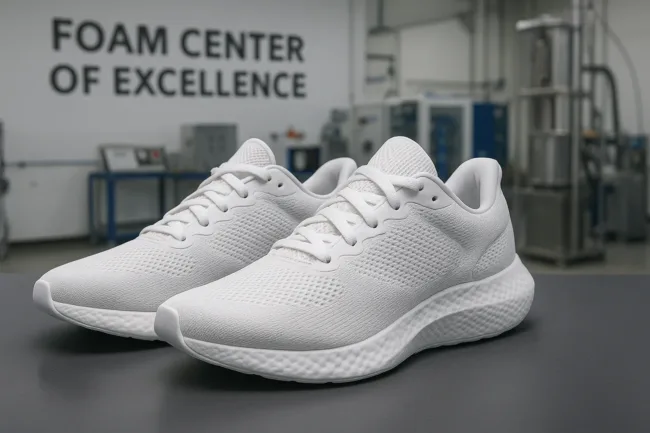
Lubrizol, the Berkshire Hathaway–owned specialty chemicals company, has announced the opening of its new Foam Centers of Excellence (COE) in Seoul, South Korea, and Shanghai, China. The move signals the company’s growing commitment to the footwear industry, a sector where innovation in materials science is increasingly shaping performance, sustainability, and brand differentiation. For Berkshire Hathaway’s industrial portfolio, Lubrizol’s initiative underscores the importance of positioning specialty chemicals in consumer-facing growth markets that promise both long-term returns and sectoral influence.
Why did Lubrizol expand its footwear innovation footprint in Asia Pacific at this stage?
Asia Pacific continues to be the dominant region in the global footwear supply chain, both as a manufacturing hub and as one of the most dynamic consumer markets. South Korea has earned its reputation as a design and trend center, influencing global sneaker culture, while China remains unrivalled in scale, speed to market, and capacity to commercialize new designs at a global level. By situating Foam COEs in Seoul and Shanghai, Lubrizol is effectively embedding itself into the innovation cycle where trends are born, tested, and scaled at unprecedented speed.
The company framed this expansion as part of a “local for global” strategy. Jane Cai, Lubrizol’s Senior Business Director in Asia Pacific, explained that the centers would allow the company to combine its global scientific expertise with deep local market insights, anticipating consumer demands and regulatory pressures unique to the region. The move also ensures that Lubrizol’s TPU foam solutions can be adapted swiftly to market needs while still contributing to global innovation pipelines.
How does physical foaming technology transform the footwear midsole industry?
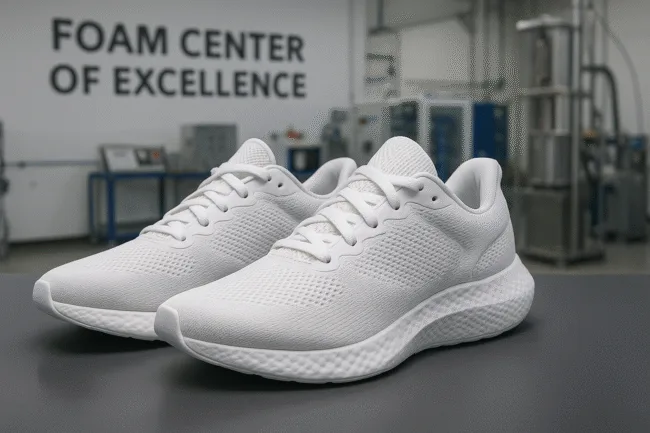
The highlight of Lubrizol’s announcement is its emphasis on physical foaming technology. Unlike conventional chemical blowing agents, physical foaming uses advanced processes such as supercritical fluid injection and autoclave methods to create lightweight, high-performance foams. These foams provide durability, energy return, and cushioning that rival or surpass traditional EVA foams while reducing the environmental footprint of production.
This technological shift reflects a broader push across the footwear industry to marry performance innovation with sustainability. Justin Park, Director of Global Footwear Marketing at Lubrizol, noted that physical foaming is becoming a global standard because of its dual advantage: superior athletic performance and alignment with rising sustainability expectations. With global sportswear leaders under increasing scrutiny for their environmental practices, suppliers like Lubrizol that can deliver breakthrough solutions without sacrificing function are gaining competitive advantage.
The Foam COEs house cutting-edge equipment, including a supercritical fluid injection foam machine in Korea and an autoclave foam machine in China. These facilities will allow Lubrizol to experiment with next-generation foams, validate products faster, and ensure that partners can launch commercially viable midsoles with shorter lead times.
Why is collaboration across the footwear value chain critical to Lubrizol’s plan?
One of the more distinctive features of Lubrizol’s Foam COE initiative is its collaborative framework. Rather than treating its innovation centers as isolated R&D labs, the company has positioned them as hubs for co-creation with processors, footwear brands, and supply chain stakeholders.
For processors, the Foam COEs provide technical assistance, prototyping capabilities, and process optimization insights. For footwear brands, they offer validation that new materials can be scaled effectively without compromising quality or sustainability. This ecosystem-driven approach reflects the new reality of the sportswear industry, where speed, differentiation, and cross-functional collaboration often determine which product innovations succeed commercially.
The “local for global” philosophy ensures that insights and breakthroughs generated in Asia can be shared across Lubrizol’s international network. This creates a feedback loop where global best practices inform local execution, and local consumer insights refine global material strategies.
How does Lubrizol’s move connect to broader sectoral trends in sportswear and specialty chemicals?
The midsole market has undergone a profound transformation over the last decade. In the 2010s, the emergence of branded foams like Adidas Boost and Nike React redefined performance footwear and created billion-dollar product franchises. These innovations, built on advanced TPU and similar technologies, shifted consumer expectations around comfort and performance.
Now, the challenge is to replicate that success with sustainability as a core principle. Regulatory frameworks, particularly in the European Union, are placing pressure on brands to deliver recyclable, low-impact materials. At the same time, consumers—especially younger demographics—are asking whether their sneakers are as environmentally responsible as they are stylish.
Specialty chemicals companies like Lubrizol, BASF, and Covestro are responding by investing heavily in foams and polymers that meet these dual demands. Lubrizol’s Foam COE investment signals that midsoles are not just about cushioning anymore—they are about environmental compliance, circular economy potential, and creating materials that can withstand the lifecycle scrutiny that regulators and consumers increasingly demand.
Does Lubrizol’s strategy carry implications for Berkshire Hathaway investors?
Lubrizol itself is not a listed company, but as part of Berkshire Hathaway’s portfolio, its strategic moves are scrutinized for what they signal about Warren Buffett’s industrial bets. For investors tracking Berkshire Hathaway’s Class A (NYSE: BRK.A) and Class B (NYSE: BRK.B) shares, Lubrizol’s focus on high-value specialty materials in consumer-facing sectors reinforces the conglomerate’s ability to balance traditional cash-generating businesses with forward-looking innovation plays.
While Lubrizol’s financials are not broken out separately, its contribution to Berkshire Hathaway’s industrial arm is notable. By expanding in Asia and targeting the footwear industry’s innovation cycle, Lubrizol is positioning itself in a sector where margins and long-term partnerships with global brands can translate into durable earnings streams. For institutional investors, this can be read as a signal of stability and growth within Berkshire’s diversified industrial portfolio.
Market analysts often point out that Berkshire’s strength lies in allowing its subsidiaries operational independence while encouraging long-term strategic bets. Lubrizol’s Foam COEs are a textbook example of this philosophy at work: marrying short-term consumer needs with durable technological investments.
What can the industry expect from Lubrizol at K Show 2025?
Lubrizol will showcase its Foam COE breakthroughs at K Show 2025, the world’s largest plastics and rubber trade fair in Düsseldorf from October 8 to 15. The company will use this global stage to demonstrate how its TPU solutions can deliver both high performance and sustainability for footwear brands and other industries.
Trade shows like K Show often act as inflection points for the industry, where suppliers unveil technologies that set the tone for the next wave of product innovation. Lubrizol’s emphasis on physical foaming is expected to resonate strongly with both footwear and non-footwear partners, potentially unlocking new applications in mobility, consumer goods, and industrial foams.
What does the future hold for footwear midsoles and Lubrizol’s specialty chemicals strategy?
Looking ahead, Lubrizol’s Foam COEs represent both an offensive and defensive strategy. On the defensive side, they ensure that Lubrizol remains relevant as footwear brands demand materials that meet rising ESG standards. On the offensive side, they put the company in a leadership position for the next generation of midsole innovations, whether that involves bio-based inputs, improved recyclability, or advanced rebound properties for performance footwear.
Industry observers expect footwear brands to increasingly lean on suppliers like Lubrizol for proprietary materials that can differentiate product lines. In an environment where speed to market and consumer perception are paramount, the ability to co-develop foams that check all boxes—comfort, durability, style, and sustainability—could decide which sneakers become global bestsellers.
For Berkshire Hathaway, Lubrizol’s strategy is a case study in aligning materials science with consumer megatrends. The Seoul and Shanghai Foam Centers of Excellence are more than regional labs; they are strategic levers in reshaping how the footwear industry balances innovation, sustainability, and profitability.
Discover more from Business-News-Today.com
Subscribe to get the latest posts sent to your email.