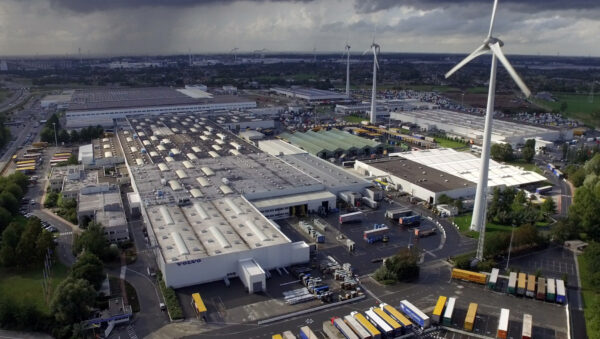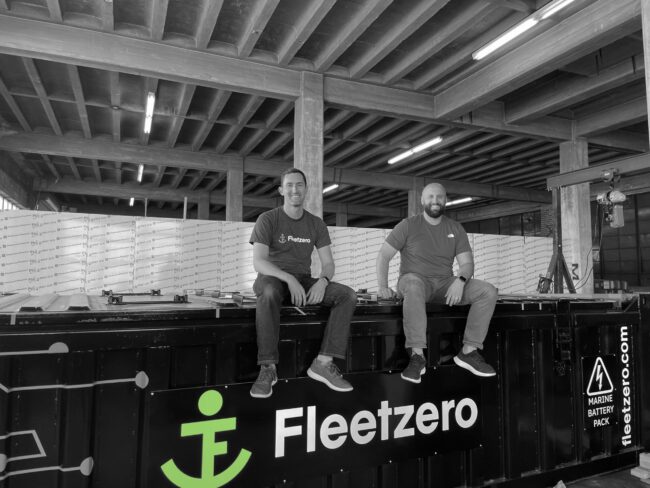
Fleetzero, a Houston-based marine technology company developing hybrid-electric propulsion systems and unmanned cargo vessel platforms, has raised $43 million in Series A funding led by Obvious Ventures. Strategic investors including Maersk Growth, Breakthrough Energy Ventures, and 8090 Industries participated in the round. Concurrently, Fleetzero opened a new manufacturing and R&D facility in Houston to support global demand for its Leviathan energy storage and propulsion systems, and to incubate its autonomy pipeline.
The investment signals institutional belief in the convergence of clean shipping, domestic shipbuilding resurgence, and defense-aligned autonomy in the US maritime sector. Fleetzero’s positioning at the intersection of electrification, robotics, and large-scale marine manufacturing has attracted investors focused on both energy transition and industrial revitalization.
Is Leviathan targeting more than electrification? Why Fleetzero’s propulsion system could anchor a broader US maritime play
The Leviathan system, Fleetzero’s core product, is designed as a modular, containerized energy storage and electric propulsion platform that can be retrofitted into existing ships or embedded in new builds. The system can operate in either hybrid or fully electric mode, offering shipowners fuel savings, reduced maintenance, and lower emissions.
But Leviathan’s significance may go beyond electrification. The company’s expansion in Houston includes a marine robotics lab and autonomy-focused R&D center, indicating that Leviathan is not just a drivetrain—it’s a potential foundational layer for unmanned shipping. The system’s software integration capabilities position Fleetzero to embed autonomy, remote operation, and predictive maintenance tools directly into propulsion infrastructure.
The new facility will have an initial production capacity of 300 MWh/year and is planned to scale to 3 GWh/year over five years. This signals serious ambitions not only in merchant shipping but also in defense logistics, small cargo craft, and energy transition infrastructure. Fleetzero appears to be building a vertically integrated marine hardware-software stack with dual-use applicability.
What does Maersk’s participation suggest about the future of electrified shipping platforms?
Maersk Growth’s investment aligns with the group’s ongoing strategy to decarbonize supply chains. By backing a hardware-native firm rather than a digital freight solution, Maersk is acknowledging that infrastructure retrofits and hybrid-electric ship systems may be faster-to-deploy decarbonization tools than ammonia or methanol vessels.
Morten Bo Christiansen, head of energy transition at A.P. Moller-Maersk, indicated Fleetzero’s appeal was not just in its battery tech but in its full-stack infrastructure vision. This reflects Maersk’s evolving portfolio approach: large methanol-fueled ships for mainline lanes, and hybrid or autonomous smaller craft for regional, feeder, or nearshore operations. That investment logic places Fleetzero in the mid-tier of global maritime decarbonization strategy—complementary rather than competitive to Maersk’s larger vessel ambitions.
It also signals Maersk’s openness to backing US-based tech that can feed into European or Asian routes, where policy-driven decarbonization incentives may accelerate pilot adoption.
Could this become a manufacturing moment for US shipbuilding?
Fleetzero’s narrative sharply contrasts with the decades-long decline of US shipbuilding capacity. By co-locating propulsion development, autonomy engineering, and manufacturing in Houston, Fleetzero is attempting to create a production model that breaks from one-off vessel customization and leans into high-volume, modular ship platform manufacturing.
8090 Industries, an investor known for backing defense-aligned industrial scale-ups, called out this aspect explicitly—describing Fleetzero’s mission as transforming shipbuilding from project-based construction to scalable asset manufacturing.
This framing may resonate not only with commercial shipping clients but with defense policymakers and port authorities looking to rebuild coastal industrial ecosystems. Fleetzero’s platform could be repurposed for logistics craft, autonomous resupply vessels, or even AI-enabled naval auxiliaries—all of which are under active consideration by maritime defense strategists.
What does this raise signal about investor appetite for heavy industrial autonomy startups?
The $43 million Series A, with participation from Breakthrough Energy Ventures and Maersk Growth, underscores that investor sentiment has broadened from climate-tech SaaS to industrial autonomy with climate-aligned use cases. Fleetzero is not a purely software business. It builds batteries, hardware platforms, and ships—yet it still attracted a roster of climate-aligned and frontier-tech venture firms.
Breakthrough Energy Ventures, which typically invests in high-potential deeptech or emissions-focused innovations, has now backed Fleetzero across multiple rounds. That suggests long-term conviction in the electrification-autonomy link in the marine sector. The strategic bet here is that electrified systems become the substrate for broader automation and efficiency across logistics and defense.
Obvious Ventures, Y Combinator, Benson Capital (the New Orleans Saints owners), and Shorewind also joined the round, bringing a mix of climate-tech, robotics, and regional infrastructure capital to the table. Notably absent were purely commercial shipping conglomerates, which may join in later stages if operational results scale globally.
How does Fleetzero fit into the broader marine autonomy and unmanned shipping trend?
Fleetzero is among a small group of US-based players attempting to commercialize unmanned surface vessels (USVs) at scale. Its autonomy ambitions are not marketing-driven—its R&D lab is dedicated to building robotic ship systems, and it has stated plans to integrate AI, autonomy software, and robotics into operational fleets.
Unmanned shipping is still constrained by regulatory and navigational policy uncertainty, but the commercial and defense sectors are actively experimenting with hybrid control models. Electrification is a prerequisite for these systems to operate with fewer mechanical interventions, higher system reliability, and longer remote operating intervals.
If Fleetzero’s Leviathan platform can demonstrate reliability, modularity, and cost advantage across hybrid and unmanned configurations, the company could position itself as the propulsion and autonomy stack of choice for an emerging category of electrified, robotic vessels.
What could go wrong from an execution or industry timing perspective?
Scaling from 300 MWh/year to 3 GWh/year of marine battery production is an enormous industrial task. Supply chain risk, cell sourcing, and safety certifications could delay scale-up. Integration of autonomy and battery systems into existing vessels may also face resistance from conservative shipowners or flag state regulators.
US regulatory inertia in approving unmanned vessel operations could limit early revenue potential from Fleetzero’s autonomy ambitions. Moreover, while the company is now manufacturing in Houston, its ability to win contracts from Tier 1 shipping customers or defense primes will depend on long-term reliability data, financing partnerships, and proven field deployments.
Additionally, while institutional investors are bullish, the current pace of maritime electrification—especially for large vessels—is slower than comparable aviation or trucking sectors. Fleetzero may find faster adoption in smaller or auxiliary craft before penetrating deep-sea shipping segments.
What are the strategic implications of Fleetzero’s Series A raise for shipbuilders, suppliers, and maritime autonomy competitors?
- Fleetzero raised $43 million in Series A funding to scale manufacturing of its Leviathan hybrid-electric marine propulsion platform.
- The round was led by Obvious Ventures, with participation from Maersk Growth, Breakthrough Energy Ventures, and 8090 Industries.
- Fleetzero opened a Houston-based R&D and manufacturing hub with plans to increase production from 300 MWh/year to 3 GWh/year.
- The Leviathan system is designed for both hybrid and all-electric use cases and may underpin future unmanned vessel autonomy.
- Maersk’s involvement signals growing strategic interest in mid-tier electrification platforms for short-haul and regional routes.
- Fleetzero aims to convert custom shipbuilding into scalable, modular manufacturing for both commercial and defense applications.
- Investor interest in heavy industrial autonomy with climate-tech upside appears to be growing, especially for US-based platforms.
- Execution risks include battery scale-up challenges, regulatory delays for autonomy, and slow adoption by incumbent shipowners.
- Fleetzero is one of the few US startups building a full-stack marine autonomy and propulsion platform with global commercial intent.
- The company is positioning itself as a hardware-native alternative to digital logistics firms in the maritime electrification race.
Discover more from Business-News-Today.com
Subscribe to get the latest posts sent to your email.