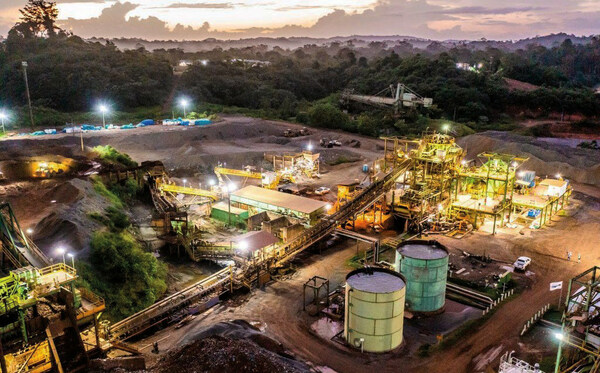





First Quantum Minerals Ltd. (TSX: FM), the Toronto-listed copper and nickel producer, has entered into a binding agreement to sell its Cayeli underground copper-zinc mine in northeastern Turkiye to Cengiz Insaat, a subsidiary of Cengiz Holding, one of Turkiye’s largest industrial conglomerates, for cash consideration of $340 million. The deal, announced on March 12, 2026, includes an advance payment of $50 million paid simultaneously with signing, with the balance creditable against the purchase price at closing. Subject to regulatory approvals and customary conditions, the transaction is expected to close in the second or third quarter of 2026. First Quantum shares have surged sharply in recent months, trading at approximately CA$39.22 on the TSX on announcement day, up more than 132% over the past twelve months and touching their 52-week high of CA$39.38, reflecting a broader recovery in copper prices and growing investor confidence in management’s deleveraging strategy.
Why is First Quantum Minerals selling the Cayeli mine now and what does the $340 million price tag signal about its strategic priorities?
The Cayeli transaction is not a distress sale. It is a deliberate act of portfolio rationalisation by a management team that has spent the better part of two years trying to convince bond markets, revolving credit lenders, and equity investors that First Quantum is serious about rebuilding its balance sheet. The company ended 2025 at 3.3 times net debt-to-EBITDA and has communicated a long-term target of at or below 1 times before committing to any greenfield development. Against that backdrop, generating $340 million in cash from a single underground mine in a non-core geography is a structurally sound decision, even if Cayeli’s extended resource life to 2036 made it more valuable on paper than many secondary assets typically put on the block.
Cayeli has operated continuously since 1994 and was a reliable, if modest, contributor to First Quantum’s overall production mix. A maiden mineral resource defined for the South Orebody in 2025 extended the mine’s operating life by roughly a decade and may have sharpened buyer interest by putting a clear forward production horizon on the asset. That resource disclosure almost certainly contributed to Cengiz Holding’s willingness to pay what amounts to a meaningful premium for an ageing underground mine. From First Quantum’s perspective, selling a recently re-rated asset at peak buyer confidence is disciplined capital allocation. The company has communicated a consistent message that portfolio simplification and debt reduction take precedence over organic production growth at this stage of its recovery cycle.
The $50 million advance payment at signing is notable. It reduces First Quantum’s effective financing cost while the transaction works through regulatory approvals in Turkiye and provides an early balance sheet benefit in a quarter where net debt had crept back up to approximately $5.2 billion, partly due to timing of receivables. Every dollar of debt reduction matters against a net leverage covenant set at 4.75 times net debt to EBITDA until September 2026, a level that management has been navigating carefully as it awaits the full uplift from the Kansanshi S3 Expansion in Zambia.
Who is Cengiz Holding and why does a Turkish conglomerate’s acquisition of Cayeli make strategic sense for both parties?
Cengiz Holding occupies a significant position in Turkiye’s industrial landscape, with operations spanning energy generation, construction, mining, tourism, and services. The group has the financial scale and domestic operational capability to absorb an underground mining asset without requiring foreign partner support or project financing of the kind that smaller buyers would need. For Cengiz, Cayeli represents a complementary addition to an existing minerals platform, rather than a step into unknown territory. The mine is located on the Black Sea coast of northeastern Turkiye, a region with established infrastructure and a workforce that has operated the site for more than three decades.
The acquisition also carries strategic logic for Cengiz at a time when Turkiye’s industrial base is aggressively expanding its domestic copper and base metals processing capacity. Copper concentrate from Cayeli would feed naturally into Turkish smelter and refining infrastructure, and the South Orebody’s extended reserve base reduces the immediate capital risk associated with production continuity. Paying $340 million for a mine with a resource life running to 2036 and an established operational track record is, on the face of it, a disciplined entry price for an acquirer with the in-country knowledge to optimise costs that a foreign operator may not have been positioned to extract.
How does the Cayeli sale fit into First Quantum’s broader deleveraging roadmap and what comes next for its asset portfolio?
First Quantum entered 2026 with net debt of approximately $5.2 billion and a balance sheet that, while meaningfully improved from the crisis levels seen after the Cobre Panama suspension in late 2023, still carries material leverage risk relative to peers. The company has pursued a multi-track deleveraging strategy combining asset disposals, a $1 billion gold streaming transaction completed in 2025, revolving credit facility refinancing extended to February 2029, and production growth from the Kansanshi S3 Expansion in Zambia. The Cayeli proceeds slot directly into this framework and, if the transaction closes in Q2 2026 as anticipated, would arrive before the covenant step-down cycle intensifies in the second half of the year.
The company’s remaining operating portfolio after the Cayeli sale will be anchored by the Kansanshi and Sentinel copper mines in Zambia and the Guelb Moghrein copper-gold mine in Mauritania. Cobre Panama remains in a phase of preservation and safe management, with an international arbitration process continuing in the background. Ravensthorpe nickel in Australia is on care and maintenance. The Argentina Taca Taca copper-gold-molybdenum project remains in development permitting. Selling Cayeli therefore does not materially alter near-term production guidance, but it does reduce operational and geopolitical complexity, removes exposure to Turkiye country risk, and converts a long-duration asset into immediate liquidity.
Management has also signalled that it does not anticipate adding further copper or gold hedges after existing contracts expire by mid-2026, a decision that reflects growing confidence in cash flow generation from the core Zambian operations at current copper prices. The combination of reduced hedge drag, Cayeli proceeds, and the S3 Expansion ramp-up creates a credible pathway toward the 1 times net debt-to-EBITDA target that management has identified as the threshold for returning to greenfield development, including the Taca Taca project.
What execution and regulatory risks could complicate or delay the First Quantum Minerals and Cengiz Holding transaction?
Mining asset transactions in Turkiye are subject to regulatory review by the General Directorate of Mining and Petroleum Affairs, and any transfer of an operating mining licence requires government consent. While Cengiz Holding’s domestic profile and existing relationships with Turkish regulatory bodies reduce the probability of protracted approval delays, the timeline to Q2 or Q3 2026 does leave room for slippage. Turkish mining regulation has tightened in recent years, particularly around environmental compliance and labour conditions at underground operations, and a transaction of this scale will attract scrutiny regardless of buyer pedigree.
There is also a modest pricing risk embedded in the customary closing adjustments. The $340 million headline figure is subject to working capital adjustments at the time of closing, which means the net proceeds could shift modestly depending on inventory levels, receivables, and mine operating costs between announcement and completion. For a company with $5.2 billion in net debt, the difference between $330 million and $350 million in net proceeds is not strategically significant, but it does matter at the margin when leverage covenants are in active focus. First Quantum will also need to manage the transition of workforce obligations carefully given Cayeli’s 30-year operating history and the labour relations significance of mine ownership changes in Turkish industrial communities.
How are First Quantum Minerals shares performing and what does the market reaction to the Cayeli sale tell investors?
First Quantum Minerals shares were trading at approximately CA$39.22 on the TSX at the time of the announcement, up around 5.2% on the day and touching a 52-week high of CA$39.38. The 52-week range stretches from CA$14.41 to CA$39.38, a move that illustrates the dramatic re-rating the stock has undergone as the deleveraging narrative has gained credibility and copper prices have strengthened. The analyst consensus target of approximately CA$42.40 implies modest further upside from current levels, though at a forward PE ratio that remains elevated relative to the company’s near-term earnings trajectory, the stock is pricing in a significant degree of operational recovery.
The market’s positive response to the Cayeli announcement is consistent with the prevailing investor sentiment that capital discipline and debt reduction are the right priorities for First Quantum at this stage of the cycle, even when that means selling assets that still have long productive lives ahead of them. The stock’s 132% gain over the past twelve months reflects confidence that management has turned a corner, and a clean $340 million disposal reinforces that narrative without requiring any operational execution risk that a mine ramp-up or capital project would introduce.
Key takeaways: what the Cayeli mine sale means for First Quantum Minerals, its peers, and the copper mining sector
- First Quantum Minerals has agreed to sell its Cayeli copper-zinc mine in Turkiye to Cengiz Holding for $340 million in cash, with a $50 million advance payment made at signing, in a transaction expected to close in Q2 or Q3 2026.
- The sale is a deliberate portfolio rationalisation move, not a distress disposal. It converts a recently re-rated asset, whose resource life was extended to 2036 following a South Orebody maiden resource in 2025, into immediate balance sheet liquidity.
- Net debt stood at approximately $5.2 billion at end-2025, equivalent to 3.3 times net debt-to-EBITDA. The Cayeli proceeds provide meaningful progress toward management’s stated long-term target of at or below 1 times leverage before any greenfield development commitment.
- Cengiz Holding is one of Turkiye’s largest conglomerates with existing mining and energy operations, giving it the in-country capability to optimise Cayeli’s underground operations in ways that a foreign operator managing from afar could not replicate at the same cost.
- The transaction reduces First Quantum’s geopolitical and regulatory complexity by removing its last operating exposure to Turkiye, concentrating the portfolio on Zambia (Kansanshi and Sentinel) and Mauritania (Guelb Moghrein) as the core producing base.
- Copper-exposed mining majors and mid-caps are closely watched by the market for capital allocation signals. First Quantum’s consistent disposition of non-core assets alongside the $1 billion streaming transaction and revolving credit refinancing is building a coherent deleveraging track record.
- The regulatory approval process in Turkiye introduces a timing risk, with a Q2 to Q3 2026 expected close window leaving scope for slippage that could defer the balance sheet benefit into a period when leverage covenants begin to tighten.
- With existing copper and gold hedges expiring by mid-2026 and the Kansanshi S3 Expansion producing at scale, First Quantum is positioning for full spot price exposure in the second half of 2026, and the Cayeli proceeds arrive at an ideal moment to underpin that transition.
- First Quantum shares touched a 52-week high of CA$39.38 on announcement day. The analyst consensus target of CA$42.40 reflects moderate residual upside, contingent on continued deleveraging progress and a stable copper price environment.
- The broader copper mining sector will note that assets with extended reserve lives and established underground operations are attracting strong interest from regional industrial conglomerates, a trend that supports asset valuations even as some Western miners pursue portfolio concentration strategies.
Discover more from Business-News-Today.com
Subscribe to get the latest posts sent to your email.