
Why is Fermi America building the world’s largest private AI power grid—and who’s helping them?
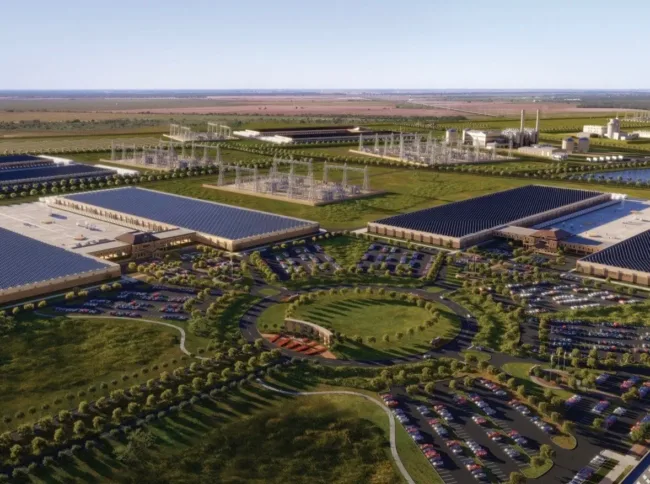
Fermi America has formally announced strategic partnerships with regional stalwarts Parkhill and Lee Lewis Construction to help design and build what it claims will be the world’s largest private energy grid—an 11-gigawatt infrastructure dedicated to powering artificial intelligence workloads. The project is anchored in Amarillo, Texas, and represents a generational investment in next-generation digital and physical infrastructure, designed to meet the surging energy demands of AI compute clusters.
The grid, which is intended to serve as a dedicated energy source for AI training and inference infrastructure, is part of Fermi America’s long-term vision to redefine how power is provisioned for industrial-scale AI deployments. With the Texas Tech University System as a formal land and development partner, Fermi America has doubled down on its West Texas roots by selecting two of the region’s most established firms—Parkhill for engineering and architecture, and Lee Lewis Construction for end-to-end build execution.
Co-founder Toby Neugebauer said the decision to go local was both strategic and personal, underscoring a belief that national players could not match the long-standing trust, regional insight, and execution reliability of firms like Parkhill and Lee Lewis.

What roles will Parkhill and Lee Lewis play in developing this 11-gigawatt AI grid in Amarillo?
Under the terms of the collaboration, Parkhill will lead infrastructure design, applying its multi-sector engineering and architecture expertise to develop a grid that is both scalable and resilient. Jay Edwards, president of Parkhill, said the firm would incorporate Texas Tech’s architectural identity into the site’s design while balancing safety, sustainability, and long-term operational performance.
Lee Lewis Construction will take charge of project execution, construction management, and on-site delivery. The firm, which has maintained a place on Engineering News-Record’s Top 400 Contractors list for over four decades, emphasized its commitment to both quality and community.
Chief Operating Officer Ryan Lewis described the collaboration as a “generational opportunity” rooted in shared values and a common goal to support regional economic development. Founder Lee Lewis added that building for AI was about more than bricks and wires—it was about shaping the future of how West Texas contributes to the global tech ecosystem.
Together, the two firms will execute one of the largest power infrastructure builds ever undertaken in the private sector, with all eyes on their ability to deliver an 11GW grid on time and on budget—something few organizations have ever attempted, let alone in the context of AI.
How does this partnership reflect institutional momentum behind Fermi America’s AI grid strategy?
The partnerships reinforce growing institutional alignment behind Fermi America’s mission. Texas Tech University System, a longstanding stakeholder in West Texas development, is a critical ally in the initiative, with formal lease arrangements and workforce development collaborations already underway. Both Parkhill and Lee Lewis Construction have multi-decade histories with the university system, providing a layer of stability and local knowledge that national engineering firms often lack.
Fermi America has made it clear that this is not a one-off project, but the first phase of a multi-gigawatt expansion strategy. Its goal is to establish Amarillo as a global node for AI infrastructure—an ambition that increasingly aligns with regional economic development plans and national energy grid innovation strategies.
By leveraging institutional familiarity and historical trust, Fermi America is positioning itself to execute at a scale that typically requires federal or utility-backed coordination—yet it’s doing so entirely within the private sector.
What makes this grid different from traditional utility-scale or data center power infrastructure?
Unlike utility-scale grids that feed into broader transmission networks, Fermi America’s grid is designed for direct allocation to hyperscale compute operations. This includes powering AI training clusters, inference endpoints, data lake infrastructure, and potentially, future edge-AI systems.
The company has not disclosed what energy mix will power the grid—whether it includes renewables, nuclear, or gas peakers—but given the Texas location, it is expected to incorporate both dispatchable and intermittent energy sources. Parkhill’s track record in sustainable infrastructure design suggests that renewable integration will be a major design consideration.
By decoupling AI energy needs from the traditional utility grid, Fermi America is betting that private provisioning of power will become a competitive advantage in an era where GPU availability and electricity access are the new bottlenecks for AI firms.
What does this project mean for West Texas and the broader construction economy in the region?
This AI grid marks a significant moment for West Texas—not just as an energy-producing region, but as a tech infrastructure destination. The Amarillo build signals a shift from oil-and-gas dominated projects to digital-era industrialization, with AI acting as a new anchor tenant for power-intensive development.
The financial scale of an 11GW grid suggests billions in potential capex over the life of the build, translating into hundreds of high-paying construction, engineering, and support jobs across the region. Moreover, supply chain activity related to high-voltage components, substation equipment, fiber deployment, and cooling infrastructure will bring further investment into local manufacturing and logistics.
For Parkhill and Lee Lewis Construction, the project could be among their largest undertakings to date. Both firms have expressed optimism not just about execution, but about the catalytic effect the build could have on West Texas’ global reputation as a tech-forward energy hub.
How are investors and analysts viewing the viability of private AI grids at this scale?
While Fermi America is not publicly listed, the institutional market has increasingly paid attention to private grid efforts tied to AI compute demands. Analysts have noted that access to power—particularly in regions with deregulated energy markets—has become a gating factor for hyperscale deployment.
Recent market moves from firms like Amazon Web Services, Microsoft, and Meta Platforms into power purchase agreements and private substation development suggest that Fermi’s grid strategy is part of a broader trend. However, Fermi’s move to independently develop and own an 11GW facility puts it at the high end of ambition.
Institutional sentiment around such infrastructure plays is cautiously optimistic, with investors looking for execution reliability, regulatory clarity, and eventual customer pipeline visibility. The presence of long-standing firms like Parkhill and Lee Lewis may help address some of those concerns by anchoring the build in trusted delivery capabilities.
What is the long-term outlook for private energy grids dedicated to AI workloads?
The long-term outlook for private energy grids is bullish, particularly in the context of AI and high-density compute zones. With energy now acting as a de facto currency for AI scalability, operators with access to reliable, low-cost, and scalable power will have a structural advantage.
Fermi America’s project could pave the way for future builds that blend edge computing, real-time AI inference, and sovereign data center operations—all running on dedicated, non-utility grids. If successful, it may not only redefine AI infrastructure planning but also challenge legacy assumptions about who builds and controls the future of energy.
By embedding itself deeply within West Texas’ cultural and economic fabric—and bypassing national contractors in favor of local champions—Fermi America is signaling that infrastructure innovation is not just about scale, but about relationships, resilience, and regional pride.
Discover more from Business-News-Today.com
Subscribe to get the latest posts sent to your email.