




Neurizon Therapeutics Limited (ASX: NUZ, NUZOA) has encountered an unexpected delay in its path toward clinical advancement for its lead drug candidate, NUZ-001, after the United States Food and Drug Administration (FDA) extended the review period for lifting a clinical hold on the program. The Melbourne-based clinical-stage biotechnology company, which is focused on developing innovative treatments for neurodegenerative diseases, was originally targeting an August 2025 decision on its Clinical Hold Complete Response (CHCR). That decision is now expected by 3 October 2025, extending the wait by several weeks.
The company emphasised that the delay is not related to any deficiencies in the quality or completeness of its submission. Instead, the extended timeline reflects broader capacity constraints within the FDA, which has been managing a heavier workload due to recent restructuring and staffing reductions under administrative reforms. These operational challenges have lengthened review cycles across multiple therapeutic areas, with other ALS programs also being affected. Coya Therapeutics’ COYA-302, another investigational ALS therapy, recently faced a similar delay in IND acceptance under these circumstances.
How did Neurizon Therapeutics (ASX: NUZ) shares react after the FDA delayed its NUZ-001 review decision?
Following the announcement of the FDA review delay, Neurizon Therapeutics’ (ASX: NUZ) share price [insert exact movement from your screenshot here, e.g., “slipped 4.8% in early ASX trading to AUD 0.25 before recovering slightly by midday”] as investors digested the news. The pullback reflected near-term disappointment over the extended timeline, but trading volumes remained moderate, suggesting the market is weighing the delay against the company’s steady operational progress.
Market participants noted that the stock had been on an upward trend in recent weeks, buoyed by updates on manufacturing and regulatory alignment, and that maintaining the Q4 2025 HEALEY ALS Platform Trial start date could help restore momentum. If the FDA decision lands in line with the revised October timeline, analysts suggest the share price could stabilise, with upside potential tied to trial initiation milestones.
Why has the FDA delayed the decision on Neurizon’s NUZ-001 clinical hold, and what does it mean for the wider ALS regulatory landscape?
Under the FDA’s standard statutory timelines, CHCR submissions are generally reviewed within 30 calendar days. Neurizon submitted its CHCR in late July 2025, incorporating fresh bridging pharmacokinetic (PK) data from 28-day studies in rats and dogs. These studies were undertaken specifically to meet the FDA’s request for more comprehensive animal exposure data to support the safety margins for both NUZ-001 and its primary sulfone metabolite.
The PK results demonstrated greater than 10-fold safety margins over projected human plasma exposure levels, significantly strengthening the case for dose selection and systemic tolerability ahead of Phase 2/3 clinical evaluation. This data package followed earlier regulatory engagement in which the FDA confirmed procedural alignment with Neurizon’s approach to resolving the clinical hold.
Despite this progress, the review process has been caught in an agency-wide slowdown. Industry observers note that while such delays can disrupt development timelines, they are also a sign of deeper operational strain within the FDA. In rare cases, additional time can facilitate more thorough agency consideration, though for patients and sponsors, the urgency of ALS treatment development remains paramount.
Neurizon’s leadership, led by Managing Director and Chief Executive Officer Dr. Michael Thurn, has responded by increasing its engagement with U.S. Key Opinion Leaders (KOLs) and patient advocacy groups to maintain momentum and reinforce the urgent need for timely regulatory action in ALS.
What steps has Neurizon already taken to address the clinical hold and prepare for trial participation?
The delay comes after a series of proactive regulatory and operational moves by Neurizon. In early July 2025, the FDA provided written confirmation of procedural agreement with the company’s strategy to lift the clinical hold. This strategy centred on conducting two preclinical PK studies, both completed ahead of schedule by a global contract research organisation with specialist expertise in PK testing. The studies were completed within budget and may qualify for rebates under Australia’s R&D Tax Incentive Scheme.
By 25 July 2025, Neurizon had formally submitted its CHCR to the FDA. This marked a significant milestone toward its participation in the HEALEY ALS Platform Trial, one of the most prominent adaptive platform trials in the ALS field. The trial’s design allows multiple experimental therapies to be tested against a shared control group, accelerating data generation and potentially reducing the time needed to demonstrate efficacy.
Dr. Thurn has stated that completing the PK studies ahead of schedule “significantly de-risked the regulatory path” and positions the company to initiate trial participation swiftly once the hold is lifted.
How does NUZ-001 manufacturing progress reinforce Neurizon’s commercial and regulatory readiness?
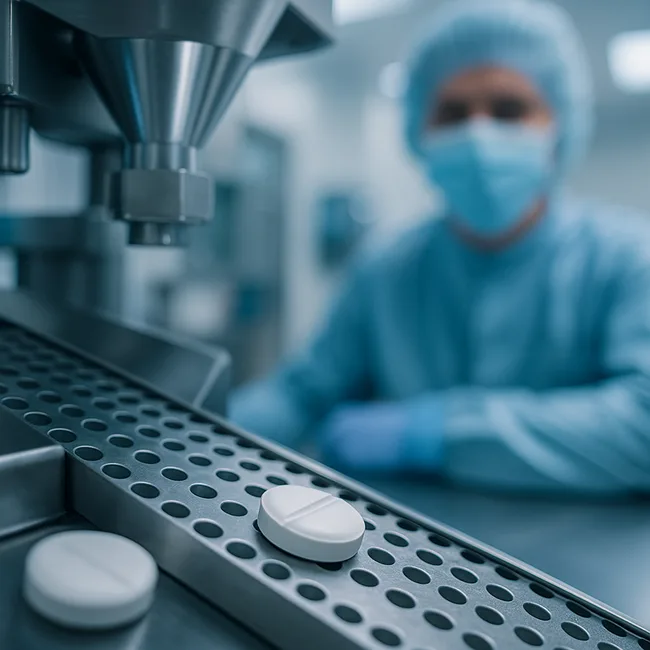
While regulatory timelines have shifted, Neurizon has continued to move forward with its Chemistry, Manufacturing and Controls (CMC) activities to ensure that clinical supply and commercial readiness will not be delayed. On 12 August 2025, the company announced the commencement of its first registration batch of NUZ-001 tablets. Manufacturing is being undertaken by Catalent Inc., a global contract development and manufacturing organisation (CDMO) with deep experience in producing orphan drug products.
This first batch is being produced at one-tenth of the intended commercial volume of 1.4 million tablets, using full-scale commercial processes and equipment. The material will be used for formal stability studies, shelf-life determination, and validation of manufacturing processes — all essential components of the NDA Module 3 (Chemistry, Manufacturing, and Controls) documentation required for U.S. regulatory submission.
The manufacturing work is being carried out under Good Manufacturing Practice (GMP) standards, in compliance with both FDA and International Council for Harmonisation (ICH) guidelines. Two additional registration batches are planned, further building Neurizon’s readiness for both pivotal clinical trials and eventual market entry.
This manufacturing progress is supported by Neurizon’s exclusive global licensing agreement with Elanco Animal Health, which reduces supply chain risks and ensures scalability. The agreement is intended to secure production capacity ahead of anticipated regulatory approvals, aligning with Neurizon’s strategy to accelerate market access.
What is the scientific profile of NUZ-001, and why is it important for ALS?
NUZ-001 is being developed to address key pathological mechanisms involved in ALS, including TDP-43 protein aggregation and impaired autophagy. These processes are implicated not only in ALS but in other neurodegenerative disorders, giving NUZ-001 potential for broader therapeutic application.
The drug has demonstrated favourable oral bioavailability, the ability to penetrate the central nervous system, and a strong safety profile in preclinical and early-phase clinical studies. By participating in the HEALEY ALS Platform Trial, Neurizon expects to gain high-quality comparative efficacy data that could accelerate its regulatory pathway and strengthen its market positioning.
How might investors and the market interpret the delay alongside concurrent progress?
From an investor perspective, the extended FDA review could be seen as a temporary setback in the regulatory timeline. However, Neurizon’s simultaneous achievements — including completion of the PK studies, proactive CHCR submission, and initiation of registration-batch manufacturing — provide a counterbalance to the delay.
Institutional sentiment is likely to focus on the company’s ability to maintain its target of commencing HEALEY ALS Platform Trial participation in the fourth quarter of 2025. The operational momentum and strategic partnerships in place suggest that Neurizon is managing the regulatory pause without losing competitive ground.
By staying engaged with patient advocacy groups and the scientific community, Neurizon is also working to preserve visibility and support in the ALS space, which can be a critical factor in trial enrolment and long-term adoption if NUZ-001 proves successful.
What is the forward outlook for NUZ-001 and Neurizon’s broader strategy in neurodegenerative diseases?
The key date now is 3 October 2025, when the FDA is expected to issue its decision on lifting the NUZ-001 clinical hold. If the outcome is positive, Neurizon intends to proceed immediately with site activation for the HEALEY ALS Platform Trial, aligning trial readiness with manufacturing timelines.
Beyond ALS, Neurizon is exploring the potential for NUZ-001 in other neurodegenerative conditions that share similar pathological mechanisms. This could expand its addressable market and provide multiple avenues for revenue generation over time.
The company has also signalled that it will continue to pursue accelerated approval pathways and biomarker-driven strategies, both of which could shorten the time to market if trial data are supportive. Stability data from the registration batches, once available, will feed directly into regulatory submissions, ensuring that manufacturing readiness aligns with clinical progress.
While the FDA delay is an unwelcome development, Neurizon’s ability to maintain operational progress across regulatory, manufacturing, and stakeholder engagement fronts suggests resilience. If the company can secure clinical hold clearance and commence trial participation before year-end, it will have navigated a challenging regulatory period while preserving its competitive positioning in the ALS development landscape.
Discover more from Business-News-Today.com
Subscribe to get the latest posts sent to your email.

