


On September 5, 2025, Europe entered the elite exascale computing club with the official inauguration of JUPITER — the continent’s most powerful supercomputer and the first to surpass one quintillion (10¹⁸) calculations per second. Installed at the Jülich Supercomputing Centre in Germany, JUPITER marks a historic milestone not only for scientific capability, but for Europe’s ambition to lead in sovereign AI and high-performance computing (HPC).
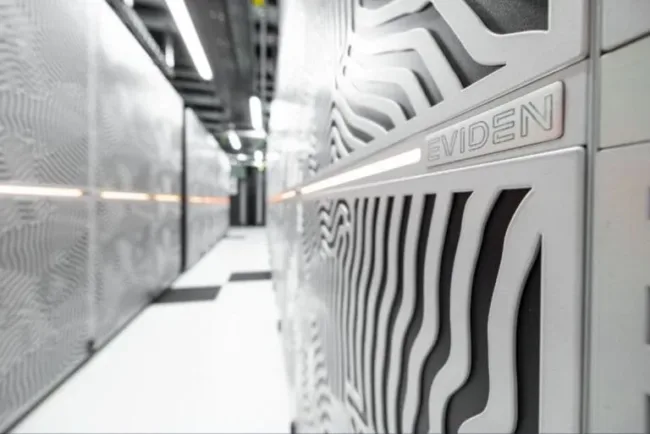
A standout feature of this €500 million project, co-funded by the European Union and Germany through the EuroHPC Joint Undertaking, is the JUPITER Booster — a high-performance AI partition developed by Eviden, the Atos Group’s advanced computing and cybersecurity brand. The Booster is designed to support AI training workloads, next-generation scientific simulations, and real-time decision engines across multiple domains.
The inauguration was attended by top European leaders including German Chancellor Friedrich Merz, Minister-President of North Rhine-Westphalia Hendrik Wüst, Federal Research Minister Dorothee Bär, and State Minister Ina Brandes — underlining the strategic significance of JUPITER for Europe’s digital and industrial future.
How does Eviden’s Booster partition elevate JUPITER’s AI training capabilities and simulation performance?
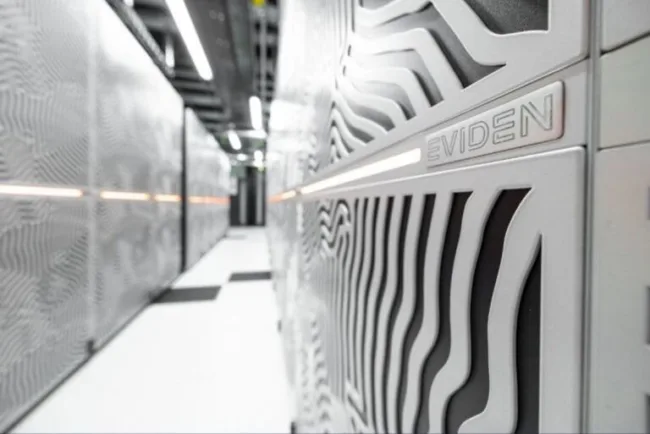
At the heart of JUPITER’s breakthrough is Eviden’s custom-built Booster partition, an HPC-AI hybrid designed to tackle some of the most complex computational challenges in the world. This partition integrates over 24,000 NVIDIA GH200 Grace Hopper Superchips, connected via NVIDIA’s Quantum-2 InfiniBand networking — a combination optimized for massively parallel tasks like climate modeling, quantum physics, and training large language models.
The Booster’s architecture is embedded in Eviden’s Modular Data Center approach — a system of pre-built, scalable, and interchangeable modules that allow flexible expansion and sovereign data governance. This ensures that AI workloads, research datasets, and confidential simulations can be securely managed within the EU’s regulatory framework.
Cooling is another dimension where the system excels. Leveraging Eviden’s patented Direct Liquid Cooling technology, JUPITER achieves industry-leading energy efficiency. This performance was validated in June 2025, when its JEDI module ranked first on the Green500 list of the world’s most energy-efficient supercomputers.
This blend of performance, sustainability, and sovereign control allows the JUPITER Booster to become the AI engine of Europe — capable of supporting vertical-specific AI models, from healthcare to manufacturing, while aligning with EU standards on data privacy, energy use, and public access.
What kinds of applications will JUPITER support — from generative AI to climate models and neuroscience?
JUPITER’s supercomputing capability unlocks a new era for European research and innovation. Scientists and developers can now simulate systems at a resolution and speed previously considered out of reach.
In climate science, researchers can run the ICON atmospheric model at kilometre-scale resolution to simulate the full Earth system. This makes it possible to forecast extreme weather events like heatwaves, floods, and cyclones with greater precision. It also enables long-range climate modeling under various CO₂ trajectories, supporting better adaptation policies.
In artificial intelligence, JUPITER’s compute scale can accelerate the training of large language models (LLMs), including multilingual systems like OpenGPT-X, which emphasizes European languages such as German. The infrastructure drastically cuts training times and energy costs — two major bottlenecks in generative AI development.
In neuroscience, JUPITER offers enough exascale muscle to simulate neural networks at the biological neuron level. Software like Arbor, when combined with this hardware, allows researchers to model how memory forms, how Alzheimer’s disease progresses, or how learning might be replicated in silicon — all at unprecedented levels of realism.
In structural biology and quantum chemistry, JUPITER enables the exploration of protein folding pathways, drug-protein interactions, and next-generation materials for green energy systems.
In media, finance, and logistics, JUPITER can serve as the backend for complex optimization problems, generative design tasks, and real-time risk modeling, giving European companies a sovereign alternative to cloud hyperscalers abroad.
What makes JUPITER different from other supercomputers—and how does it serve Europe’s strategic goals?
Unlike many top-tier supercomputers operated by corporate cloud providers or military-industrial complexes, JUPITER is a public-good compute infrastructure, governed under the EuroHPC framework. It is accessible to universities, startups, industrial R&D centers, and public institutions through structured allocation programs.
JUPITER also aligns with Europe’s AI Factory and AI Gigafactory strategies, which aim to concentrate the continent’s compute, data, and talent resources into modular, scalable, and sovereign platforms. By doing so, the EU hopes to reduce its reliance on foreign cloud giants while fostering a uniquely European AI ecosystem focused on transparency, ethics, and energy efficiency.
Over 76 proposals across 16 Member States have already been submitted to join the AI Gigafactory network, which will use supercomputers like JUPITER to train AI models with hundreds of trillions of parameters, power autonomous systems, and support national digital services.
What are leaders and institutions saying about JUPITER’s impact on research and AI sovereignty?
European officials have positioned JUPITER as both a scientific achievement and a sovereignty statement. Commissioner Ekaterina Zaharieva described the supercomputer as a catalyst for a “new chapter” in European science, AI, and innovation. “JUPITER strengthens Europe’s digital sovereignty, accelerates discovery, and ensures that the most powerful and sustainable computing resources are available to our researchers, innovators, and industries,” she stated.
Meanwhile, Henna Virkkunen, Executive Vice-President for Tech Sovereignty, noted that JUPITER would act as a gravitational force for Europe’s innovation ecosystem — much like the planet Jupiter in the solar system.
Professor Thomas Lippert, director of the Jülich Supercomputing Centre, emphasized the European origin of the technology: “This is a genuine European technology. Only thanks to the generous support of the European Commission and EuroHPC… is such an investment possible.”
How are investors and institutions viewing the broader opportunity around JUPITER and EuroHPC?
While JUPITER itself is a public initiative, institutional investors are closely tracking private companies involved in its ecosystem — from Eviden and Atos to NVIDIA, power suppliers, and modular data center vendors. Analysts suggest that public-private alignment around sovereign compute could benefit chipmakers, advanced cooling tech providers, and EU-compliant cloud providers.
With sovereign compute, AI sovereignty, and energy-efficiency mandates converging, the investment landscape around digital infrastructure in Europe is rapidly evolving. Future beneficiaries could include companies involved in RISC-V chips, LLM inference optimization, and green data center logistics.
As EU grant-backed AI factories become operational, access to JUPITER-like systems will also lower barriers for deep-tech startups to build competitive AI models within Europe — a long-term upside for venture capital and university spinouts alike.
What’s next for JUPITER — and how can developers, scientists, and AI builders gain access?
JUPITER is already operational and applications are being accepted via the EuroHPC JU allocation system. Research institutions, AI developers, and startups can apply for compute time and access to training frameworks depending on project scope and public benefit.
Programs are also being rolled out for AI-specific acceleration, especially for foundational model training, climate modeling, and pandemic preparedness simulations. With a multi-decade roadmap, JUPITER is designed to scale — both through hardware upgrades and federated access across the EU’s AI Gigafactory network.
Eviden, for its part, is continuing to develop next-gen compute modules and refining its Modular Data Center blueprint to offer other countries and institutions the ability to replicate the JUPITER model elsewhere in Europe and beyond.
Discover more from Business-News-Today.com
Subscribe to get the latest posts sent to your email.