



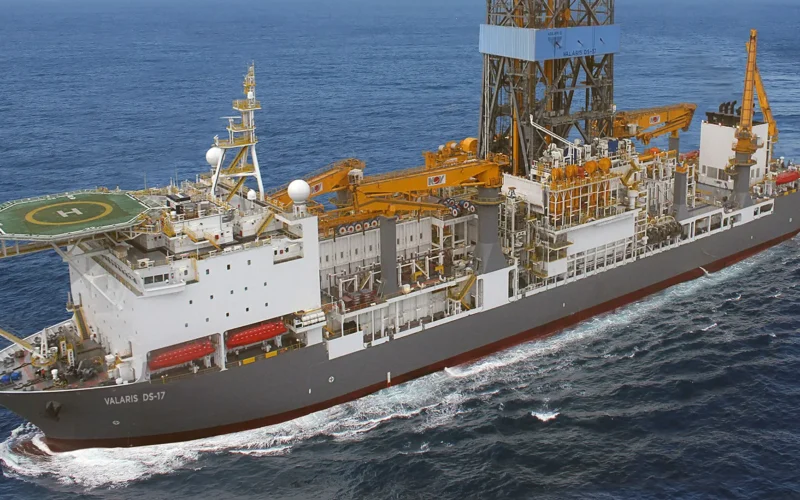
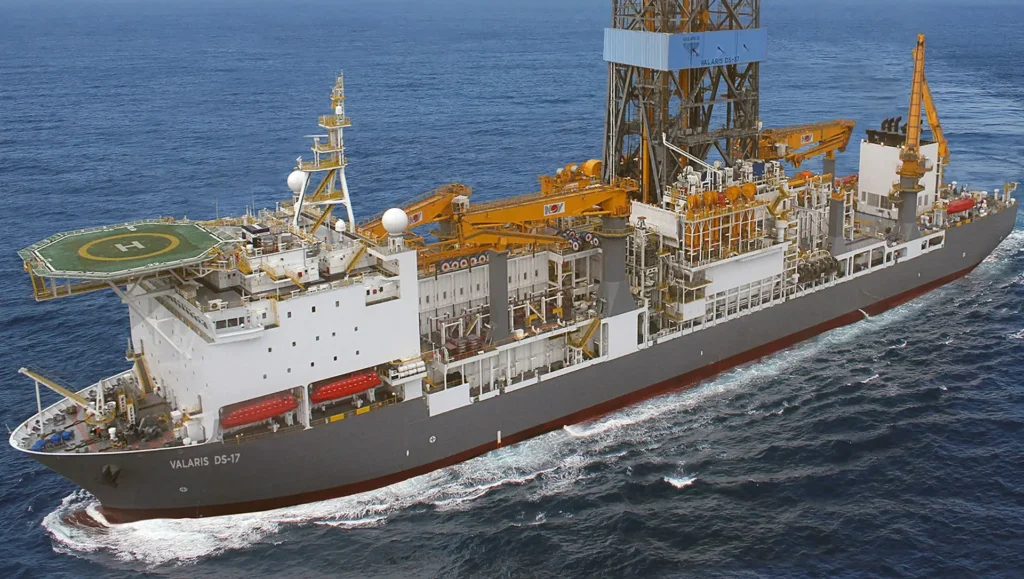
Equinor ASA (OSE/NYSE: EQNR) formally commenced the drilling phase of its Raia natural gas project on 24 March 2026, deploying the Valaris DS-17 drillship across six pre-salt wells in Brazil’s Campos Basin, roughly 200 kilometres offshore the state of Rio de Janeiro in water depths approaching 2,900 metres. The development, Equinor’s largest international capital commitment at approximately USD 9 billion, holds recoverable reserves exceeding one billion barrels of oil equivalent and is designed to export up to 16 million cubic metres of natural gas per day once operational. At projected capacity, that single project would supply close to 15 percent of Brazil’s total gas demand, making Raia a strategically significant addition to both Equinor’s international production portfolio and Brazil’s domestic energy security calculus. With FPSO integration and commissioning also advancing in parallel, the company is signalling that a 2028 production start remains firmly on schedule.
Why is Equinor’s Raia gas project considered a turning point for Brazil’s domestic gas supply security?
Brazil’s natural gas market has long been characterised by structural undersupply, regional pipeline fragmentation, and a heavy reliance on Petrobras-controlled infrastructure that has historically constrained competition and depressed industrial investment. Raia changes that equation in a meaningful way. The project’s export design delivers treated, sales-quality gas directly from an offshore FPSO into the onshore grid at Cabiúnas in Macae, bypassing the need for dedicated onshore processing facilities entirely. This is the first time that gas from an offshore Brazilian development will be specified to transmission standards offshore and delivered straight to the transmission network, a technical precedent with implications for how future deepwater gas assets in the region are conceived and permitted.
The Cabiúnas receiving terminal connects directly into the Nova Transportadora do Sudeste pipeline grid, meaning Raia gas will have immediate access to southeastern Brazilian industrial demand centres from day one of production. With gas demand projections pointing to sustained growth across fertilisers, petrochemicals, and power generation, a new supply source of this scale arriving in 2028 gives Brazilian industrial buyers a credible alternative to expensive liquefied natural gas imports and removes pricing leverage from incumbent domestic suppliers. For Petrobras, holding a 30 percent non-operating stake in Raia, the project is simultaneously a revenue source and a competitive constraint on its own gas marketing operations elsewhere in the country.
How does the Raia FPSO’s carbon intensity profile compare to global deepwater peers and what does it signal to ESG-focused investors?
Equinor is positioning Raia’s FPSO as among the most carbon-efficient offshore production units in the world, targeting an average CO2 emissions intensity of approximately 6 kilograms per barrel of oil equivalent over the field’s lifetime. The current industry average sits around 17 kilograms per barrel, making Raia’s projected emissions intensity roughly two-thirds below that benchmark. The performance case rests on a combined-cycle power generation system aboard the FPSO, which pairs a gas turbine with a steam turbine to recover waste heat that would otherwise be vented. Raia will be the second Equinor FPSO in Brazil to deploy combined-cycle turbines, following the Peregrino FPSO upgrade experience, and the design makes it one of a very small number of offshore units globally with this configuration at scale.
For institutional investors scrutinising Equinor’s upstream portfolio under emissions-linked capital allocation frameworks, a new production asset entering the portfolio at 6 kilograms per barrel dilutes the average intensity across the company’s international equity production base. The broader significance is strategic rather than merely reputational: as European energy majors face increasing pressure from pension funds and ESG-aligned capital pools to demonstrate that new upstream investments are consistent with a lower-emissions trajectory, Raia gives Equinor a tangible asset-level example that large-scale deepwater gas development and low-carbon operations are not mutually exclusive. Whether that argument moves the needle for the investor community holding a consensus Hold rating on EQNR stock at this moment is another question.
What execution risks threaten the Raia project timeline and what precedents exist for managing them at this water depth?
At approximately 2,900 metres of water depth, Raia sits at the operational boundary of proven ultra-deepwater drilling technology. The Valaris DS-17 drillship is not an unfamiliar asset in this concession: it participated in the earlier Bacalhau field drilling campaign in the same basin under the same partnership configuration. That continuity of rig, crew familiarity, and shared lessons across a technically comparable pre-salt development provides a credible risk mitigation layer that distinguishes Raia from a greenfield ultra-deepwater undertaking. Equinor has also secured drilling and well services agreements with SLB, Baker Hughes, and Halliburton, with a combined value of approximately USD 109 million, integrating managed pressure drilling capabilities that are particularly relevant for managing pre-salt reservoir pressures at this depth.
The more consequential execution risk is not below the waterline but above it. FPSO delivery schedules have historically been the critical path on large Brazilian offshore developments, with fabrication yard congestion, equipment lead times, and integration complexity routinely stretching timelines. Equinor states that commissioning activities on the FPSO are progressing in parallel with the drilling campaign, and the shallow-water section of the 200-kilometre export pipeline was completed in September 2025. MODEC holds the engineering, procurement, construction, and installation contract for the FPSO, with BrasFELS shipyard from the Seatrium Group constructing key topside modules. The 852-day Valaris contract duration, covering 672 drilling programme days, implies the campaign should conclude by roughly mid-2028 at the outside, which aligns with the stated production start target but leaves limited schedule buffer if any major phase encounters delay.
How does the Raia project fit within Equinor’s international capital allocation strategy and what does it mean for long-term cash flow visibility?
Raia is Equinor’s largest single international investment, and that distinction is not trivial. At USD 9 billion gross project cost, with Equinor’s 35 percent stake implying an equity exposure of roughly USD 3.15 billion, this is a capital commitment that materially shapes the company’s international upstream spending profile for the remainder of this decade. The project’s 30-year field life and gas-weighted production profile provide something Norwegian Continental Shelf assets cannot fully replicate: long-duration, international equity production with structural exposure to Brazil’s growing domestic gas market rather than purely to global LNG pricing. For a company navigating investor scepticism about the long-term sustainability of hydrocarbon investment, gas assets with captive domestic demand are significantly easier to defend than incremental oil production with volatile export revenue.
Equinor’s share buyback programme is active in 2026, reflecting management confidence in near-term cash generation capacity. However, the analyst community’s current consensus Hold rating on EQNR and a 12-month average price target of approximately USD 37 suggests the market is not yet pricing in the full forward value of Raia’s production contribution. On the Oslo Bors, EQNR traded at 392.20 NOK on 25 March, just below its 52-week high of 401.80 NOK, having ranged as low as 226.40 NOK over the prior year. The stock’s trajectory over the next 18 months will likely be more sensitive to Brent crude pricing and Norwegian Continental Shelf output trends than to a Brazilian project still two years from first gas, but as 2028 approaches and Raia moves from construction into commissioning, market attention to its cash flow contribution should sharpen materially.
What does Raia mean for Repsol Sinopec Brasil and Petrobras and how do competitive dynamics shift when the field enters production in 2028?
Repsol Sinopec Brasil holds an equal 35 percent interest alongside Equinor and will receive the same proportional production entitlement from what is its largest Brazilian deepwater asset. For Repsol’s parent, the project provides a meaningful international gas production contributor at a time when the Spanish major is managing portfolio transitions in Europe. Sinopec’s involvement through the joint venture also reflects a sustained Chinese interest in securing equity exposure to Brazilian pre-salt hydrocarbons, a strategic consideration that extends beyond project economics. The Repsol Sinopec partnership predates Equinor’s operatorship assumption in 2016, when Repsol Sinopec made the original Pao de Acucar, Gavea, and Seat discoveries in 2010, and the continuity of this structure across a 15-year development journey speaks to the project’s strategic durability.
Petrobras occupies the most complex position in the partnership. As Brazil’s dominant gas aggregator and the operator of most of the country’s gas transmission infrastructure, Petrobras will receive production from a field that simultaneously competes with its own upstream gas supply base. The state company’s 30 percent non-operating interest ensures it participates in Raia’s upside while the Cabiúnas terminal integration into the Nova Transportadora do Sudeste network, which Petrobras no longer owns following the 2019 divestment, limits its ability to use infrastructure control as a competitive lever. The broader consequence for the Brazilian gas market is that Raia’s 16 million cubic metres per day supply addition is set to arrive into a market that will be more structurally open and more infrastructure-accessible than at any prior point in Brazil’s upstream gas history.
Key takeaways: What Equinor’s Raia drilling milestone means for investors, competitors, and Brazil’s gas market in 2026 and beyond
- Equinor has formally commenced drilling at the USD 9 billion Raia project in the Campos Basin, Brazil, deploying the Valaris DS-17 across a six-well campaign at approximately 2,900 metres water depth, with production targeted for 2028.
- At projected capacity, Raia will export 16 million cubic metres of natural gas per day, potentially supplying 15 percent of Brazil’s total gas demand and establishing Equinor as a structurally important participant in the country’s domestic gas market.
- The FPSO is designed to achieve average CO2 intensity of approximately 6 kg per barrel of oil equivalent, well below the industry average of 17 kg per barrel, strengthening Equinor’s positioning with ESG-focused institutional capital.
- Raia is Equinor’s largest international investment to date, implying equity capital exposure of approximately USD 3.15 billion for the Norwegian major and providing long-duration gas production with 30-year field life visibility.
- FPSO commissioning and the shallow-water pipeline section are advancing concurrently with drilling, but FPSO delivery schedules represent the most consequential execution risk given historical delays on comparable Brazilian deepwater projects.
- The Valaris DS-17 drillship’s prior involvement in the Bacalhau field campaign provides operational continuity and reduces technical risk at depth, while integrated drilling services from SLB, Baker Hughes, and Halliburton add managed pressure drilling capability.
- Raia marks a technical precedent for Brazil: for the first time, offshore gas will be processed and specified to transmission standards entirely at sea, eliminating the need for onshore treatment facilities and potentially setting a development template for future pre-salt gas assets.
- Petrobras holds 30 percent of a project that adds competing supply to the domestic gas market while Repsol Sinopec Brasil’s equal 35 percent stake reflects sustained Spanish-Chinese strategic interest in Brazilian pre-salt equity production.
- EQNR stock traded at 392.20 NOK on 25 March 2026, approaching its 52-week high of 401.80 NOK, though the analyst consensus remains Hold with the market unlikely to significantly reprice Raia’s production contribution until commissioning milestones in 2027-2028.
- Brazil’s gas market stands to gain a strategically significant new supply source connected directly to the Nova Transportadora do Sudeste transmission grid, with implications for industrial buyer pricing, LNG import dependency, and competitive dynamics among domestic gas suppliers.
Discover more from Business-News-Today.com
Subscribe to get the latest posts sent to your email.