



What Drove Dell’s Record-Breaking Q1 FY26 Performance?
Dell Technologies Inc. (NYSE: DELL) opened fiscal 2026 on a powerful note, reporting a 5% year-over-year increase in revenue to $23.38 billion for the quarter ended May 2, 2025. While the top line showed moderate growth, it was the company’s bottom-line efficiency and record free cash flow that caught investors’ attention. Non-GAAP operating income rose 10% to $1.67 billion, while non-GAAP diluted EPS surged 17% to $1.55. GAAP diluted EPS remained flat at $1.37.
The most notable milestone came from the company’s record-setting $2.8 billion in cash flow from operations, nearly tripling the $1.04 billion reported in the same period last year. Capital returns followed suit, with Dell distributing $2.4 billion to shareholders through dividends and share buybacks—more than double the average quarterly return since the company initiated its capital allocation strategy in FY23.

Why Are AI Servers Emerging as Dell’s New Growth Engine?
The Infrastructure Solutions Group (ISG) stood out as the main revenue engine this quarter, bringing in $10.3 billion—up 12% from the prior year. This surge was driven by record-breaking performance in servers and networking, which climbed 16% to $6.3 billion. Storage revenue followed with a 6% rise to $4 billion.
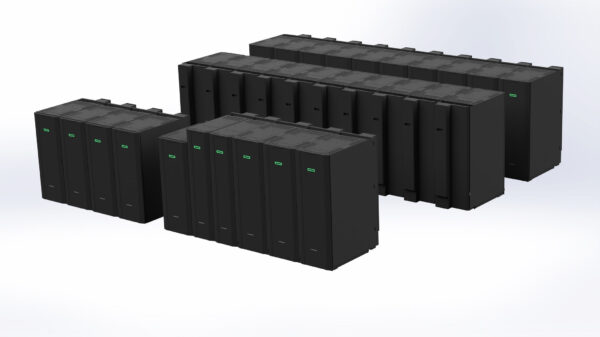
COO Jeff Clarke attributed the strength to “unprecedented demand” for AI-optimized servers, adding that Dell secured $12.1 billion in AI-related orders in Q1 alone. This figure already exceeds all AI-related shipments for FY25 and leaves Dell with a $14.4 billion AI server backlog. The division’s operating income jumped 36% to $998 million, pushing ISG’s share of segment operating income to 60%, compared to 49% a year ago.
The performance reflects broader sectoral momentum in AI infrastructure. As enterprises rush to modernize data centers and deploy generative AI applications, hardware vendors like Dell Technologies, Hewlett Packard Enterprise, and Lenovo are seeing renewed capital expenditure flows.
What’s Holding Back Dell’s Consumer Business?
While Dell’s commercial operations delivered solid growth, its Client Solutions Group (CSG) revealed a more nuanced picture. Total CSG revenue increased 5% to $12.5 billion, but this was heavily weighted toward commercial client sales, which rose 9% to $11 billion. Consumer sales, however, plummeted 19% year-over-year to $1.46 billion—marking a continued contraction in discretionary tech purchases amid post-pandemic normalization.
CSG’s operating income declined 16% to $653 million, and its operating margin slipped to 5.2% from 6.5% the previous year. As a result, CSG now contributes just 40% of Dell’s segment operating income, down from 51% in Q1 FY25.
Why Did Dell Stock Dip Despite Strong Earnings?
Despite robust financials, Dell’s stock dropped 1.3% to $112.15 on May 30, 2025, after an initial post-earnings surge of over 5% in after-hours trading. Investors appeared concerned by the company’s decision not to raise full-year guidance, even after a record quarter.
At the midpoint, Dell projects FY26 revenue of $103 billion, up 8% year-over-year, and non-GAAP diluted EPS of $9.40, up 15%. For Q2 FY26, Dell anticipates revenue between $28.5 billion and $29.5 billion and non-GAAP EPS of $2.25—representing a 15% jump year-over-year. Yet the lack of upward revision in annual guidance raised concerns that near-term AI demand might already be priced in.
What Are Analysts Saying About Dell’s Future?
Wall Street sentiment remains mostly bullish, though tempered by Dell’s cautious forward stance. TD Cowen raised its price target to $125, citing Dell’s strong AI order pipeline and robust infrastructure solutions growth. Analysts at Evercore ISI, Morgan Stanley, Citigroup, and Raymond James continue to rate the stock as “Buy” or “Outperform.”
Still, several analysts pointed out the need for Dell to prove sustained execution on its $14.4 billion AI backlog. The mixed narrative—solid performance but tempered outlook—is causing some institutional investors to rotate capital into peer stocks perceived to have more aggressive growth curves.
What Does Institutional Flow Data Reveal?
Recent 13F filings show a mixed institutional response. According to Nasdaq data, 699 institutional investors increased their stakes in Dell, while 666 reduced holdings. Capital World Investors exited its position entirely, selling over 12.46 million shares. Meanwhile, Norges Bank and FIL LTD significantly increased their exposure, adding 3.69 million and 2.82 million shares respectively.
This distribution signals a rotation between short-term risk management and long-term conviction plays. Funds with AI infrastructure theses are doubling down, while others appear to be profit-taking or hedging against macro uncertainties.
Should Investors Buy, Sell, or Hold Dell Stock?
Buy: For long-term investors, Dell’s positioning in the enterprise AI stack makes it a compelling buy. The combination of backlog visibility, strong free cash flow, and improving operating margins suggests durable earnings potential.
Hold: Existing shareholders may choose to hold as Dell works through its AI backlog and seeks to sustain ISG margins. Monitoring commercial client demand and Q2 conversion rates will be key to validating the current valuation.
Sell: Risk-averse investors might consider trimming exposure given the recent volatility and the company’s reluctance to raise guidance despite record performance.
What’s the Strategic Outlook for Dell in FY26?
Dell’s long-term strategy centers on scaling AI-optimized infrastructure for enterprise and government clients. With major orders already secured, execution risk now lies in timely fulfillment, margin protection, and integration with AI platforms and services. If Dell can maintain gross margin stability—currently around 21.1% GAAP and 21.6% non-GAAP—it could unlock further valuation upside in FY26.
Meanwhile, the consumer segment may remain a drag unless cyclical tech buying returns or new consumer hardware cycles spark replacement demand. Commercial and AI infrastructure, however, offer enough growth to offset these pressures.
Dell Technologies’ Q1 FY26 report marks a critical inflection point. With enterprise demand for AI hardware soaring, Dell is no longer just a PC maker—it is emerging as a full-stack infrastructure powerhouse. Yet Wall Street’s reaction reflects a deeper scrutiny of execution risk and earnings durability. The next few quarters will determine whether Dell can translate its AI backlog into lasting market leadership—or if the peak hype has already passed.
Discover more from Business-News-Today.com
Subscribe to get the latest posts sent to your email.