What Happened at Iran’s Shahid Rajaee Port?
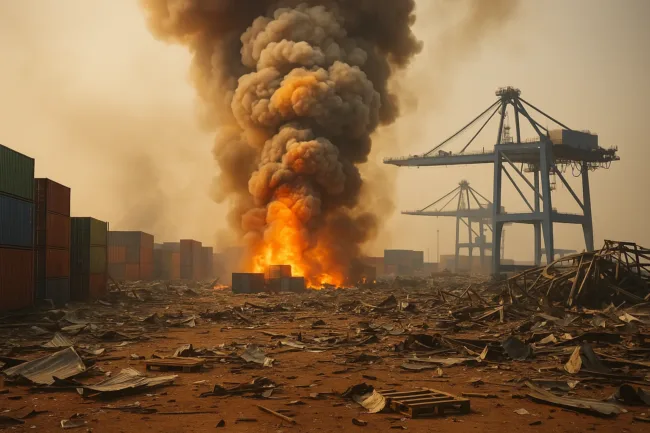
A major explosion struck Iran’s Shahid Rajaee port in Bandar Abbas at approximately 12:10 PM local time on 26 April 2025, killing five people and injuring more than 700 others, according to statements from Hormozgan provincial officials. The blast originated from a container storage area, causing a massive shockwave that was felt up to 50 kilometres away, local emergency services confirmed. Iran’s Ports and Maritime Organisation suspended operations immediately as emergency responders rushed to the site.
Footage circulating on social media showed large plumes of smoke, toppled shipping containers, and widespread fires throughout the port complex. Residents reported shattered windows and debris scattering across parts of Bandar Abbas. Authorities urged civilians to stay away from the area due to potential chemical exposure risks.

How Many People Were Affected by the Bandar Abbas Explosion?
Hormozgan Governor Mehdi Dousti stated that at least five individuals lost their lives while over 700 sustained injuries ranging from minor cuts to severe burns and respiratory complications linked to chemical inhalation. Hospitals across Bandar Abbas were placed on high alert, with additional medical personnel mobilised from nearby provinces.
Medical authorities confirmed that dozens of critically injured victims required urgent surgeries, and local health services established temporary triage zones at the port. Provincial authorities warned that the casualty figures could rise further as recovery efforts continued through the night.
What Caused the Blast at Shahid Rajaee Port?
Preliminary investigations suggested that the explosion may have stemmed from chemical materials improperly stored within the port’s container yard. Iranian media cited officials who pointed to a recent shipment containing sodium perchlorate—an oxidising agent used in missile fuel and explosives—that had arrived from China.
However, Iranian authorities emphasised that no definitive cause had been established. Speaking to state news agency IRNA, a port official explained that negligence in safety procedures could not be ruled out, pending the outcome of detailed forensic examinations.
The Hormozgan Governor’s Office announced the formation of an independent investigative committee, comprising members from the Ports and Maritime Organisation, the Ministry of Roads and Urban Development, and emergency response agencies, to identify the chain of events leading to the disaster.
Was Sabotage Suspected in the Bandar Abbas Explosion?
While speculation about sabotage surfaced briefly on social media, officials made no statements supporting such claims. The Governor of Hormozgan urged the public not to spread unverified information, highlighting that technical errors involving chemical handling were a primary line of inquiry at this stage.
Iran’s Ministry of Intelligence has been tasked with assisting the investigation to rule out external interference. As of now, authorities are treating the event as a tragic industrial accident pending conclusive findings.
Why Is Bandar Abbas Port Strategically Important?
Bandar Abbas, located near the Strait of Hormuz, is Iran’s principal maritime gateway, handling over half of the nation’s containerised imports and exports. The Shahid Rajaee port is a critical node in Iran’s logistics network, particularly vital given the country’s isolation from many Western shipping routes due to ongoing sanctions.
Damage to Shahid Rajaee port infrastructure threatens to disrupt Iran’s already fragile supply chains. Observers noted that if major port functions remain impaired, Iran could face delays in essential imports, including industrial goods, food supplies, and medical equipment.
Historically, Bandar Abbas has been targeted during past conflicts, such as the Iran-Iraq War. In recent years, Iranian authorities had invested heavily in upgrading port safety standards, although challenges around managing hazardous materials have persisted.
How Extensive Was the Damage at the Site?
Initial assessments revealed extensive damage across multiple sectors of the Shahid Rajaee port. Dozens of warehouses were either destroyed or rendered structurally unsafe. Hundreds of containers were displaced by the force of the blast, some bursting into flames, posing secondary hazards.
Crane operations, container terminals, and port logistics centres reported severe operational disruptions. Emergency crews worked throughout Saturday to contain fires and stabilise chemical residues to prevent additional explosions. Air quality monitoring units were deployed to evaluate potential environmental contamination risks.
Iran’s Ports and Maritime Organisation confirmed that port operations would remain suspended for several days at minimum, with international shipping traffic redirected to alternate facilities, including the ports of Bushehr and Chabahar.
How Are Iranian Authorities Managing the Fallout?
President Ebrahim Raisi ordered an immediate investigation into the incident and directed federal agencies to provide full support for recovery and cleanup efforts. Crisis response teams from the Islamic Revolutionary Guard Corps and the National Disaster Management Organisation were dispatched to Bandar Abbas.
The Hormozgan provincial government declared a local state of emergency, temporarily restricting civilian access to the Shahid Rajaee port area. Special hazardous materials units, including chemical decontamination teams, began site inspections and containment work.
Environmental health agencies also initiated testing of local groundwater and air quality to assess the long-term impact of chemical exposure. Officials warned that nearby coastal areas could be temporarily affected, although no large-scale evacuations had been ordered as of the latest update.
Is There Any Link to Wider Regional Tensions?
The explosion occurred amid sensitive diplomatic negotiations between Iran and Western powers in Oman, aimed at reviving discussions over Iran’s nuclear activities. However, Iranian officials have publicly dismissed speculation linking the Bandar Abbas incident to sabotage related to regional rivalries or international tensions.
Over the past decade, Iran has experienced several industrial accidents, many involving facilities handling hazardous chemicals or military materials. Experts caution that poor maintenance standards and lapses in industrial safety regulations are frequent underlying causes of such disasters, rather than acts of sabotage.
Analysts suggested that while political narratives may emerge around the incident, the immediate priority for Iran remains the rapid recovery and restoration of a vital economic artery.
What Is the Immediate Economic Impact?
Iran’s Ministry of Economy warned that the suspension of operations at Shahid Rajaee port would likely lead to significant short-term trade disruptions. Essential goods destined for domestic markets could face delivery delays, while freight costs are expected to rise due to diversion to alternative ports.
Shipping industry observers noted that Bandar Abbas’s closure could reverberate through Middle Eastern logistics chains, given its proximity to key maritime routes through the Strait of Hormuz. However, oil and gas export facilities, which operate separately from container terminals, appeared to remain unaffected.
Iran’s Chamber of Commerce issued an advisory to domestic businesses, warning of potential increases in prices for imported consumer goods and manufacturing materials over the coming weeks if port functions are not quickly restored.
What Happens Next at Shahid Rajaee Port?
Recovery operations are expected to span several weeks, with a phased reopening of less-affected port zones planned once safety verifications are complete. Authorities have pledged to fast-track rebuilding efforts and announced that compensation packages will be made available for affected port workers and businesses.
Iran’s Ports and Maritime Organisation confirmed that it would undertake a full audit of hazardous materials handling procedures nationwide, signalling broader regulatory reforms in the aftermath of the disaster.
As of the latest update, emergency response operations continued on-site, with firefighting units reporting significant progress in extinguishing container yard fires. The government is expected to release preliminary investigation findings within days, followed by further updates on resumption of port operations.
Discover more from Business-News-Today.com
Subscribe to get the latest posts sent to your email.