
Commercial Vehicle Group (CVG) (NASDAQ: CVGI), a New Albany, Ohio-based manufacturer of seating systems, electrical wire harnesses, and trim components for commercial vehicles, has issued 2026 revenue guidance of $660 million to $700 million, alongside an adjusted EBITDA target of $24 million to $30 million, as the company reports full-year 2025 revenue of $649 million against a backdrop of persistent North American Class 8 truck market softness. The guidance range, disclosed on March 10, 2026 alongside fourth-quarter results, sits materially above the prior consensus estimate of $634.9 million and is anchored by expected ramp-up in the company’s Global Electrical Systems segment, including a newly confirmed supply contract with Zoox, the Amazon-backed autonomous ride-sharing subsidiary, for custom low-voltage wire harnesses for its all-electric robotaxi platform. With CVGI shares surging more than 54% on the day of the announcement after closing near multi-year lows below $1.70, the market reaction reflects a dramatic reassessment of the company’s trajectory, driven less by legacy trucking fundamentals and more by the credibility of its autonomous and electrified vehicle exposure. The scale of that intraday move, against a stock trading at less than $2.50, underscores both the depth of prior market skepticism and the strategic weight placed on CVG’s EV pivot by investors who had largely discounted the stock’s recovery potential.
How does CVG’s 2026 revenue guidance compare to street expectations and what is driving the upgrade?
CVG’s 2026 guidance range of $660 million to $700 million represents a recovery from a difficult 2025, in which total revenue declined 10.3% from $723.4 million in 2024 to $649 million. The guidance midpoint of $680 million implies roughly 4.8% top-line growth and exceeds analyst consensus by more than $45 million. That gap is not trivial for a company of this scale and reflects the degree to which institutional forecasters had anchored expectations to ongoing commercial truck market weakness rather than pricing in the contribution of new business wins.
The Global Electrical Systems segment is the primary growth engine. CVG management has guided for that segment to grow by more than 10% in 2026, with the Zoox program expected to begin scaling in the second half of the year. The company’s full-year Electrical Systems revenue was essentially flat in 2025, but the segment returned to growth in the third quarter and accelerated further in the fourth quarter, with margin expansion driven by the progressive shift of production capacity to lower-cost facilities in Morocco and Mexico. The combination of volume recovery, footprint optimization, and new program contributions creates meaningful operating leverage that the company’s prior cost structure would have obscured.
The EBITDA guidance of $24 million to $30 million represents approximately 50% growth at the midpoint versus full-year 2025, and management has framed free cash flow as a priority deployment toward further debt reduction rather than capital deployment or shareholder returns. That emphasis on balance sheet repair reflects where CVG currently sits on the leverage spectrum.
What is the Zoox wire harness contract and why does it matter strategically for CVG’s long-term positioning?
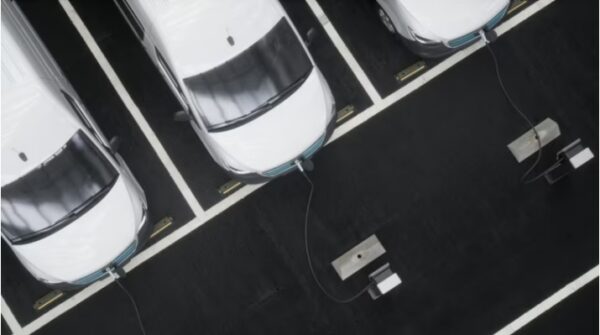
CVG’s designation as Zoox’s strategic supplier of low-voltage wire harnesses is arguably the single most consequential development in the company’s recent history. Zoox, a fully owned Amazon subsidiary, is developing purpose-built, fully autonomous, bi-directional robotaxis designed for urban ride-sharing without a human driver or steering wheel. The vehicles operate on a proprietary all-electric platform with a complex electrical architecture that demands precision in wire harness design and manufacturing. CVG has already been supplying harnesses to support Zoox’s test-market vehicle deployments, and volumes are expected to increase meaningfully in the second half of 2026 as Zoox moves from limited trials toward broader commercial activation.
The strategic logic for CVG extends beyond revenue. Being embedded in the supply chain of an Amazon-backed autonomous platform provides design-to-specification involvement at the component level, which creates switching costs, enhances CVG’s technical reputation with other EV and autonomous vehicle program teams, and diversifies the company away from its historical dependence on cyclical North American Class 8 truck builds. The Zoox contract is not a commodity supply relationship. It is a collaborative engineering engagement, and the distinction matters for how investors and potential customers assess CVG’s capabilities and future win rates in the electrified and autonomous vehicle segment.
CVG’s two facilities in Mexico provide the scalability management has cited, and the ability to ramp production without proportionate capital expenditure increases is a structural margin advantage that should be visible in segment results from the third quarter of 2026 onward.
How did CVG’s three business segments perform in Q4 2025 and what does each face in the year ahead?
Global Electrical Systems was the standout performer in the fourth quarter and the full year. The segment returned to growth in the third quarter of 2025 and continued accelerating in the fourth quarter, with revenue and margin expansion driven by new business ramps and the Morocco and Mexico footprint shift. Adjusted operating income for the full year was $3.8 million, an improvement of $4.6 million versus 2024. The Zoox program adds a third growth vector alongside the two existing new electrical programs management had previously highlighted, all of which are vehicle-related.
Global Seating delivered a more nuanced outcome. Volumes declined with the broader North American truck market, but the segment achieved operating margin expansion through operational efficiency and cost reductions. This demonstrates that CVG’s restructuring actions are producing durable profitability improvements at segment level, not just at the consolidated SG&A line. The trajectory suggests the segment is well-positioned to generate meaningful earnings leverage as Class 8 volumes normalize, without needing a volume surge to reach profitability.
Trim Systems and Components remained the weakest link. Fourth-quarter revenue declined 22.5% to $34.4 million against the year-ago quarter, and the segment posted an adjusted operating loss of $1.4 million. For the full year, revenue was down 22.9%, and adjusted operating income fell $13.4 million versus 2024. The segment is directly exposed to North American Class 8 demand cycles, and management has indicated it has taken proactive steps to improve profitability, though the specifics of structural intervention in this segment beyond cost reduction have not been fully elaborated. A market recovery in Class 8 builds, which ACT Research projects at approximately 260,000 units in 2026 versus 251,247 in 2025, would provide some top-line relief, but the segment will require more than a modest volume recovery to restore meaningful profitability.
What does the Class 8 truck market recovery outlook mean for CVG’s revenue assumptions and execution risk?
CVG’s 2026 guidance rests in part on the ACT Research forecast of a 4% increase in North American Class 8 heavy truck production to approximately 260,000 units, following a 2025 during which the second half saw roughly a 28% sequential decline from the first half. The ACT model for 2026 projects a steady ramp throughout the year, with second-half volumes approximately 18% above the first half, which provides a favorable comp dynamic as CVG progresses through the year and reports results. This sequential recovery profile supports the probability of a stronger second half weighting in CVG’s revenue and earnings delivery, consistent with the Zoox ramp timing.
The construction end market, another meaningful exposure for CVG’s electrical systems and seating businesses, is expected to grow in the low single-digit percentage range in 2026, supported by lower interest rates and fiscal stimulus activity. That is not a high-conviction growth driver, but it eliminates one of the headwinds the company carried through much of 2024 and 2025.
The execution risks are real and should not be dismissed. ACT’s own longer-horizon data shows a 5% Class 8 decline projected for 2027, which means any sustained recovery in CVG’s legacy commercial vehicle business may be shallow and short-lived. Dependence on the Class 8 cycle creates structural volatility in earnings that autonomous vehicle program revenue, once at sufficient scale, would help dampen. Until then, investors are effectively underwriting both a cyclical trucking recovery and a new program ramp simultaneously, each carrying its own set of delivery variables.
How is CVG managing its balance sheet and what does leverage reduction mean for financial flexibility in 2026?
Free cash flow was a genuine bright spot in 2025. CVG generated $33.7 million in free cash flow for the full year, up $21.5 million from 2024 and ahead of management’s guidance, driven by working capital improvement and lower capital expenditure levels. That cash generation funded $29.1 million in total debt reduction and brought net leverage to 4.1 times adjusted EBITDA by year-end, down from higher levels earlier in the year. The trend is in the right direction, but 4.1 times net leverage is not a comfortable position for an industrial company facing end-market uncertainty and operating in a high interest rate environment.
Management has been explicit that 2026 free cash flow will be deployed toward further debt reduction, with a stated longer-term target of 2.0 times net leverage. That goal requires continued EBITDA growth and disciplined capital allocation, both of which are achievable if the Electrical Systems segment ramp proceeds on schedule and the Class 8 recovery materializes as forecast. Interest expense remains a headwind. CFO Andy Cheung acknowledged that rates remain elevated following the company’s refinancing approximately a year ago, though continued debt paydown should translate to gradually lower interest expense through 2026, providing incremental earnings relief.
The existence of an active S-3 shelf registration filed in August 2025 is worth noting. While CVG has not indicated any near-term dilutive intent, the shelf creates an overhang that may constrain equity re-rating until the company demonstrates sustained EBITDA improvement and meaningfully reduces leverage. Institutional investors who have underweighted the stock given that overhang may reassess as 2026 results accumulate.
How should investors interpret CVGI’s 54% single-day share price surge relative to the company’s fundamental value?
CVGI entered the March 11 session trading near $1.62, having closed in the lower half of its 52-week range and below its 200-day moving average. The stock surged more than 54% intraday following the earnings release and call, reaching $2.49 during trading, adding approximately $32 million in market capitalization. A peak intraday move of 35.4% was tracked by Argus, with extended afterhours activity driving the cumulative gain above 54%. The magnitude of the move from a very low base reflects the compression of negative sentiment rather than a fundamental re-rating to full value.
Prior to this announcement, the consensus estimate of $634.9 million for 2026 revenue was already implying a soft recovery assumption. The guidance range of $660 million to $700 million forces a revision to both revenue and EBITDA estimates, and the Zoox contract announcement removed a significant information gap around the company’s ability to win credible autonomous vehicle business. Noble Financial, which maintained a Buy rating as recently as February 17, 2026, has been among the few analysts with a constructive view on CVGI ahead of this announcement.
At $2.49, the implied market capitalization remains modest relative to the guided revenue and EBITDA profile, and the stock continues to trade with significant leverage to execution. The question for new investors entering after the surge is whether the Zoox ramp timeline, the Class 8 recovery, and the margin improvement trajectory will collectively deliver the EBITDA growth required to justify further re-rating while the company navigates residual balance sheet risk. For existing holders, the question is whether the stock’s recovery reflects full disclosure of the near-term catalyst set or whether additional program wins in the Electrical Systems segment can provide further upside in the second half of 2026.
What do CVG’s 2026 targets mean for the company, its competitors, and the commercial vehicle components sector?
- CVG has guided 2026 revenue of $660 million to $700 million, materially exceeding prior consensus of $634.9 million and representing a roughly 5% recovery from a $649 million full-year 2025 base marked by broad North American demand softness.
- The Zoox low-voltage wire harness contract is a structural inflection, placing CVG inside the supply architecture of an Amazon-backed autonomous robotaxi program and signaling transition from cyclical truck supplier toward a diversified electrified platform partner.
- Global Electrical Systems is targeted to grow more than 10% in 2026, with the Zoox ramp concentrated in the second half, creating a favorable earnings trajectory as the year progresses and reducing near-term delivery risk on guidance.
- Adjusted EBITDA guidance of $24 million to $30 million implies approximately 50% growth at the midpoint, driven by Electrical Systems volume leverage, SG&A discipline, and a Class 8 market recovery forecast to produce a 4% year-over-year increase in build volumes.
- Free cash flow generation of $33.7 million in 2025, well ahead of guidance, reduces near-term refinancing risk and supports continued debt paydown toward management’s stated 2.0 times net leverage target from the current 4.1 times.
- Trim Systems and Components remains a drag, with 2025 revenue down 22.9% and an adjusted operating loss for the full year; a sustained Class 8 recovery and footprint rationalization are required before this segment returns to meaningful earnings contribution.
- Production footprint shifts to lower-cost Morocco and Mexico facilities are generating tangible margin benefits in Global Electrical Systems and provide scalable capacity for the Zoox ramp without proportionate capital expenditure increases.
- CVGI’s 54% single-day stock move from near-multi-year lows reflects sentiment compression reversal rather than full fundamental re-rating; the stock remains a high-execution-risk proposition, with the active S-3 shelf registration a residual overhang to monitor.
- For sector competitors in commercial vehicle components such as Stoneridge (SRI) and Sparton, CVG’s autonomous vehicle program wins raise the competitive bar for electrical systems capability and signal customer willingness to diversify the supply base for next-generation platforms.
- Management’s expansion targeting into data center power generation and related infrastructure, separate from its vehicle programs, indicates an intent to further reduce cyclical concentration over the medium term, though this opportunity remains at the early-stage discussion phase.
Discover more from Business-News-Today.com
Subscribe to get the latest posts sent to your email.