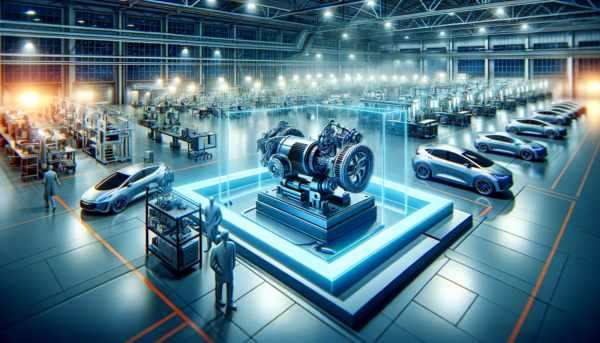
Cummins Inc., the American engine and alternative power solutions manufacturer, has unveiled plans to invest more than $1 billion across its domestic engine manufacturing network. The sweeping investment initiative—timed to coincide with President Joe Biden’s visit to Cummins’ Fridley facility in Minnesota—will prioritize upgrades at key manufacturing locations in Indiana, North Carolina, and New York.
This landmark investment is positioned to support the rollout of Cummins’ next-generation fuel-agnostic internal combustion engines, including the new 15-liter platform designed to run on a wide spectrum of lower-carbon fuels such as hydrogen, natural gas, and advanced biofuels. These enhancements form a central pillar of Cummins’ dual-path decarbonization strategy, which blends immediate improvements in engine efficiency with long-term investment in zero-emissions technologies.
Why is Cummins investing over $1 billion in its U.S. manufacturing footprint right now?
The investment announcement comes as Cummins intensifies its pivot toward decarbonization amid growing regulatory and customer demand for cleaner transport and industrial solutions. Speaking from the Fridley site during President Biden’s Investing in America tour, Cummins President and CEO Jennifer Rumsey stated that the company is moving rapidly to commercialize key technologies that will help cut emissions across the economy.
“In just a few weeks, we will begin manufacturing one of the key pieces of technology for green hydrogen production that will help decarbonize our economy and drive the clean energy transition—the electrolyzer,” Rumsey said. “The electrolyzer production in Minnesota and investment in our Indiana, North Carolina and New York facilities are reflective of our dual path approach of advancing both engine-based and zero-emission solutions—an approach that is best for all of our stakeholders and our impact on the planet.”
President Biden’s visit to the Fridley plant aligns with his administration’s broader industrial revitalization strategy, which emphasizes onshoring clean energy production, creating skilled manufacturing jobs, and achieving net-zero emissions by 2050. Cummins’ announcement serves as both a commercial and political milestone, showcasing how traditional engine manufacturers are leveraging federal momentum and private capital to transition into the clean energy age.
What is the Jamestown Engine Plant’s role in Cummins’ clean-tech future?
Of the $1 billion-plus investment outlined by Cummins, a significant portion—$452 million—is earmarked for upgrading the Jamestown Engine Plant (JEP) in Western New York. Spanning 998,000 square feet, the Jamestown facility is one of Cummins’ most advanced manufacturing sites and will serve as the production hub for its new 15-liter fuel-agnostic internal combustion engine platform.
The new engine architecture allows a common base design with cylinder heads and fuel systems tailored for different low-carbon fuels. One of the first iterations of this platform, the X15N engine, is already being piloted by major customers including Walmart, Matheson, Werner Enterprises, and National Ready Mix. These field trials represent an early validation of Cummins’ strategy to offer flexible solutions that support decarbonization without forcing immediate transitions to fully electric drivetrains, especially in hard-to-electrify sectors like long-haul trucking and construction.
The Jamestown upgrades will enable increased manufacturing scale and improved product integration across Cummins’ evolving product line. The site will also support localized workforce expansion, further aligning with national and state-level economic development goals.
When and where will Cummins begin electrolyzer production—and why is it significant?
Cummins confirmed that commercial production of electrolyzers at its Fridley, Minnesota facility will begin on April 24, 2023. The high-efficiency electrolyzer systems, used to split water into hydrogen and oxygen using renewable electricity, are essential to enabling the hydrogen economy and decarbonizing industrial applications, heavy transport, and power generation.
The Fridley facility, which has been modernized to accommodate these next-generation systems, reflects Cummins’ long-term commitment to scaling hydrogen infrastructure both domestically and globally. By investing in electrolyzer manufacturing now, Cummins is positioning itself as a foundational supplier in the nascent—but rapidly maturing—green hydrogen supply chain.
Electrolyzer production will also complement Cummins’ partnerships in the hydrogen mobility space, where the firm has already supplied fuel cell solutions for buses, trains, and off-road vehicles. Analysts covering the clean tech and industrials sector view the dual investment in combustion innovation and zero-emission hardware as a hedge against technological uncertainty and a reflection of the company’s pragmatic, multi-path strategy.
What is the scope of planned upgrades in Indiana and North Carolina?
While Cummins has not yet disclosed full details of its capital allocation in Indiana and North Carolina, executives have indicated that announcements will follow in the coming weeks. These states house several of Cummins’ legacy operations and engine testing centers, including its Columbus Engine Plant and Seymour Technical Center in Indiana, both of which are expected to play a role in validating and deploying fuel-flexible platforms.
North Carolina is also home to key logistics and component facilities that will likely benefit from the network-wide optimization plan. Investment in these states is expected to include both infrastructure upgrades and digital transformation initiatives, including automation, sustainability retrofits, and potentially workforce reskilling programs focused on hydrogen and electrification technologies.
How does Cummins’ fuel-agnostic strategy fit within broader industry trends?
Cummins is not alone in pursuing hybrid pathways to net-zero transport. Engine and powertrain rivals such as Daimler Truck, Volvo Group, and PACCAR are also exploring flexible engine platforms while building capacity for fuel cells and battery-electric systems. However, Cummins’ commitment to “fuel-agnostic” internal combustion engines—rather than phasing out combustion entirely—represents a distinctive strategy rooted in its deep customer base and technical expertise in powertrains.
By designing engines that can operate on natural gas, hydrogen, or renewable diesel without major platform redesigns, Cummins is addressing one of the core friction points in fleet decarbonization: infrastructure readiness. For many of its commercial clients, zero-emission transitions hinge on fueling availability, payload concerns, and lifecycle cost predictability. Cummins’ modular approach allows fleets to start reducing emissions today without waiting for hydrogen or battery infrastructure to reach scale.
Sector analysts note that this adaptability may give Cummins a competitive edge in emerging markets, regional transport corridors, and heavy-duty vehicle classes where full electrification is still years away from economic feasibility.
How does this investment tie into U.S. manufacturing policy and job creation?
The timing and content of Cummins’ investment directly align with the Biden Administration’s policy thrust under the Bipartisan Infrastructure Law and Inflation Reduction Act. Both programs incentivize domestic manufacturing of clean energy components, job creation in industrial regions, and the modernization of U.S.-based supply chains.
President Biden’s visit to Fridley underscores the political significance of Cummins’ announcement. The Administration’s Investing in America tour aims to highlight private-sector contributions to industrial revitalization and decarbonization. Cummins’ $1 billion commitment serves as a headline example of how legacy manufacturers can pivot to climate-aligned growth while creating skilled jobs and modernizing critical infrastructure.
Local officials in Minnesota, New York, and Indiana have welcomed the investment, citing its potential to sustain thousands of manufacturing jobs, accelerate clean tech innovation, and catalyze new industrial ecosystems around fuel-agnostic and hydrogen technologies.
Is Cummins redefining its identity as a next-generation power technology leader?
With over $1 billion in capital investments slated for its U.S. manufacturing base, Cummins is signaling a transformative phase in its century-old evolution. By blending its heritage of engine manufacturing with bold bets on hydrogen and carbon-neutral fuels, the American engine developer is positioning itself as a key enabler of the global energy transition.
This dual-path strategy—simultaneously advancing combustion-based efficiency and zero-emission alternatives—resonates with current market and policy realities. As fleets, industries, and governments seek near-term emissions reductions without compromising operational continuity, Cummins’ adaptable engine platforms and electrolyzer technologies may offer a unique bridge to a cleaner future.
Discover more from Business-News-Today.com
Subscribe to get the latest posts sent to your email.