


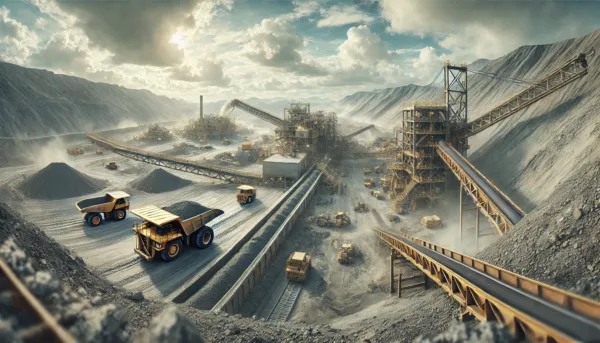
Why is trace uranium emerging as a strategic asset and how can Globe Metals & Mining capitalise on this trend?
Globe Metals & Mining Limited (ASX: GBE) is primarily focused on niobium and tantalum development at its Kanyika Project in Malawi, but institutional investors are beginning to take note of the project’s trace uranium potential. As the global energy transition accelerates and nuclear energy reclaims its role as a reliable low-carbon power source, even secondary uranium resources are gaining strategic importance.
While uranium is not the primary revenue driver, its presence under Large-Scale Mining Licence No. LML0216/21 adds another layer of diversification to Kanyika’s critical mineral profile. Globe Metals & Mining has indicated that any uranium considerations will remain secondary, but analysts believe that positioning as a low-volume, ethically sourced uranium supplier could strengthen investor interest in the long term.
How does the global uranium market outlook align with Kanyika’s trace resource potential?
The global uranium market has been buoyed by renewed investment in nuclear energy as governments seek stable baseload power to complement renewables. The World Nuclear Association expects uranium demand to grow by more than 25% over the next decade, driven by new reactor construction in Asia, life-extension programs in Europe, and small modular reactor (SMR) deployment in North America.
Spot uranium prices have rebounded significantly since 2023, currently averaging above USD 80 per pound, as supply remains tight due to limited new mine developments and production constraints in Kazakhstan and Canada. Against this backdrop, any additional uranium production from non-conflict jurisdictions is viewed favourably by utilities seeking diversified supply.
Although Kanyika’s uranium content is classified as deleterious material within the current resource estimate, institutional sentiment suggests that regulatory and technological advancements could make by-product recovery commercially viable in later project phases.
Can Globe Metals & Mining integrate uranium recovery without disrupting its niobium and tantalum economics?
Globe Metals & Mining has yet to outline a clear uranium recovery plan, focusing instead on niobium and tantalum as its primary economic drivers. However, analysts believe that the company’s decision to delay its bankable feasibility study (BFS) while adopting early contractor involvement (ECI) could provide an opportunity to assess whether uranium extraction could be integrated cost-effectively.
Modern hydrometallurgical techniques have improved the economics of recovering trace uranium from multi-metal deposits, and Malawi’s regulatory environment has been supportive of uranium development in the past, as demonstrated by the Kayelekera Mine. If Globe Metals & Mining incorporates even low-level uranium recovery in later stages, it could enhance revenue diversity with minimal incremental capital expenditure.
What would be the implications for project financing and investor sentiment?
The potential to add uranium as a future revenue contributor could bolster Globe Metals & Mining’s financing profile, especially as ESG-conscious funds are beginning to reclassify nuclear-linked investments as green under certain taxonomies. While the company’s ongoing negotiations with the Industrial Development Corporation of South Africa remain centred on niobium and tantalum, institutional investors are likely to view uranium as an optional upside that strengthens long-term cash flow potential.
Globe Metals & Mining’s share price, which closed at AUD 0.042 on 25 July 2025, has gained 61.54% over the past month, primarily due to optimism around niobium demand. Analysts believe that confirmation of uranium recovery feasibility—if aligned with Malawi’s regulatory standards—could further boost investor interest, particularly among funds focused on energy-transition commodities.
How does Malawi’s stable jurisdiction enhance Globe Metals & Mining’s uranium positioning?
Malawi has historically maintained a supportive stance toward uranium mining, with the Kayelekera Mine—once operated by Paladin Energy—exporting uranium oxide to international utilities under long-term contracts. The country’s established regulatory framework for uranium exploration and production, developed during Kayelekera’s operational years, provides a proven permitting pathway and clear environmental compliance standards. This track record significantly reduces jurisdictional and licensing risks compared to other African nations, where uranium mining often faces delays due to political instability or shifting regulatory requirements.
Combined with Malawi’s broader reputation as a stable and transparent mining destination, this regulatory precedent positions Globe Metals & Mining to eventually market any future uranium production as an ESG-compliant, conflict-free, and traceable supply source. In a nuclear fuel market where utilities are increasingly prioritising low-risk jurisdictions and ethical sourcing, this distinction could become a valuable differentiator, particularly for buyers in Europe, North America, and Asia transitioning toward low-carbon nuclear energy.
Discover more from Business-News-Today.com
Subscribe to get the latest posts sent to your email.