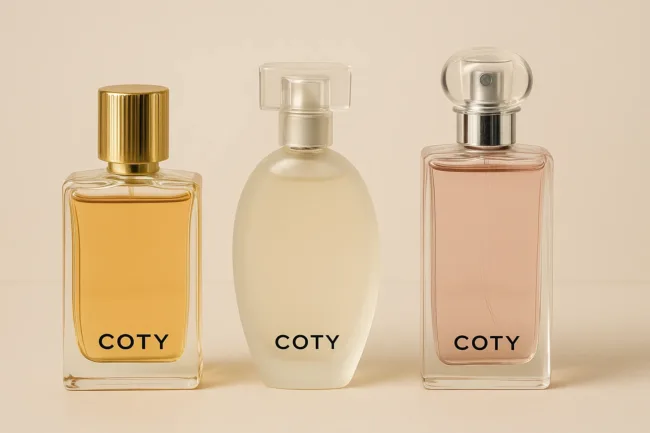
Coty Inc. (NYSE: COTY) has unveiled a sweeping reorganization that will consolidate its prestige and mass fragrance businesses while launching a strategic review of its consumer beauty operations. The move underscores the American beauty group’s renewed focus on fragrance as the central driver of growth and profitability, at a time when its mass cosmetics division has been struggling to maintain relevance. By pivoting decisively toward its strongest category, Coty is signaling to both markets and consumers that its turnaround plan will be fragrance-led, with other segments either refocused or potentially divested.
The announcement, made in New York, comes against a challenging backdrop for Coty’s financial performance. For fiscal 2025, the company reported net revenue of USD 5.89 billion, down 4 percent on a reported basis and 2 percent on a like-for-like basis. Its consumer beauty segment, which houses mass color cosmetics, body care, and mass fragrance, generated USD 2.07 billion in revenue, an 8 percent decline year on year, and posted an operating loss of USD 127.4 million. Analysts and institutional investors have pointed to this persistent underperformance as a drag on Coty’s broader profitability, making a strategic reset inevitable.
What does the integration of prestige and mass fragrance mean for Coty’s growth trajectory in 2025 and beyond?
Coty has chosen to integrate its prestige fragrance unit with its mass fragrance business to create a unified global “scenting powerhouse.” Fragrance already accounts for roughly 69 percent of Coty’s total sales, spanning premium perfumes priced at hundreds of dollars and accessible body sprays at just a few dollars. Under the new structure, Coty expects to drive synergies across research and development, consumer insights, manufacturing, and global distribution.
This integration is designed to break down silos between prestige and mass products, allowing insights and innovations in one tier to be rapidly adapted to another. Marketing campaigns, logistics systems, and procurement strategies will be centralized to eliminate duplication and unlock economies of scale. By doing so, Coty aims not only to improve its margin profile but also to strengthen its ability to launch products quickly and respond to shifting consumer preferences across income segments.
The fragrance market has outpaced growth in global beauty, with consumers showing a willingness to indulge in perfumes and mists as “affordable luxuries.” Coty’s CEO Sue Nabi has highlighted fragrance as the company’s core competitive advantage, noting that the business has the ability to capture consumers at every price point, from USD 5 to USD 500. This breadth provides Coty with a rare level of resilience in a beauty landscape that is increasingly polarized between premium and value-driven segments.
Why is Coty reviewing its consumer beauty business after years of market pressure?
The consumer beauty division, anchored by brands such as CoverGirl, Rimmel, Sally Hansen, and Max Factor, has been under sustained pressure. In fiscal 2025, revenues in this segment fell sharply, and the unit slipped into an operating loss. In the most recent quarter, consumer beauty revenue dropped 12 percent year on year, magnifying investor concerns about Coty’s exposure to slowing demand in mass cosmetics markets.
Coty has now initiated a comprehensive strategic review of the consumer beauty unit. The review will evaluate options such as divestitures, spin-offs, partnerships, or restructuring. The company is also scrutinizing its Brazilian business, which contributes close to USD 400 million in annual revenue through locally popular brands. Analysts believe that Coty may prioritize exiting underperforming categories to free up resources for fragrance and prestige, although no decision has yet been confirmed.
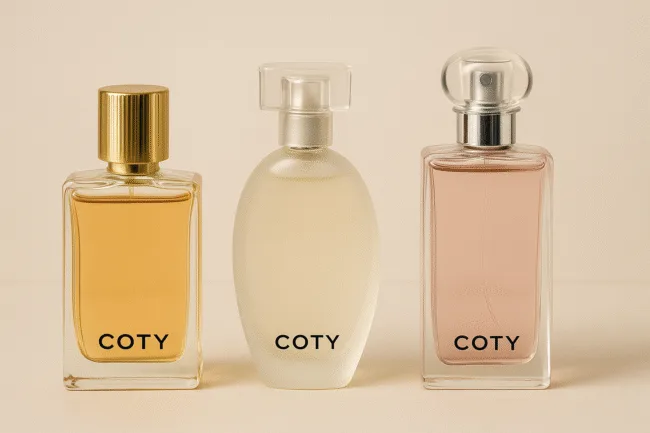
Institutional sentiment suggests investors will welcome moves that improve capital efficiency and restore profitability. However, there are concerns that shedding mass market brands could erode scale advantages and reduce Coty’s presence in large but lower-margin channels. Balancing the need for profitability with the risks of losing consumer touchpoints will be central to the outcome of this review.
How did Coty’s financial performance in fiscal 2025 set the stage for this pivot toward fragrance?
Coty’s fiscal 2025 performance exposed the structural weaknesses of its consumer beauty division and underscored the importance of fragrance to its survival. The company reported operating income of USD 241.1 million, down 56 percent compared to the previous year. This decline reflected impairment charges in color cosmetics and lower volumes across mass categories. Net losses totaled USD 381.1 million, driven in part by unfavorable mark-to-market impacts on equity swaps.
Gross margins did improve slightly to 64.8 percent, thanks to supply chain efficiencies and pricing execution, but the gains were insufficient to offset the steep decline in operating profit. Fourth-quarter results amplified investor unease: revenue of USD 1.25 billion fell 8 percent compared to the prior year, and adjusted operating margin slipped to 5.4 percent from 7.9 percent. With consumer beauty down double digits and prestige also contracting, Coty’s reliance on fragrance as its engine of resilience became even clearer.
Institutional investors reacted by selling off shares, leading to a sharp decline in Coty’s stock price. Some reports indicated the stock fell by nearly 20 percent after the earnings release. Analysts described the move as a recognition that Coty’s turnaround is far from complete, and that management must prove its ability to stabilize revenue trends before regaining credibility in equity markets.
How are markets and industry observers interpreting Coty’s fragrance-first strategy and consumer beauty review?
Reactions from analysts and industry commentators have been mixed but focused on one theme: Coty is retreating to its strongest fortress. Many see the move as a pragmatic recognition that mass cosmetics has become structurally weaker, with fragmented competition, pricing pressure, and slowing innovation cycles. By contrast, fragrance offers premium pricing power, brand loyalty, and a relatively stable demand base.
Some observers note that Coty’s review of its mass beauty brands could include a sale or spin-off of CoverGirl, a name long synonymous with U.S. drugstore cosmetics. While such a move would be symbolically significant, analysts believe investors would reward Coty for shedding underperforming assets and focusing squarely on higher-margin categories. Others warn that divestments may not be straightforward, given legacy contracts and channel entanglements that complicate clean exits.
Institutional sentiment reflects cautious optimism. Investors appear willing to support Coty’s pivot to fragrance, provided management demonstrates execution discipline and articulates a clear timeline for strategic actions. Failure to follow through could deepen skepticism and further weigh on valuation.
What risks could undermine Coty’s ability to execute its fragrance-first reinvention?
While fragrance offers promise, Coty faces multiple risks. Integrating prestige and mass units is operationally complex, requiring careful coordination of branding strategies, supply chains, and sales channels. Any missteps could confuse consumers or dilute brand equity. Additionally, fragrance relies heavily on international ingredient sourcing, leaving Coty exposed to tariff shifts and global trade dynamics.
Consumer behavior also remains uncertain. While fragrance has historically shown resilience, a prolonged economic downturn could soften discretionary spending, particularly in premium tiers. Meanwhile, potential divestitures of mass brands carry their own risks, as Coty could lose distribution scale in markets where these brands still hold recognition.
Execution will also be tested in the fast-growing USD 7 billion mist and body spray market, where new entrants and indie brands are already competing aggressively. Coty must prove that its global reach and brand equity can translate into market share in this evolving category.
What does Coty’s future outlook look like, and can fragrance sustain its turnaround strategy?
Looking ahead, Coty has guided investors to expect like-for-like sales declines of 6 to 8 percent in early fiscal 2026 before potential recovery in the second half. The company plans to restore growth through a mix of margin expansion, blockbuster fragrance launches, and portfolio simplification. Its strategy also emphasizes tapping into emerging consumer segments, such as Gen Z, through new formats like pen sprays and mists.
Fragrance is not only Coty’s strongest category but also its most defensible, with pricing power and global resonance. If the company can align its operational execution with its brand vision, it may succeed in repositioning itself as a fragrance-led leader while freeing itself from legacy weaknesses in mass cosmetics. Success will hinge on disciplined portfolio decisions, timely product launches, and investor patience.
Coty’s pivot is both a retrenchment and a bold bet. By fully embracing fragrance, the company is declaring where it believes the future of beauty lies. Whether that conviction translates into shareholder value will be closely watched in the months ahead.
Discover more from Business-News-Today.com
Subscribe to get the latest posts sent to your email.