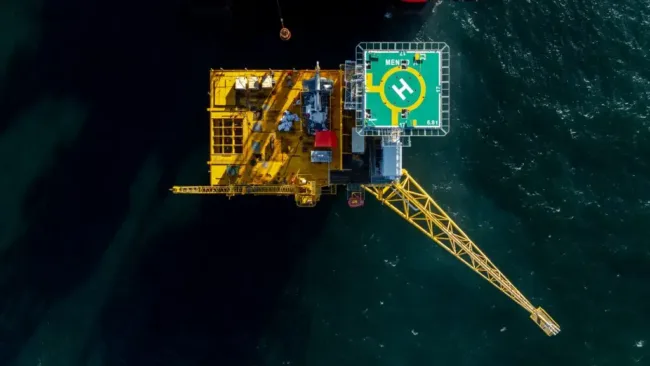
Sintana Energy Inc. (TSX-V: SEI; AIM: SEI; OTCQX: SEUSF) has commenced a 4,300 km2 3D seismic acquisition program on AREA OFF-1 offshore Uruguay, with the survey executed by Viridien using the BGP Prospector vessel. The Canadian-listed exploration company holds a 40 percent non-operated interest in the block and is fully carried for the anticipated cost of the program by an affiliate of Chevron Corporation, which farmed in for a 60 percent operating stake in 2025. The start of acquisition shifts Sintana Energy Inc.’s Uruguay exposure from portfolio optionality to active subsurface de-risking at a time when frontier Atlantic margin plays are regaining strategic relevance.
The campaign will be executed across two seasons, from February to April 2026 and from November 2026 to April 2027, with the majority of data covering priority prospects expected during the first season. Fast-track results are anticipated in the fourth quarter of 2026, followed by pre-stack depth migrated results in the second quarter of 2027. That timeline establishes a clear sequence for capital markets: near-term technical validation followed by refined structural imaging capable of supporting future drilling decisions.
Why does the Chevron-carried 3D seismic program materially change Sintana Energy Inc.’s capital risk exposure in Uruguay?
For a junior exploration company, frontier offshore acreage typically carries binary valuation dynamics. High-impact potential is offset by capital intensity and funding risk. Sintana Energy Inc.’s 40 percent interest in AREA OFF-1 would ordinarily expose the company to a significant cash call for 3D seismic acquisition, particularly at a scale of 4,300 km2. Instead, the farm-out to an affiliate of Chevron Corporation has structurally altered the risk equation.
Being fully carried for the anticipated cost of the seismic program effectively transforms Sintana Energy Inc.’s position from capital-constrained explorer to leveraged equity holder in a major-backed technical program. The company gains subsurface insight, prospect definition, and potential resource uplift without near-term balance sheet strain. For investors evaluating dilution risk, that carry materially reduces the need for equity issuance tied to seismic expenditure.
The partnership with Chevron Corporation also introduces technical credibility. Chevron Corporation’s global deepwater experience across conjugate Atlantic margins suggests that prospect maturation on AREA OFF-1 will be evaluated against comparable geological analogues in West Africa and Brazil. If seismic imaging supports structural and stratigraphic traps analogous to those basins, Sintana Energy Inc.’s retained 40 percent interest could represent asymmetric upside relative to its current market capitalization.
From a capital allocation perspective, this arrangement demonstrates disciplined leverage of acreage rather than overextension. Sintana Energy Inc. has effectively monetized operating control while preserving material exposure. That approach contrasts with junior explorers that attempt to self-fund high-cost offshore campaigns, often resulting in shareholder dilution or stalled programs.
How does the AREA OFF-1 seismic campaign position Uruguay within the broader Transatlantic exploration narrative?
Uruguay’s offshore sector has historically been underexplored compared with neighboring Brazil and Argentina. However, the geological logic underpinning the South Atlantic conjugate margin concept continues to attract major oil and gas operators. Discoveries along the West African margin have reinforced interest in structurally analogous plays across the Atlantic.
The commencement of 3D seismic acquisition on AREA OFF-1 signals that Uruguay is transitioning from conceptual prospectivity to data-driven evaluation. High-quality 3D seismic data, particularly with pre-stack depth migration processing, is essential for resolving complex salt geometries and imaging deeper objectives. If the first season results demonstrate coherent structural closures or amplitude-supported stratigraphic features, Uruguay’s offshore basin could re-enter global exploration screening discussions.
The legal backdrop adds another dimension. The start of acquisition follows the rejection by Uruguayan courts of attempted interventions by activist groups. That development suggests regulatory resilience and institutional clarity within Uruguay’s environmental permitting framework. For international operators assessing sovereign and permitting risk, judicial affirmation of the process reduces uncertainty around project continuity.
This regulatory validation matters because frontier offshore exploration often faces delays unrelated to subsurface risk. Timely execution of seismic campaigns indicates that Uruguay is capable of balancing environmental oversight with commercial development. For Sintana Energy Inc., uninterrupted acquisition enhances schedule credibility and reduces the risk of cost overruns associated with operational downtime.
What are the execution and timeline risks between fast-track seismic in 2026 and drilling decisions in 2027 and beyond?
While commencement of seismic acquisition is strategically significant, execution risk remains embedded in the technical timeline. Fast-track results expected in the fourth quarter of 2026 will likely provide preliminary structural mapping and initial amplitude indicators. However, these results are typically insufficient for final well location decisions.
The more definitive pre-stack depth migrated data expected in the second quarter of 2027 will determine whether AREA OFF-1 advances toward exploration drilling. Depth migration is particularly critical in salt-influenced basins, where misinterpretation of subsurface geometries can materially affect volumetric estimates and, by extension, commercial thresholds.
Between acquisition and drilling, several gating factors will emerge. Chevron Corporation, as operator, will evaluate prospect ranking within its global portfolio. Capital allocation decisions at the major level are influenced not only by geological merit but also by oil price assumptions, internal rate of return thresholds, geopolitical exposure, and competing deepwater opportunities across Latin America, West Africa, and the United States Gulf of Mexico.
For Sintana Energy Inc., the primary risk is strategic deprioritization rather than outright technical failure. Even if seismic data indicates encouraging structures, Chevron Corporation may sequence drilling within a broader capital program to optimize portfolio balance and cash flow visibility. The upside case depends on AREA OFF-1 achieving competitive ranking within Chevron Corporation’s exploration inventory during annual capital planning cycles.
There is also the question of market patience. Frontier exploration equities often experience valuation compression during data-processing intervals, particularly when timelines extend across multiple reporting periods. Sintana Energy Inc. will need to maintain narrative discipline and technical transparency between fast-track results and final depth migration outputs to sustain investor engagement.
From a market sentiment perspective, Sintana Energy Inc.’s stock performance over the next 12 to 18 months is likely to correlate with data milestones rather than macro oil price volatility alone. Fast-track seismic interpretation could act as a speculative catalyst if structural clarity emerges early. Conversely, muted or ambiguous early data could temper enthusiasm, even before full processing is complete. Investors in frontier exploration equities typically price probability shifts rapidly, often ahead of definitive technical confirmation.
The acquisition of Challenger Energy in December 2025 adds another layer of strategic context. The integration of assets into a Transatlantic portfolio suggests that Sintana Energy Inc. is building geographic coherence around Atlantic margin exposure rather than isolated frontier bets. Success on AREA OFF-1 would validate that thematic positioning and potentially enhance farm-out leverage across other assets. Failure, however, would test whether portfolio diversification across basins can offset concentrated frontier risk and preserve balance sheet resilience.
Key takeaways on what Sintana Energy Inc.’s Uruguay seismic campaign means for its valuation, Chevron’s strategy, and frontier Atlantic exploration
- The 4,300 km2 3D seismic program materially de-risks Sintana Energy Inc.’s capital exposure due to the Chevron Corporation carry structure.
- AREA OFF-1 advances from conceptual acreage to data-driven prospect evaluation, shifting valuation drivers toward measurable technical milestones.
- Uruguay’s regulatory resilience following court rejections of activist interventions enhances sovereign risk perception for offshore operators.
- Pre-stack depth migrated results in 2027 will be the decisive inflection point for drilling commitment and resource narrative credibility.
- Chevron Corporation’s portfolio ranking process introduces timing risk even if seismic results are technically encouraging.
- Sintana Energy Inc.’s retained 40 percent interest preserves significant upside leverage relative to its balance sheet scale.
- Frontier Atlantic margin exploration is re-emerging as a strategic theme, and AREA OFF-1 now sits within that competitive global screening process.
Discover more from Business-News-Today.com
Subscribe to get the latest posts sent to your email.