

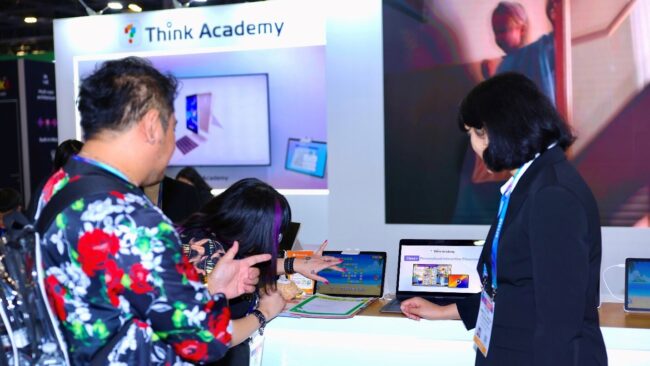
Think Academy used CES 2026 to unveil a bold repositioning strategy that could place it at the intersection of AI, education, and consumer technology. The company debuted three AI-powered platforms: Class+, TalPad T100, and PawPal. These were introduced under a unified vision that moves beyond traditional educational technology into what it now calls “Life Tech.” By targeting both classroom learning and family routines, Think Academy is effectively expanding its addressable market while introducing a vertically integrated ecosystem for children aged 3 to 12.
At the institutional level, the Class+ Intelligent Learning System aims to give teachers real-time grading, error analysis, and adaptive feedback by synchronizing lesson delivery across student devices. In parallel, the TalPad T100 tablet and PawPal smart alarm clock are designed to shift parental engagement from enforcement to empowerment, using emotional AI, habit-forming gamification, and remote control features. The message from CES 2026 was unambiguous: Think Academy no longer wants to be known as just an EdTech player. It wants to be the operating system for childhood.
How does the Class+ AI system aim to transform classroom personalization and instructional equity?
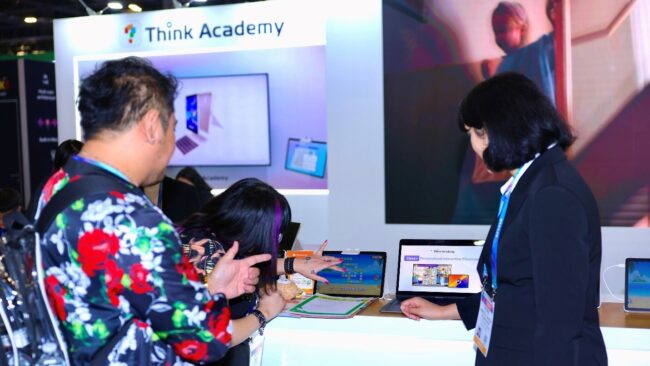
The centerpiece of Think Academy’s institutional pitch is the Class+ Intelligent Learning System, a multi-device architecture that creates a synchronous and adaptive classroom environment. Class+ links a teacher’s main display to each student’s TalPad tablet, enabling real-time submission, instant grading, and individualized feedback powered by AI. Under the hood, the platform leverages Optical Character Recognition to assess handwritten answers and pairs that with a proprietary engine combining MathGPT and Item Response Theory for error diagnostics.
While personalization in education is not new, Class+ differs by embedding it within live instruction rather than post-hoc review. This approach could reduce the lag between instruction and remediation, potentially helping teachers address learning gaps before they widen. Think Academy is also targeting global relevance by ensuring support for international standards, including the Common Core in mathematics.
Institutional buyers may view Class+ not just as a pedagogical tool but also as a compliance and standardization asset, especially in systems that emphasize measurable outcomes. However, execution risk remains high. Real-time AI-based grading at scale demands infrastructure reliability, content alignment, and teacher onboarding, all historically difficult for EdTech platforms to deliver consistently across diverse school systems.
Why is Think Academy redefining its consumer strategy as “Life Tech” and what does that mean?
The debut of TalPad T100 and PawPal marks Think Academy’s consumer-facing entry into Life Tech, a term it now uses to describe AI tools that manage not just learning but also the emotional and behavioral scaffolding of childhood. With this framing, Think Academy is signaling a pivot from solving isolated educational problems to supporting a broader spectrum of daily life challenges faced by modern families.
The TalPad T100 is positioned as a purpose-built AI tutor for children aged 6 to 12. It includes a proprietary GeniusTutor system based on the Socratic method, an emotionally responsive AI companion called Thinkie, and a 2,200-minute gamified content library. Unlike generic tablets, the T100 features an eye-protection screen to allow for longer, more focused sessions, along with a robust remote management system for parents.
Meanwhile, PawPal targets a younger demographic aged 3 to 6 by gamifying routines like tooth-brushing and bedtime through a virtual pet system. By completing real-world tasks, children care for their digital pet, creating a feedback loop that ties habit formation to positive reinforcement. PawPal also includes audio-first story programming to reduce screen exposure and a fully customizable nightlight synced with parent preferences via app.
The dual launch reflects a calculated strategy. TalPad T100 addresses the high-stakes world of academic performance, while PawPal focuses on the emotionally charged routines that often create tension in young families. By solving both, Think Academy could become a go-to brand not just for tutoring but for parenting itself.
How could Think Academy’s unified AI platform strategy shape the future of EdTech and smart parenting?
If Think Academy’s CES 2026 pitch gains traction, the company could emerge as a category-defining player that fuses the historically separate markets of EdTech and consumer parenting tech. This integration mirrors broader industry trends where AI companies are pursuing vertical unification, building closed-loop ecosystems across use cases rather than isolated tools.
For Think Academy, the potential payoff is significant. Classroom deployments of Class+ could drive top-of-funnel exposure for TalPad and PawPal, especially in countries where parents seek continuity between school and home. Conversely, consumer success with PawPal and T100 could create demand pull for school adoption by building student familiarity and parental brand trust.
There are risks, however. The company will need to balance privacy assurances with the data-intensive nature of its systems. Real-time handwriting analysis, emotional support agents, and parental control dashboards all raise questions around surveillance, consent, and cross-border compliance. So far, Think Academy has emphasized its closed frameworks and content vetting protocols, but regulatory scrutiny is likely to intensify as the platform scales internationally.
What does Think Academy’s strategy mean for competitors in EdTech, consumer electronics, and AI companions?
The competitive implications of Think Academy’s move into Life Tech are not limited to the education sector. With TalPad T100 and PawPal, the company is entering territory traditionally occupied by consumer electronics giants, smart speaker ecosystems, and even segments of the health and wellness market. Incumbents like Amazon with Alexa, Apple with Screen Time and iPad parental controls, and Samsung with SmartThings may now find themselves competing not just on features but on pedagogical credibility.
In EdTech, companies such as BYJU’S, Khan Academy, and VIPKid have focused on content libraries and tutoring infrastructure. Few have developed closed-loop device ecosystems or real-time grading solutions integrated at the classroom level. Think Academy’s combined hardware and software stack gives it a defensible position in both delivery and data.
In the AI companion space, PawPal’s habit-based gamification and TalPad’s emotionally responsive tutoring challenge the often generic implementations of AI assistants aimed at children. If these systems succeed, they could push competitors to move beyond content aggregation and toward emotional and behavioral modeling that is grounded in developmental science.
What could go wrong and what happens next if Think Academy’s Life Tech model succeeds?
The success of Think Academy’s Life Tech model hinges on trust, integration, and global scalability. Parents and schools alike will need to believe in the safety, utility, and educational value of AI systems that are deeply embedded in children’s daily lives. Any breach of privacy, product flaw, or pedagogical misstep could erode this trust quickly.
Execution risk also looms large. Classroom deployments require institutional partnerships, while consumer traction depends on competitive pricing, parental awareness, and ongoing content refreshes. Synchronizing these B2B and B2C growth models without cannibalization or confusion will be complex.
But if Think Academy pulls it off, the payoff could be transformative. The company would not only expand the scope of what it means to be an EdTech brand. It could redefine AI’s role in childhood development itself. The real question is whether the rest of the industry will follow or whether Think Academy is building a category no one else yet sees.
Key takeaways: Think Academy’s CES 2026 launches reflect a strategic push to unify AI in learning and parenting
- Think Academy unveiled Class+, TalPad T100, and PawPal at CES 2026, marking a pivot from EdTech to Life Tech
- The Class+ Intelligent Learning System offers real-time AI grading, adaptive feedback, and curriculum-aligned classroom synchronization
- TalPad T100 positions itself as a high-EQ AI tutor for ages 6 to 12, emphasizing autonomy, emotional intelligence, and gamified learning
- PawPal targets early childhood routines with a virtual pet system that ties habit formation to real-world behavior
- The unified strategy integrates classroom and home, potentially expanding Think Academy’s addressable market across both sectors
- Competitive pressure may increase across EdTech, consumer electronics, and AI assistant ecosystems if Think Academy gains traction
- Execution risk includes scaling infrastructure, maintaining privacy, and synchronizing B2B and B2C strategies
- If successful, Think Academy could redefine how AI systems support not just learning but full-spectrum childhood development
Discover more from Business-News-Today.com
Subscribe to get the latest posts sent to your email.