



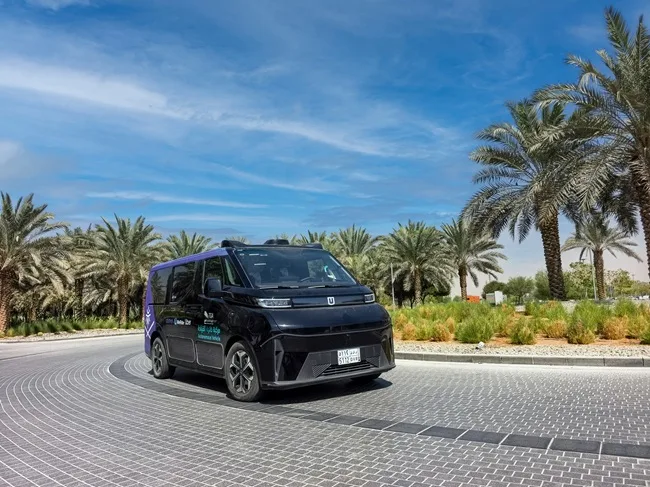
Uber Technologies, Inc. (NYSE: UBER) and autonomous driving specialist WeRide Inc. (NASDAQ: WRD) have officially launched passenger robotaxi services in Riyadh, Saudi Arabia, marking the first time that autonomous vehicles are available to the public through the Uber platform in the Kingdom. The milestone, which is being positioned as a major proof-of-concept for large-scale robotaxi deployment outside of China or the United States, is part of Saudi Arabia’s broader Vision 2030 agenda to modernize its infrastructure and become a global hub for smart and sustainable mobility.
The initiative, backed by the Transport General Authority (TGA), connects passengers between two designated locations—Roshn Front and Princess Nourah Bint Abdulrahman University—using WeRide’s Robotaxi GXR vehicles. The launch represents a pivotal moment for both Uber Technologies and WeRide Inc. as they move beyond test pilots and into live commercial robotaxi operations. Although human safety operators will be present during this phase, both companies have emphasized that fully driverless services remain the ultimate objective.
The announcement comes just months after WeRide was granted the first autonomous robotaxi permit by Saudi Arabia, a decision that followed its successful completion of the Transport General Authority’s regulatory sandbox for autonomous driving. It also follows WeRide’s similar robotaxi deployment with Uber Technologies in Abu Dhabi in late 2024, indicating a fast-expanding Middle Eastern footprint for the Chinese autonomous vehicle developer.
Why is Saudi Arabia prioritizing autonomous mobility, and how does Vision 2030 play a role?
Saudi Arabia has emerged as one of the most aggressive adopters of autonomous mobility technologies in recent years. The Kingdom’s Vision 2030 roadmap identifies smart transport as a critical pillar for economic diversification, urban modernization, and sustainability leadership. With major cities like Riyadh undergoing rapid infrastructure expansion—including new metro lines, AI-enabled city zones, and hyperconnected logistics corridors—the integration of autonomous vehicles is seen not only as a futuristic add-on but a core enabler of seamless urban transit.
The Transport General Authority, along with the Ministry of Transport and Logistics Services, has established a permissive regulatory framework to accelerate commercial deployment of self-driving cars. By supporting companies like WeRide Inc. and opening public routes for robotaxi testing, Saudi Arabia is positioning itself as a global sandbox for innovation in next-generation mobility systems.
In this context, Uber Technologies’ partnership with WeRide Inc. reflects both strategic alignment and operational readiness. Uber has previously noted its goal of transitioning from a human-driven platform to a hybrid ecosystem of human and autonomous drivers, particularly in high-growth international markets. Saudi Arabia’s legal flexibility, urban density, and centralized governance make it an ideal candidate for such experiments.
How does the Uber–WeRide collaboration in Riyadh differ from other global robotaxi deployments?
The Riyadh launch introduces a number of firsts that set it apart from similar deployments in the United States, China, or the UAE. For one, it is the first time autonomous vehicles have been integrated into Uber’s app-based service in Saudi Arabia. Riders using the Uber app can now be matched to a WeRide Robotaxi GXR when traveling on the Roshn Front–Princess Nourah route.
Second, the operational model takes a hybrid approach: while the vehicles are technically capable of operating autonomously, a safety operator remains present in each vehicle for the early phase. This allows WeRide Inc. to collect real-world telemetry, improve navigation confidence, and build public trust without waiting for full driverless certification.
Third, the initiative reflects a strong public-private alignment. Both Uber Technologies and WeRide Inc. publicly thanked the Transport General Authority for enabling this commercial pilot. Earlier in July, the authority’s Chairman, Saleh bin Nasser Al-Jasser, inaugurated the Initial Operational Phase of Autonomous Vehicles in Riyadh—underscoring official endorsement and high-level support for such ventures.
What is the strategic value for Uber Technologies in launching robotaxis in Saudi Arabia?
For Uber Technologies, this move offers both a short-term visibility gain and a long-term operating model shift. By expanding access to robotaxis through third-party partnerships, Uber reduces its reliance on driver supply while increasing control over safety, consistency, and scalability of service delivery. The inclusion of autonomous rides within its main platform gives Uber a competitive edge in markets where regulators are hungry for innovation.
Furthermore, Uber’s global head of autonomous mobility and delivery, Sarfraz Maredia, described the Saudi launch as a meaningful next step in expanding autonomous vehicle access across the Middle East. While Uber has exited autonomous vehicle development efforts such as its past ATG unit (which was sold to Aurora), the company continues to partner with external robotaxi developers like Motional, Waymo, and now WeRide Inc. to integrate AVs into its ride-hailing ecosystem.
The real strategic value lies in Uber’s ability to license access, build partnerships, and localize services without taking on the capital-intensive burden of building and operating robotaxi fleets itself.
What does this milestone mean for WeRide Inc.’s global expansion strategy and investor perception?
WeRide Inc., headquartered in Guangzhou, China, is rapidly becoming a key global player in the autonomous vehicle sector. Its listing on the Nasdaq under the ticker symbol WRD brought significant institutional attention, and its recent operational wins in the Middle East—including UAE and Saudi Arabia—demonstrate that the company is building a unique cross-border expansion strategy.
By launching commercial robotaxi services in Riyadh, WeRide Inc. becomes the first AV company to complete Saudi Arabia’s regulatory sandbox, obtain a permit, and go live with public operations. According to WeRide’s international CFO Jennifer Li, the company sees its technology as an enabler for not just safer roads, but also greener, more efficient cities. Its Robotaxi GXR has already undergone testing across a wide range of climates and traffic conditions, which analysts say makes it suitable for Saudi Arabia’s environment.
Institutional investors are watching closely. While WeRide’s revenue model remains early-stage, the company’s growing list of regulatory wins and commercial deployments may help justify its valuation and bolster longer-term funding rounds. This Riyadh launch gives the company a new live deployment reference, which is often a prerequisite for high-value enterprise or municipal contracts.
How are institutional investors and analysts reacting to Uber and WeRide’s robotaxi rollout?
Initial sentiment among institutional observers is cautiously optimistic. Autonomous driving remains one of the most capital-intensive and risk-sensitive areas of mobility innovation. However, successful commercial pilots—especially those backed by government support—are viewed as early indicators of scalability and commercial feasibility.
In Uber Technologies’ case, investors see this as a non-dilutive growth lever that strengthens its innovation story without adding excessive capital expense. The integration of robotaxi partners via platform licensing agreements offers operating leverage and geographic diversification. Uber’s stock has responded positively in similar past announcements tied to robotaxi rollouts in California and UAE.
WeRide Inc.’s launch in Riyadh, however, is likely to play a more material role in its equity narrative. The company has yet to deliver full-scale monetization from AVs, and pilot launches like this one are being closely watched for usage data, fleet economics, and rider engagement. Analysts will also monitor WeRide’s pace of transition from operator-assisted driving to fully driverless mode—a crucial litmus test for institutional buy-in.
What should stakeholders monitor in the coming months as Saudi Arabia expands autonomous services?
Key indicators in the coming quarter include the rider uptake rate for robotaxis via the Uber platform, customer feedback from the Roshn–Princess Nourah route, regulatory updates from the Transport General Authority, and any further expansion of WeRide Inc.’s operational area. Both companies are expected to report internal performance metrics, such as ride volumes, safety logs, and reliability uptime, which could shape investor confidence and policy frameworks.
From a geopolitical standpoint, the Saudi–Chinese collaboration also reflects emerging multipolar dynamics in global technology deployment. As U.S. and Chinese AV firms seek new operating theatres, regions like the Middle East may become strategic battlegrounds for robotaxi leadership.
Ultimately, this pilot is more than a test—it is a message to the world that autonomous vehicles are no longer confined to Silicon Valley or Shanghai. With Uber Technologies and WeRide Inc. now active in Saudi Arabia, the race toward commercial autonomous mobility just got more real—and a little more global.
What are the key takeaways from the Uber and WeRide robotaxi launch in Saudi Arabia?
- Uber Technologies and WeRide Inc. have launched Saudi Arabia’s first publicly accessible robotaxi service in Riyadh, marking a regional milestone for autonomous vehicle adoption.
- The service is currently available on specific routes between Roshn Front and Princess Nourah Bint Abdulrahman University, with human operators present in each vehicle.
- This marks the first deployment of autonomous vehicles on the Uber platform within the Kingdom, aligning with Saudi Arabia’s Vision 2030 smart mobility goals.
- The Transport General Authority has formally endorsed the initiative, granting WeRide the Kingdom’s first autonomous robotaxi permit following successful completion of the AV regulatory sandbox.
- Uber Technologies aims to expand its global autonomous ride-hailing model through third-party AV partnerships, with Saudi Arabia representing a strategic new frontier.
- WeRide Inc. strengthens its international positioning with this deployment, adding a new live reference point beyond its prior operations in Abu Dhabi and China.
- Institutional sentiment is cautiously optimistic, with analysts citing scalability, safety metrics, and regulatory support as key variables for future expansion.
- Stakeholders are watching for transition timelines to full driverless operations, as well as the potential replication of this model in other Middle Eastern cities.
Discover more from Business-News-Today.com
Subscribe to get the latest posts sent to your email.