What is the significance of Sungrow’s new technical center in Munich for Europe’s energy transition?
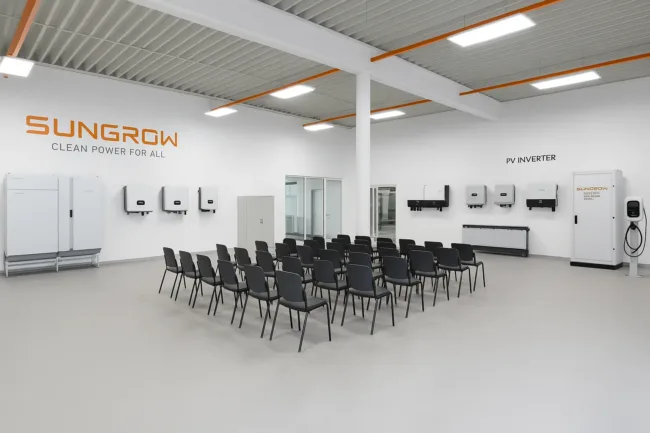
Sungrow Power Supply Co., Ltd. has opened its largest European training and technical service center in Oberschleißheim, near Munich, marking a significant expansion of its footprint in the region. The Chinese renewable energy giant, known for its power conversion and energy storage solutions, launched the facility to deepen its support for partners and customers across Central and Northern Europe. The new Sungrow Service Competency Center is designed as a hands-on technical hub to facilitate project commissioning, operational support, and ongoing maintenance.
With a total built-up area of 5,000 square meters—including a fully equipped warehouse, repair center, and dedicated training spaces—the site reflects Sungrow’s strategic commitment to localizing its services in key growth markets. Regular in-person and online training sessions are already underway, targeting a range of use cases from residential rooftop installations to large-scale utility solar and storage projects.
How does the Munich center fit into Sungrow’s broader European service network strategy?
The launch of the Oberschleißheim facility follows the opening of a similar site in Pamplona, Spain, earlier this year—clearly signaling Sungrow’s ambition to create a decentralized, region-specific support structure across Europe. These hubs are not just operational outposts but strategic nodes that aim to elevate Sungrow’s service quality in line with the growing complexity of Europe’s solar and storage markets.
Moritz Rolf, Vice President of Sungrow Europe and head of operations across DACH, BeNeLux, Nordics, and Turkey, explained that the training center ensures access to “state-of-the-art knowledge and service capabilities.” He emphasized the company’s formula of “global innovation and local anchoring” as a way to stay competitive in the fast-evolving clean energy industry. The center also houses Sungrow EV chargers, reflecting the firm’s intention to diversify its solution suite beyond inverters and battery systems.
What features make the new center a critical asset for Sungrow’s growth in the DACH region?
The Oberschleißheim site combines several functions under one roof. The training area spans 150 square meters and is designed to offer both foundation and certification-level training. Sungrow said these courses are customized to the target audience and aligned with the specific technical standards and business models of each European market.

Equally important is the site’s integration with Sungrow’s broader ATIC (Assurance, Testing, Inspection, and Certification) platform. The fully operational maintenance center at the site is capable of handling the entire product portfolio—from string inverters to energy storage systems. Moreover, the warehousing capability supports faster turnaround times for spare parts and hardware deployment, which remains a key differentiator in a market increasingly sensitive to downtime and service response times.
The presence of locally trained experts further reinforces Sungrow’s ability to serve utility clients and installers without depending on long-distance logistics or offshore support teams. This is especially relevant in Germany and surrounding regions where public tenders and industrial projects often mandate local service capabilities as part of ESG and compliance scoring.
How is Sungrow’s long-term investment strategy evolving in Europe?
Sungrow has been present in Europe for over 18 years, and its footprint now spans more than 25 local offices, over 750 employees, and two R&D teams. The European market accounts for a growing share of Sungrow’s global portfolio—especially in segments like commercial rooftop solar, EV fleet charging integration, and long-duration storage.
The new training center is part of Sungrow’s broader effort to de-risk its European growth strategy amid increased regulatory complexity, rising local competition, and demands for stronger after-sales performance. The company’s localized service hotline network, region-specific sales teams, and technical support ecosystem are designed to provide enterprise-grade reliability across the lifecycle of clean energy assets.
Institutional observers believe Sungrow’s expansion into regional service hubs is a calculated move to offset the commoditization of PV hardware with differentiated service and training offerings. With most of Europe’s solar markets moving toward professionalized O&M models and performance-based contracting, players like Sungrow are positioning themselves not just as equipment vendors, but as lifecycle solution providers.
How does Sungrow compare with other renewable energy hardware firms in terms of local support infrastructure?
Compared to other PV inverter and storage manufacturers, Sungrow’s service investments in Europe appear more proactive and geographically balanced. While some competitors maintain centralized support centers or rely on third-party service partners, Sungrow’s strategy of direct infrastructure ownership could offer operational and reputational advantages.
For instance, the training component of the new center aligns with the European market’s growing need for certified installers and grid-compliance professionals. As grid codes tighten and permitting becomes more stringent across Germany, Austria, the Netherlands, and the Nordics, the value of a region-specific training infrastructure increases.
Analysts tracking the sector suggest that Sungrow’s vertically integrated model—combined with aggressive local investments—helps it stay resilient amid fluctuating commodity prices and currency risks. It also provides a hedge against rising tariffs on Chinese-made products, as Sungrow could potentially bundle services in ways that improve gross margins and retain client loyalty.
What does Sungrow’s clean energy capacity and bankability status tell us about its global market role?
As of June 2025, Sungrow has deployed 870 GW worth of power electronic converters globally. BloombergNEF continues to rank the company as the world’s most bankable inverter supplier—a status that has helped it win trust across utility-scale projects in Europe, Asia, and the Americas.
Sungrow’s global network includes more than 520 service outlets, reflecting a scale of support that few competitors can match. In Europe, this network has become a crucial part of how the company closes the loop between product delivery and long-term asset management.
With this latest expansion, Sungrow seems intent on being more than just a PV inverter and energy storage supplier. It’s carving out a role as an enabler of the clean energy workforce—a theme likely to resonate with governments, EPCs, and investors looking to bridge the renewable skills gap.
What is the forward outlook for Sungrow’s market position in Europe following this expansion?
Looking ahead, Sungrow is likely to continue its strategy of regionalizing both its training and technical support assets to match the increasing granularity of European energy markets. From residential battery installations in Germany to large-scale solar-plus-storage projects in Sweden and EV fleet integration in the Netherlands, Sungrow’s model allows it to adapt without being constrained by a one-size-fits-all approach.
With clean energy targets tightening across the EU and grid interconnection protocols becoming more rigorous, Sungrow’s focus on technical competency centers may offer a durable edge in project execution and O&M bidding. Analysts expect further expansions in France, Italy, and Eastern Europe to follow—especially as demand for hybrid systems and energy independence continues to rise.
The Oberschleißheim launch may also serve as a blueprint for other global regions. If the model proves successful in driving customer satisfaction and reducing service lead times, Sungrow could replicate this hub strategy in Latin America, Southeast Asia, and the Middle East, where the next wave of renewable installations is projected to accelerate.
Discover more from Business-News-Today.com
Subscribe to get the latest posts sent to your email.