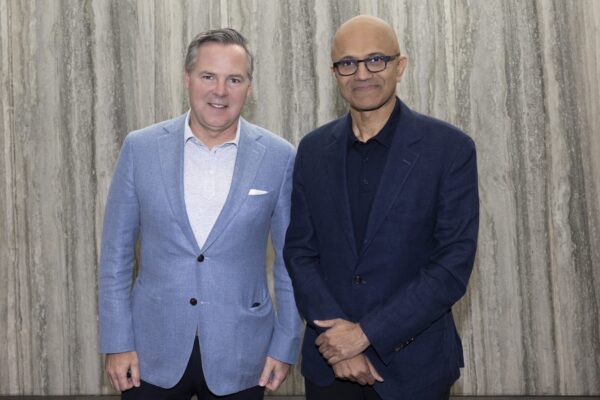




SEALSQ Corp (NASDAQ: LAES) and Kaynes SemiCon have announced the creation of SEALKAYNESQ Ltd, a new joint venture that will be headquartered in India to build a state-of-the-art semiconductor design and personalization center. This move, revealed on September 29, 2025, highlights India’s determination to develop a strong domestic semiconductor ecosystem while embedding advanced post-quantum cryptography capabilities directly into chip design and testing. The venture comes as India accelerates its ambition to secure supply chains, reduce import dependency, and emerge as a credible alternative to Asia’s established chipmaking hubs.
Under the deal, SEALSQ will hold a 51 percent stake, while Kaynes SemiCon will own 49 percent, with both sides sharing governance through a five-member board. WISeKey International Holding AG (Nasdaq: WKEY, SIX: WIHN), the Swiss parent of SEALSQ, will license intellectual property exclusively to the new entity. Any new intellectual property created through the venture will remain within the company.
The announcement reflects not only the continued maturation of India’s semiconductor sector but also the recognition that future competitiveness requires deep integration of secure cryptography and quantum resistance at the hardware level.
How does the SEALSQ and Kaynes SemiCon joint venture align with India’s semiconductor self-reliance and national security strategy?
The joint venture (JV) will establish an Outsourced Semiconductor Test and Personalization (OSTP) facility within Kaynes SemiCon’s Sanand, Gujarat manufacturing hub. Unlike traditional outsourced assembly and test centers, the OSTP unit will integrate wafer and final test services with personalization processes that comply with Common Criteria standards. Critically, it will embed Public Key Infrastructure (PKI) and post-quantum cryptography personalization into the chip manufacturing process, ensuring that devices are secure by design.
A milestone in the partnership will be the localized deployment of SEALSQ’s Quantum Shield semiconductor series, including the QS7001 secure processors. These are engineered to resist vulnerabilities posed by quantum computing, a technology that threatens to undermine the encryption methods underpinning modern financial, defense, healthcare, and government systems. By embedding personalization at the semiconductor level, India is preparing its digital infrastructure for resilience against quantum-era risks while simultaneously meeting the requirements of its own national security regulations.
For Kaynes SemiCon, this collaboration aligns directly with its role as India’s first serious OSAT contender. The firm is already preparing to deliver its first packaged chip samples to U.S.-based Alpha Omega Semiconductor by October 2025. By incorporating secure cryptography features, the company will not only serve commercial sectors such as electric vehicles, consumer electronics, and satellites but also move into higher-value, security-driven markets that require quantum-resistant hardware.
What role does SEALSQ play in strengthening India’s digital sovereignty against quantum computing risks?
SEALSQ’s involvement is pivotal in ensuring that the joint venture does not merely add testing capacity but brings cutting-edge quantum-resistant security to India’s domestic chip production. With its VaultIC hardware security modules, QVault-TPM secure processors, and post-quantum chip designs, SEALSQ has a proven track record in protecting digital identity and securing Internet of Things ecosystems worldwide.
For India, hosting such capabilities locally means far less reliance on foreign-made secure chips at a time when cybersecurity has become a cornerstone of national strategy. Analysts observing the deal have noted that global regulatory momentum around PQC compliance is rising, and India’s decision to host this capacity at home positions it as both a sovereign producer and an exporter of secure semiconductors.
Institutional investors view the move as significant for India’s credibility in technology sovereignty. They argue that embedding PQC into semiconductor production could attract multinational firms seeking secure supply chain diversification outside East Asia. This, in turn, strengthens India’s bid to become a trusted global hub for both secure and mass-market chip production.
How does the parallel UST and Kaynes SemiCon partnership expand India’s semiconductor OSAT footprint?
On the same day, UST, a global technology transformation and digital engineering company headquartered in California, revealed that it will invest ₹3,330 crore (about USD 400 million) in a joint venture with Kaynes SemiCon. While the SEALSQ partnership focuses on secure semiconductors, the UST collaboration is designed to expand India’s outsourced semiconductor assembly and test capacity at scale.
The facility, also located in Sanand, will deliver world-class OSAT services with a focus on packaging chips for electric vehicles, renewable energy systems, and consumer electronics. UST will contribute its expertise in AI-driven process optimization, real-time data analytics, and advanced digital engineering. These tools are intended to minimize hidden costs, improve reliability, and accelerate time-to-market, all of which are critical in the highly competitive global semiconductor supply chain.
Executives from both companies emphasized that this collaboration will allow Indian assembly and testing facilities to meet rising global demand for advanced semiconductor packaging. By combining Kaynes’ manufacturing execution with UST’s scale and engineering depth, the venture could enable India to challenge the dominance of Taiwan, South Korea, and China in this critical area of the semiconductor value chain.
How does the Swiss–India free trade agreement improve competitiveness of these ventures in global semiconductor markets?
The recently signed Swiss–India Free Trade Agreement, finalized in 2024 after years of negotiation, gives SEALSQ and Kaynes SemiCon an added advantage. Under the agreement, nearly 95 percent of Swiss exports to India now benefit from customs relief. This directly reduces the cost of importing advanced semiconductor equipment and cryptography components, helping lower the cost base of the new joint venture.
The timing of the FTA is strategically important. Analysts suggest that lowering equipment costs will make Indian facilities more competitive against established Asian rivals, while smoother trade flows with Switzerland could also encourage greater collaboration in technology transfer and R&D. This adds a geopolitical layer of strength to the joint venture, making it part of a larger story about India’s emergence as a serious semiconductor destination.
What is the financial outlook for Kaynes Technology and its role in India’s semiconductor growth?
Kaynes Technology India Limited, the parent company of Kaynes SemiCon, remains on a strong financial footing as it pushes forward with its semiconductor ambitions. As of September 2025, the firm reported trailing twelve-month revenues of USD 340 million and a market capitalization of USD 5.44 billion. Its share price has reflected investor confidence in its ability to scale both secure semiconductor solutions and commercial OSAT capacity.
The first chip shipment to Alpha Omega Semiconductor in October will serve as a critical test for Kaynes’ credibility in quality and timeliness. Should the milestone be achieved without major hiccups, analysts expect further institutional inflows, particularly from U.S. and Japanese clients eager to diversify supply chains. Investors have generally remained positive, highlighting the company’s first-mover advantage in OSAT manufacturing in India and its growing ability to service both domestic and export markets.
What are the broader implications of these ventures for India’s semiconductor ecosystem and global position?
India’s semiconductor ecosystem has long been constrained by its reliance on imported wafers, packaging, and secure chips. The twin partnerships with SEALSQ and UST mark a new chapter in which India is attempting to build localized capacity not only for standard packaging but also for high-value secure semiconductors that can resist quantum-era risks.
The broader implication is that India is positioning itself as a diversified hub that can offer both high-volume OSAT services and specialized cryptography-driven solutions. If successful, this strategy could differentiate India from other emerging players by giving it both scale and security credibility. Institutional sentiment has reflected cautious optimism, with most observers agreeing that execution risks remain around technology integration, scaling production, and meeting global certification standards.
However, in a global environment where supply chains are being reshaped by geopolitical tensions, India’s ability to provide secure and cost-competitive alternatives is increasingly appealing. For investors, these ventures represent early-stage exposure to a sector that could generate long-term returns as India becomes more central to global semiconductor supply chains.
Discover more from Business-News-Today.com
Subscribe to get the latest posts sent to your email.