A robust 529 metre intercept from Hot Chili Limited’s La Verde site in coastal Chile is forcing a reconsideration of how satellite deposits could redefine value for long-life copper mines. Drillhole DKD032 returned 0.41 percent copper and 0.21 grams per tonne gold from 41 metres down to 569.9 metres, including a high-grade 148 metre core that logged 0.60 percent copper and 0.30 g/t gold. This result expands the known mineralisation envelope significantly and invites a fresh assessment: can such satellite assets materially change the economics of established copper mining hubs?
La Verde sits about 30 kilometres south of the planned processing hub at Costa Fuego, giving it strategic appeal as a near-hub satellite. The intersection from DKD032 confirms vertically extensive porphyry-style copper-gold mineralisation and suggests that near-surface and deeper sulphide zones may contribute significant tonnage. If follow-up drilling converts this into a defined resource, La Verde could supply early to mid-life ore to Costa Fuego, potentially improving cash flows, reducing strip ratios, and bringing forward high-margin tonnes.
What geological advantage do satellite deposits like La Verde offer to large copper hubs?
Satellite deposits like La Verde benefit from the geological characteristics of porphyry copper systems, which often allow economically viable mining even at relatively low copper grades, as long as tonnage and continuity are robust. Porphyry copper deposits are formed from hydrothermal fluids tied to magmatic intrusions and are known for large, disseminated ore bodies that can carry copper along with by-products like gold. This dual-metal dynamic adds optionality to project economics.
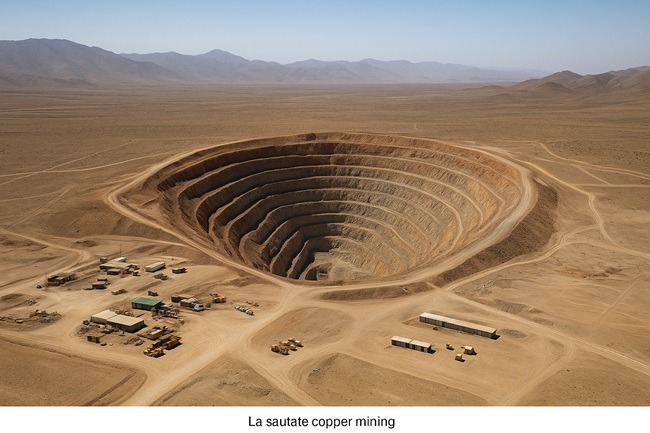
In the case of La Verde, historical mining focused on near-surface, oxide copper, leaving deeper sulphide porphyry potential largely untested. Hot Chili Limited’s consolidation of the lease and initiation of systematic drilling has unlocked access to this deeper mineralised body. The result is broad, vertically continuous copper-gold mineralisation over a footprint of approximately 1,000 by 750 metres, open in multiple directions and extending more than 400 metres in depth. This structural scale and continuity is a key enabler for bulk-tonnage, open-pit economics.
For a larger mining hub like Costa Fuego, satellite deposits reduce reliance on a single orebody, mitigate geological risk, and increase flexibility. Rather than depending on deep, high-cost Andean mining, a hub can draw from near-surface or satellite-fed ore sources, optimising capex and operating cost profiles, especially when processing infrastructure is shared.
How can satellite deposits like La Verde improve mine-life economics and shareholder value?
First, satellite deposits help smooth the production profile. They can supply ore during early phases of mine life, allowing a mining company to ramp up output without immediately resorting to capital-intensive deep mining. For Costa Fuego, integrating La Verde could provide high-grade feed in the early years, lowering all-in sustaining costs and boosting early cash flow, which is critical for project payback and investor returns.
Second, satellites reduce operational risk and enhance optionality. Having multiple ore sources within a common hub enables blending of ore grades and metallurgical consistency, which supports stable production and better forecasting. The dual-metal nature of deposits like La Verde, with copper and gold, provides a hedge in volatile commodity cycles, improving resilience against copper-only price swings.
Third, satellites can extend mine life. Instead of relying solely on a central orebody that may deplete over decades, a hub-plus-satellites model allows incremental resource additions, infill drilling, and step-out opportunities. As long as infrastructure and processing facilities are sized appropriately, such a model can significantly lengthen the economic operating life of a mining complex.
Finally, from an investor perspective, discoveries like La Verde can act as catalysts. Positive drill results often lead to re-rating, especially when they add to the upside potential of a known project. For a firm like Hot Chili Limited, satellite growth reduces downside risk and enhances optionality, which are factors increasingly valued by institutional capital in the base metals space.
What challenges and risks remain before satellites like La Verde can deliver on their promise?
Not all satellite deposits will translate into value-adding ore sources. First and foremost, geological risk remains. Until mineralisation is converted into a resource and then a reserve, there is no guarantee of economic viability. The transformation from a broad exploration intercept to a mineable reserve requires rigorous drilling, resource modelling, metallurgical studies, and economic feasibility work. The lifecycle from discovery to produced ore can span years.
Second, scale matters. While La Verde’s footprint is promising, individually coastal or satellite deposits may not rival the size of large, standalone porphyries in the high Andes. To generate meaningful volume, a hub like Costa Fuego may need multiple satellites, or the satellite must be large enough in tonnes and grade to materially impact long-term production volumes.
Third, infrastructure and capital allocation remain constraints. Even with proximity advantages, satellites require additional drilling, water and power supply, permitting, and integration into processing infrastructure. If a satellite deposit requires substantial upfront capital for development, the economic benefits may be eroded, especially in volatile commodity cycles.
Fourth, commodity price risk cannot be ignored. The business case for satellites often relies on current strong copper and gold prices. If prices weaken, particularly copper, the incentive to develop lower-grade or marginal satellite ore may diminish, especially if stripping ratios or capital costs rise.
What should the market watch for next to assess La Verde’s role in reshaping mine economics?
The next key milestone will be the release of follow-up assay results from step-out and deep diamond drillholes at La Verde. Confirmation of lateral extent, additional high-grade zones, and depth continuity will be essential to support a resource upgrade. According to Hot Chili Limited’s recent corporate release, impact modelling already outlines potential for significant open-pit material to be added to Costa Fuego’s schedule.
If drilling continues to succeed, a formal resource estimate will likely follow. That will mark effective de-risking of La Verde and shift the narrative from exploration upside to mine economics driver. In parallel, metallurgy results, water and infrastructure studies, environmental permitting, and integration planning will determine how quickly satellite ore can feed into production.
Investors and larger mining companies will also watch for consolidation opportunities. Satellite-rich districts may become acquisition targets or alliance hubs as majors and mid-tier miners look to lock in lower-cost ore feeds without the geological or social complexity of high-altitude mining.
Why satellite-plus-hub models may shape the future of copper supply in a tight market
Global copper demand remains under structural pressure from electrification, renewable energy buildout, electric vehicle penetration, and grid expansion. With mature mines depleting high-grade reserves and facing rising capex, alternative supply models will gain attention. Satellite-plus-hub systems like Costa Fuego and La Verde offer a scalable, modular approach that balances accessible near-surface supply with long-term reserve growth. These systems could help bridge short-term supply gaps while building sustainable long-life mines.
The optionality of dual-metal credits, combining copper and gold, further strengthens this model’s attractiveness. Gold serves as a natural hedge against copper price volatility, and its inclusion can materially improve project economics. For mining companies and investors alike, satellites present a lower-cost entry to copper exposure while retaining upside potential if the orebody delivers.
In markets where financing is tightening, jurisdictions are demanding higher ESG compliance, and large remote mines face permitting and environmental scrutiny, satellite and coastal belt mining may emerge as a pragmatic pathway.
Can satellite deposits like La Verde become the key to unlocking next-generation copper mine economics?
Satellite deposits such as La Verde have the potential to significantly reshape the economics and strategic value of long-life copper hubs. By providing near-surface, dual-metal ore with low-cost access, satellites can smooth production profiles, extend mine life, reduce risk, and add optionality. For Hot Chili Limited’s Costa Fuego project, successful integration of La Verde could accelerate payback, improve margins, and provide a flexible supply base.
That said, realisation of this potential depends on the outcome of further geological, metallurgical, infrastructural, and economic studies. Market participants should monitor upcoming drill results, resource estimates, and feasibility milestones closely.
If satellite deposits deliver as hoped, and if their integration is managed well, this model may evolve into a blueprint for copper-gold production in Chile and beyond. Especially in an era defined by supply tightness, ESG scrutiny, and soaring demand for battery and infrastructure metals, the mining world might be witnessing the rise of a new template: the satellite-fed hub.
Discover more from Business-News-Today.com
Subscribe to get the latest posts sent to your email.