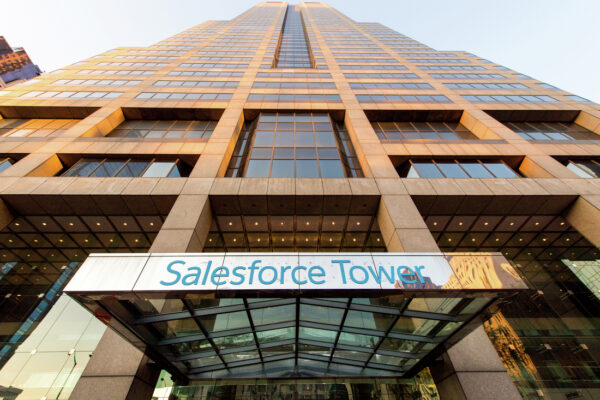
Why is Salesforce investing $1 billion in Mexico and what does it mean for Latin America’s AI future?
Salesforce, Inc. (NYSE: CRM) has unveiled an ambitious plan to invest $1 billion in Mexico over the next five years, marking one of its most significant commitments to Latin America since its founding. Announced on October 8, 2025, the investment underscores the company’s intent to expand its footprint beyond North America and Europe while turning Mexico into a hub for AI-driven enterprise transformation.
The investment forms part of Salesforce’s mission to help businesses evolve into what it calls Agentic Enterprises—organizations where humans and AI agents collaborate seamlessly to enhance productivity, customer engagement, and decision-making. It comes at a time when global software firms are competing to capture the AI services market, with Salesforce positioning its Agentforce platform as a differentiator against Microsoft Copilot, Oracle Fusion, and ServiceNow’s Now Assist suite.
This announcement coincides with the company’s unveiling of a new five-story office and Global Delivery Center (GDC) in Mexico City’s Polanco district, designed to serve customers across the Americas with multi-lingual consulting and AI advisory support.
How does Salesforce’s expansion connect to its broader AI and CRM transformation strategy?
Salesforce’s Mexico investment builds on nearly two decades of local presence since it entered the country in 2006 with a small sales team. Over time, Mexico became a core growth market for the company’s AI CRM and Customer 360 platform, serving major clients such as Xcaret, Grupo Bafar, and FEMSA.
The new investment will fund infrastructure, hiring, and regional delivery capabilities that support Salesforce’s evolution from a CRM vendor to a full-stack AI automation provider. The Mexico City GDC will anchor this strategy by providing enterprise-grade services in English, Spanish, and Portuguese—targeting customers across Mexico, Brazil, Chile, and Colombia.
Chair and CEO Marc Benioff described the expansion as a “commitment to Mexico as a key market for AI-powered growth,” emphasizing that the company’s mission is to help businesses and governments across Latin America transition toward human-AI collaboration models.
Through Agentforce and its Einstein GPT-powered Data Cloud, Salesforce aims to reduce customer churn, automate service tickets, and deliver predictive insights—turning the region into a showcase for its AI-as-a-Service (AIaaS) strategy.
How will the $1 billion investment be allocated across infrastructure, talent, and social impact?
A major portion of the $1 billion funding will be directed toward real estate development and digital infrastructure, including the flagship five-story Mexico City headquarters capable of housing up to 2,000 employees. This space is designed as an innovation hub that supports hybrid work, AI product development, and regional consulting operations.
The new Global Delivery Center will expand Salesforce’s professional services organization, providing design, implementation, and support for customers using Agentforce, Data Cloud, and Einstein platforms. It is also expected to deliver nearshore AI and CRM consulting to clients in North and South America—offering faster turnaround and reduced costs compared with U.S. or European delivery hubs.
Additionally, Salesforce will dedicate $250,000 toward AI skills training through the nonprofit Amigos de Filantrofilia, which supports education and social development initiatives. The program aims to train tens of thousands of Mexican students in AI fundamentals, coding, and data analytics—further embedding Salesforce’s social-impact ethos under its 1-1-1 philanthropic model (1 percent of equity, time, and product for good).
Why are investors and analysts paying close attention to this announcement?
The Mexico expansion arrives amid mixed investor sentiment surrounding Salesforce’s AI transition. Over the past year, the company’s stock has fluctuated sharply, reflecting debates over whether AI investments will deliver near-term financial returns or dilute focus from its high-margin SaaS products.
Salesforce’s share price, currently hovering around $240, is down roughly 30 percent year-to-date due to concerns about slower enterprise spending and intensifying competition from Microsoft Dynamics 365, Oracle Fusion, and SAP CX.
Analysts at Bank of America have maintained a bullish outlook, arguing that Salesforce’s AI portfolio will become a recurring revenue engine by FY 2027. However, D.A. Davidson’s Gil Luria downgraded the stock earlier this year, cautioning that overemphasis on AI could divert attention from core CRM execution.
Institutional investors appear undeterred. Activist hedge fund Starboard Value recently increased its stake by almost 50 percent, signaling confidence that management’s focus on profitability and regional expansion could unlock value.
Market watchers say the Mexico plan could serve as an operational hedge—diversifying cost bases and talent pools while unlocking new enterprise contracts in fast-growing Latin American markets.
How does this move position Salesforce against rivals like Microsoft, Oracle, and SAP?
Salesforce’s Latin American expansion mirrors a broader wave of hyperscaler investment in the region. Microsoft committed $1.3 billion earlier this year to enhance its cloud and AI infrastructure in Mexico, while Google Cloud and Amazon Web Services continue to invest heavily in Brazilian and Chilean data centers.
By anchoring a physical and operational base in Mexico, Salesforce differentiates itself from cloud competitors that primarily sell infrastructure. Instead, Salesforce is exporting AI-powered business transformation—embedding automation, analytics, and CRM modernization into local enterprises.
This regionalization strategy also helps Salesforce strengthen its compliance posture. Hosting regional delivery operations allows better alignment with data-sovereignty regulations emerging in countries such as Brazil, Mexico, and Colombia.
For Latin American businesses, this presence translates into faster adoption cycles, lower latency for cloud services, and improved access to Salesforce-certified talent. For Salesforce, it ensures deeper market penetration and the opportunity to cross-sell its growing AI ecosystem, from Tableau AI to Slack GPT and Einstein Trust Layer.
Can Salesforce’s “Agentic Enterprise” concept redefine how businesses in Mexico use AI?
Salesforce’s “Agentic Enterprise” vision represents a paradigm shift in enterprise software—where human employees and AI agents operate side-by-side as co-workers. Through the Agentforce platform, companies can deploy autonomous digital agents that handle everything from marketing automation to customer-support workflows.
In the Mexican market, this approach could help large enterprises overcome persistent efficiency gaps. By combining Einstein AI’s predictive insights with the conversational automation of Agentforce, businesses in sectors like retail, finance, and manufacturing can improve customer retention, personalize interactions, and reduce operational costs.
For the public sector, Salesforce’s AI suite may enable new citizen-service models powered by multilingual chatbots, workflow analytics, and predictive engagement systems—all key components of the company’s government cloud strategy.
Industry analysts predict that by 2030, Mexico could emerge as Latin America’s top AI delivery hub, exporting knowledge services to the U.S. and neighboring economies, with Salesforce positioned as a catalyst for that growth.
What are the key challenges and opportunities facing Salesforce’s Latin American strategy?
While the Mexico expansion represents long-term optimism, execution risks remain. Managing currency volatility, balancing talent retention, and maintaining high consulting margins will be crucial to sustaining returns. The company must also navigate a fragmented regulatory landscape where AI governance, data privacy, and localization laws differ across Latin American markets.
Moreover, competitors like Microsoft and Oracle are doubling down on similar strategies. If Salesforce cannot scale its regional operations quickly enough, it risks ceding early-mover advantage.
Still, the upside potential is compelling. With AI adoption in Latin America projected to grow over 30 percent annually through 2030, Salesforce’s early establishment of delivery capacity and workforce readiness positions it as a front-runner in shaping the region’s enterprise-AI future.
Why Salesforce’s $1 billion Mexico bet is more than expansion — it’s a statement of global AI intent
Salesforce’s $1 billion investment in Mexico is more than a corporate expansion—it’s a declaration that the next wave of AI enterprise transformation will be built on emerging-market talent and global collaboration. By combining infrastructure, education, and innovation under one ecosystem, Salesforce is not only scaling its business but also seeding the foundations of a regional AI economy.
Whether this translates into sustained shareholder value depends on execution. But in the eyes of analysts, policymakers, and investors alike, Salesforce’s bet on Mexico captures the defining tension of today’s tech landscape: the race to globalize AI while keeping it human-centric.
Discover more from Business-News-Today.com
Subscribe to get the latest posts sent to your email.